
- HOME
- OPINION
- ON GROUND
- INTERVIEW
- Neta Profile
- Editor's Pick
- INDIA
- NewsGram USA
- WORLD
- न्यूजग्राम
- POLITICS
- ENTERTAINMENT
- CULTURE
- LIFESTYLE
- ECONOMY
- SPORTS
- Jobs / Internships
- Misc.
- NewsGram Exclusive

By Maddison Clark
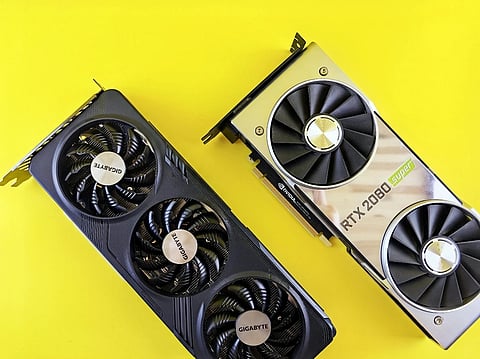
Artificial intelligence may appear to operate like magic—type a question, receive a polished answer in seconds. But behind every smooth interaction stands a machine working furiously. GPUs have become the backbone of this computing revolution, replacing the old expectation that CPUs alone could carry the load. The easiest way to visualise the difference is through a kitchen analogy: imagine one skilled chef preparing a full banquet alone. That’s the CPU. Now imagine a well-coordinated brigade of dozens of cooks, each handling part of the recipe simultaneously—that’s a GPU.
Model training (the marathon)
Training is the most demanding stage of AI development. It requires patience, time, and hardware that refuses to break under pressure. Every iteration adjusts billions of tiny values to improve accuracy. This process consumes large amounts of VRAM because both the model and data batches must coexist in memory. When the model expands, so does the workload.This is one of the core reasons researchers and engineers lean toward multi-GPU setups or gpu dedicated hosting, where performance remains consistent and not influenced by shared environments.
Model inference (the sprint)
Inference is the moment of truth—when an already trained model must deliver results instantly. Instead of endurance, now speed rules. The machine no longer needs full-precision math but instead prioritises rapid execution and very low latency. For applications such as streaming recommendations, digital assistants, or live video analysis, every millisecond counts. Clock speed and optimised precision formats become central to performance, while VRAM needs are considerably smaller than during training, since only the finished model is loaded.
VRAM: your workspace
Think of VRAM as a workbench. A cramped workspace forces you to constantly shuffle tools, slowing progress. A spacious bench lets you move freely. Deep learning relies on this space to store the model and the data being processed at any given moment. Choosing a GPU without considering VRAM capacity is like buying a racing bike but ignoring the size of the wheels—performance collapses if the essentials do not fit together.
The magic of tensor cores
Tensor Cores—or Matrix Cores, depending on architecture—function like hyper-specialized power tools designed for the exact type of math AI depends on. While a standard core performs operations line by line, tensor cores accelerate entire blocks of matrix math in one move. Their presence determines whether tasks feel sluggish or effortlessly optimized.
Architecture generation: why it matters
GPU generations evolve quickly. Each new architecture brings smarter memory handling, efficient precision modes, or redesigned compute paths. These refinements often matter more than raw power numbers. When choosing hardware, understanding architecture helps avoid paying for outdated components that cannot support modern workloads.
PCIe lanes and bottlenecks
Even the strongest GPU cannot compensate for a narrow data pipeline. PCIe bandwidth determines how quickly information flows between CPU and GPU. A limited connection creates traffic jams, leaving the GPU waiting instead of computing. Matching components properly ensures the full system works as a unified engine.
When the cloud might be a better fit
Cloud environments and us dedicated server cheap shine when immediate scaling is required or when a short-term experiment does not justify full ownership. They allow exploring newer GPU generations without committing to long-term infrastructure. However, reliance on shared systems often means adjusting expectations about consistency and configuration flexibility.
Choosing a GPU server is not about chasing the cheapest price. It is about finding alignment with workload needs. A server that completes work sooner ultimately saves more time and resources than a slower but cheaper alternative. Transparency from hosting providers is essential—clear hardware specifications, known GPU models, real networking speeds, and reliable support all matter.
Exploring configurations such as a us dedicated server cheap can help compare real-world value beyond surface-level numbers. When considering long-term projects, upgrade paths also deserve attention: keeping architecture flexible makes it easier to adopt future hardware.
Building a system capable of supporting AI workloads requires thoughtful balance, not guesswork. Understanding differences between training and inference, recognizing VRAM’s importance, and evaluating infrastructure choices makes it possible to select hardware intelligently. Standalone GPU servers remain a powerful foundation for demanding AI work, and choosing the right configuration turns performance from a challenge into an advantage. [NG-FA]
Suggested Reading:
Subscribe to our channels on YouTube and WhatsApp
Download our app on Play Store
