- HOME
- OPINION
- ON GROUND
- INTERVIEW
- Neta Profile
- Editor's Pick
- INDIA
- NewsGram USA
- WORLD
- न्यूजग्राम
- POLITICS
- ENTERTAINMENT
- CULTURE
- LIFESTYLE
- ECONOMY
- SPORTS
- Jobs / Internships
- Misc.
- NewsGram Exclusive
This story written by Job Tiguem Poudiougo, Jean Sovon and edited by Laura originally appeared on Global Voices on February 11, 2026.
Since 2012, Mali has been in security turmoil with the emergence and expansion of several radical non-State armed groups: Jamāʿat Nuṣrat al-Islām wal-Muslimīn (JNIM), Al-Qaeda in the Islamic Maghreb (AQMI), Katiba Macina, Al Mourabitoun, and the Islamic State Sahel Province (EIGS). These groups demand the independence and empowerment of territories in the northern region of the country, using targeted violent action to weaken and overthrow the powers that be. The current state of affairs has led to ongoing security disruptions across Mali and other Central Sahel countries.
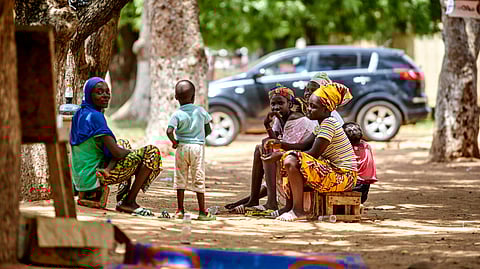
Today, the security situation in Mali, a member of the Alliance of Sahel States (AES) that withdrew from the Economic Community of West African States (ECOWAS) on January 28, 2024, has been marked by clashes between the Malian armed forces and their allies and non-State armed groups. This situation continues to disproportionately affect the civilian population, especially women and girls who are often victims of sexual violence.
According to the United Nations Population Fund’s (UNFPA) May 2025 Mali Situation Report, the armed groups’ attacks also result in forced marriages and considerably limit access to essential sexual and reproductive health and protection services. In the March 2025 report, UNFPA explains:
What’s more, the impact of the U.S. budget cuts makes these women and girls more vulnerable. The report continues:
In addition to the violence, Mali has also suffered profound socioeconomic upheaval due in part to the massive population displacement. Although these challenges affect women and children, they are often understated in official reports.
In Mali, in June 2025, more than 402,000 people were displaced, 58 percent of whom were women and girls. The 2024 United Nations Secretary General’s Report on Conflict-related Sexual Violence documents cases of rape, forced marriage, abduction, and sexual slavery that armed groups committed in the Gao, Ménaka (east-central), Kayes (southwest), Mopti, Ségou (south-central), and Tombouctou (north) regions, illustrating the scale and severity of these violations.
In rural areas and internally displaced persons camps, testimonies of sexual exploitation, harassment, and forced marriages are building up. Non-State armed groups exploit vulnerable communities, instilling a climate of fear and submission. International institutions have noted that this humanitarian crisis profoundly affects women and girls.
In 2025, Amadou, a Malian civil society member, was the victim of an armed robbery and a witness to the rape of women committed by armed men. He told Global Voices:
As it is rooted in tradition, forced marriage is commonplace, especially in areas where poverty and insecurity limit opportunities. In this country, one in two girls is married before the age of 18. This phenomenon has severe consequences: interruption to education, early pregnancies, increased domestic violence, and damage to young girls’ physical and mental health.
Despite these difficult circumstances, several Malian women come together locally to break the silence. Various women’s community associations have created safe spaces, run awareness-raising campaigns, and support survivors. These initiatives are forms of resistance and resilience in the face of systemic violence.
However, these local organizations are severely under-resourced, and fragilities remain in their actions, given the immense needs. Alimata Traore, President of the Convergence of Rural Women for Food Sovereignty (COFERSA) in Mali, explained:
The elimination of violence, access to reproductive health services, justice for sexual violence victims, and education for girls remain crucial.
Women and girls from Mali are at the crux of these crises. Although they are victims of a conflict through no fault of their own, they are also beacons of hope and change. Amadou added:
The protection of women and girls shouldn’t be optional, but an absolute priority for sustainable peace in Mali.
(SY)
Suggested Reading:
Subscribe to our channels on YouTube and WhatsApp
Download our app on Play Store