
- HOME
- OPINION
- ON GROUND
- INTERVIEW
- Neta Profile
- Editor's Pick
- INDIA
- NewsGram USA
- WORLD
- न्यूजग्राम
- POLITICS
- ENTERTAINMENT
- CULTURE
- LIFESTYLE
- ECONOMY
- SPORTS
- Jobs / Internships
- Misc.
- NewsGram Exclusive
While the South African city of Cape Town drew international attention when it warned it could run out of water this year, an international charity focused on global water supplies says "slow burning" droughts have wreaked even worse devastation in other parts of Africa.
Jonathan Farr leads work on water security for Water Aid, an organization that works to bring clean water to some of the world's poorest communities, including in southern Africa.
"We should remember that there are already 844 million people in the world who lack basic access to water," he said. "More than 8 million of those live in South Africa."
The El Nino weather pattern has triggered water crises across southern Africa since 2015, causing the region's worst drought in 35 years, Farr said.
"By the beginning of last year, it affected about 41 million people in countries including Mozambique, Madagascar, Malawi, Zambia and, of course, South Africa," he said.
And some of those places are in worse shape than Cape Town.
In 2016, Madagascar's government declared a state of emergency in the country's south, "with almost a million people facing alarming levels of hunger," Farr said. Last April, Malawi's president also declared a state of national disaster, "with 25 out of 28 parts of the country having severe food shortages" related to the drought, Farr added.
In February, Mozambique reduced the water supply by more than half for consumers in its capital city, Maputo, although that order was lifted in April.

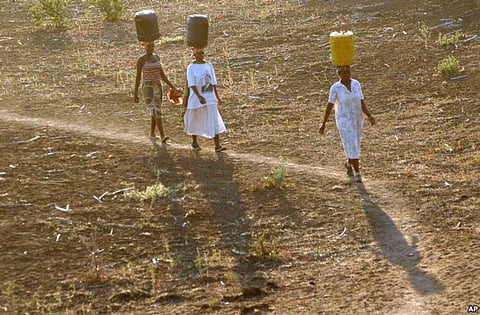
Drought has spread in Cape Town and severe conditions are expected in future in entire Africa, VOA
Threats across Africa
But water security is threatened across Africa, and not just because of hotter, drier weather.
"Lots of people are moving from rural communities to cities. The cities aren't ready for this huge influx of people, and so that's increasing demand for water, but in a very small area," he said. "So, it does mean there's huge pressures on particular water basins. The authorities, even those who are reacting well, are dealing with a very serious problem."
In many southern Africa nations, water is lost through poor infrastructure, lax maintenance and illegal users. And, Farr said, many governments aren't effectively collecting usage fees, so they lack the money to maintain and expand water systems.
Farr's organization cooperates with governments, engineers and architects to assess threats to water supplies — everything from leaking infrastructure to improved water quality.
It also helps to build feasible infrastructure: In Maputo, it's helping Mozambicans tap into unused water basins near the city.
Dramatic deadline
But if droughts are so much more serious in other parts of southern Africa, why are they largely out of the public eye? Why all the attention on Cape Town?
Farr said there are a few reasons for the international community focusing heavily on the city at the southern tip of Africa.
"You've got the deadline of Day Zero and that's dramatic; it captures headlines, and it's got this looming threat."
Day Zero is the point at which authorities will be forced to cut water to most homes, so that people will need to line up at distribution points for daily rations. City officials said it would come when water levels in the city's reservoirs fell to 13.5 percent of capacity.
Subscribe to our channels on YouTube and WhatsApp
Download our app on Play Store
