
- HOME
- OPINION
- ON GROUND
- INTERVIEW
- IPL 2026
- INDIA
- NewsGram USA
- WORLD
- न्यूजग्राम
- POLITICS
- ENTERTAINMENT
- CULTURE
- LIFESTYLE
- ECONOMY
- SPORTS
- Jobs / Internships
- Misc.
- NewsGram Exclusive
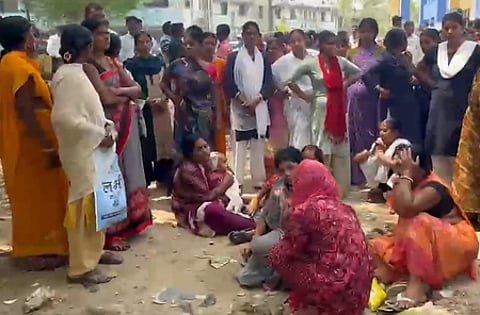
New Delhi, March 31 (IANS) Eight people were killed and eight others injured in a stampede at the Mata Sheetla Temple in Bihar’s Nalanda district on Tuesday, police said, the latest in a series of crowd crush incidents reported in 2026 and 2025 that have highlighted safety gaps at mass gatherings across the country.
The latest stampede occurred during prayers under the Deepnagar Police Station limits after a sudden surge of devotees led to overcrowding and chaos within the temple premises.
According to officials, local residents and police personnel quickly launched rescue operations, shifting the injured to nearby hospitals. Senior district authorities reached the spot to oversee relief efforts, and an inquiry has been ordered. CCTV footage is being examined, and forensic teams are working to establish the exact sequence of events.
Prime Minister Narendra Modi expressed grief over the loss of lives and announced ex gratia compensation of Rs 2 lakh for the families of the deceased and Rs 50,000 for the injured.
The Nalanda tragedy comes amid a worrying pattern of stampedes reported from across India over the past two years, particularly during religious gatherings and large public events where crowd management remains a challenge.
A timeline of major stampede incidents reported this year and last year is as follows:
Early 2025: Maha Kumbh Uttar Pradesh, several people were killed, and dozens were injured in a stampede during the religious congregation as massive crowds gathered for a holy dip.
February 2025: New Delhi Railway Station, at least 18 people died in a crowd crush as passengers rushed to board trains for the Kumbh, leading to chaos on the platform.
June 2025: Bengaluru, multiple fatalities were reported in a stampede outside Chinnaswamy Stadium during a large public event with heavy footfall.
In 2025, separate incidents at temples and public gatherings in Tamil Nadu and Andhra Pradesh also resulted in deaths amid overcrowding and inadequate arrangements.
At least 127 people lost their lives in stampedes across India in 2025, underlining the scale of the problem.
Experts have repeatedly flagged systemic issues behind such incidents, including poor crowd flow planning, a lack of real-time monitoring of bottlenecks at entry and exit points, and inadequate coordination between agencies in managing large gatherings.
They have stressed the need for scientific crowd management systems, better infrastructure deployment of surveillance technology, and stricter adherence to safety protocols, particularly during high footfall religious events.
The repeated occurrence of such tragedies despite past lessons has raised serious concerns about preparedness and accountability, prompting renewed calls for reforms to ensure public safety at mass gatherings.
--IANS
sn/skp
Subscribe to our channels on YouTube and WhatsApp
Download our app on Play Store

