
- #ElectionsWithNewsGram
- HOME
- OPINION
- ON GROUND
- INTERVIEW
- IPL 2026
- INDIA
- NewsGram USA
- WORLD
- न्यूजग्राम
- POLITICS
- ENTERTAINMENT
- CULTURE
- LIFESTYLE
- ECONOMY
- SPORTS
- Jobs / Internships
- Misc.
- NewsGram Exclusive
Chennai, May 4 (IANS) Tamil Nadu stands on edge as counting of votes for the 2026 Assembly elections gets underway on Monday, with an unusually high number of political variables making the outcome one of the most unpredictable in recent decades.
From the emergence of new political entrants to simmering internal rifts among established leaders and the impact of a large-scale revision of electoral rolls, the electoral battlefield has evolved into a complex contest where even seasoned observers are hesitant to call the result.
For Chief Minister M.K. Stalin and the DMK, the stakes are historic. A victory would mark the party’s first consecutive electoral win since 1971, breaking a 55-year gap and reinforcing the durability of its welfare-driven governance model.
The opposition All India Anna Dravida Munnetra Kazhagam (AIADMK)-led alliance is equally poised for a landmark moment. If it secures power, it would be the party’s first Assembly victory since the passing of its iconic leader J. Jayalalithaa.
It would also see Edappadi K. Palaniswami return as Chief Minister, placing him among a select group of leaders who have held the office more than once.
Adding a dramatic new dimension is actor-turned-politician C. Joseph Vijay and his Tamilaga Vettri Kazhagam (TVK). A victory for the fledgling party would mark a political upset of historic proportions, comparable to the rise of M.G. Ramachandran, but potentially more rapid, given TVK’s swift ascent since its launch.
Meanwhile, Seeman’s Naam Tamilar Katchi (NTK), though not seen as a contender for power, remains a critical factor. Its vote share in a multi-cornered contest could influence outcomes in closely fought constituencies.
Internal fissures within regional parties add another layer of uncertainty. S. Ramadoss and his son Anbumani Ramadoss are locked in a visible power struggle, while V.K. Sasikala seeks to mobilise support among key caste groups. Similarly, K. Krishnasamy and T. Velmurugan could influence regional vote patterns.
A major unknown remains the “special intensive revision” (SIR) of electoral rolls, which saw over 67 lakh names removed, potentially altering voting dynamics.
Polling for all 234 constituencies was held on April 23, with 4.88 crore votes cast from a total electorate of 5.73 crore, translating to a turnout of 85.10 per cent.
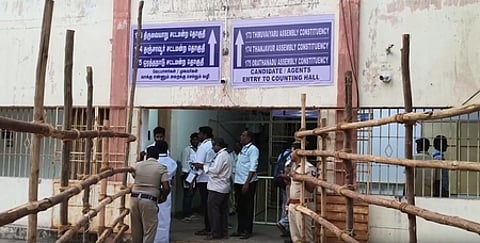
A total of 4,023 candidates are in the fray, with counting taking place across 62 centres under tight security.
With multiple cross-currents at play, Tamil Nadu’s political future now hinges on a finely balanced verdict that will unfold through the day.
--IANS
aal/dpb
Subscribe to our channels on YouTube and WhatsApp
Download our app on Play Store

