
- HOME
- OPINION
- ON GROUND
- INTERVIEW
- Neta Profile
- Editor's Pick
- INDIA
- NewsGram USA
- WORLD
- न्यूजग्राम
- POLITICS
- ENTERTAINMENT
- CULTURE
- LIFESTYLE
- ECONOMY
- SPORTS
- Jobs / Internships
- Misc.
- NewsGram Exclusive
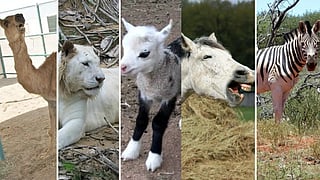

Two different species, one offspring, sounds fascinating yet impossible, but they do exist; science made it possible. When two closely related species are being bred with the intention of combining the desirable traits from each parent into one animal, it results in hybrid animals. Humans have been creating these hybrids for years to get the desired blend of characteristics, which may include strength, endurance, size, or adaptability. Hybrids represent both aspects, scientific curiosity as well as deliberate human intervention in nature, which range from farm animals to exotic big cats in captivity.
Hybrids can be made as per one’s wishes, but they have limitations too, biological ones, and that is sterility. They cannot reproduce or produce offspring of their own, the reason being the genetic blueprints inside the cells: the chromosomes. Hybrid offspring are products of two different species with different chromosome numbers or structures, which results in an offspring that inherits mismatched sets. Owing to this, it becomes difficult for the chromosomes to pair properly during meiosis, which is the process that produces sperm and eggs. This also explains the rarity of these remarkable hybrids, which fail to form stable populations even after being one-of-a-kind creations in the pool of species that exists in the wild.
The most common and well-known sterile hybrid in scientific history is the offspring produced by crossing a male donkey and a female horse, known as the mule. The reverse pairing of a female donkey and a male horse is called a hinny, which is similar to the mule but smaller. This crossing produces mules with a chromosome number of 63, as horses possess 64 chromosomes and donkeys 62, making them sterile by nature.
The breeding results in an individual that enjoys the best of both worlds, combining the strength and size of a horse with the endurance, intelligence, and sure-footedness of a donkey. The offspring bears the qualities of a powerful, sure-footed work animal that has been used for centuries in agriculture, transport, and mountainous terrain. Mules have been in existence since ancient times, as they were deliberately bred to gain an animal that is more resilient and less prone to certain diseases, making them extremely valuable working animals.
A liger is produced when a male lion and a female tiger breed, while the reverse breeding of a male tiger and a female lion results in a tigon. Ligers grow up to become the largest cats in the world, given the growth genes inherited from both sides. They are typically born with a nonfunctional reproductive system; however, some females have rarely been reported to be fertile.
Ligers are generally the result of human-facilitated breeding, as the two species, tigers and lions, do not usually overlap geographically. Ligers have a blend of traits from both their parents, with a lion-like body structure and faint tiger stripes. Ligers are often bred for exhibition and exist in captivity, and their creation raises ethical debates.
When a male goat breeds with a female sheep or vice versa, geeps are born with a chromosome count of 57, as sheep have 54 chromosomes and goats 60. They are hard to create, as most embryos don’t survive given the different genera involved, resulting in sterile offspring. Geeps display a blend of horn shapes and body structure and are rarely bred because of their wide genetic gap. They form a curious mix of coarse goat-like hair and patches of sheep’s wool. Geeps are scientifically significant, as the species gives insight into species boundaries and genetic compatibility.
Zebroid is a term used for any hybrid of a zebra with another equid such as a horse or a donkey, resulting in a zorse or zonkey. These zebroids are born with mismatched chromosome numbers most of the time, resulting in mostly sterile offspring. This breeding was first carried out out of curiosity, which later shifted to achieving certain desired traits like disease or pest resistance. These offspring are infertile, especially the males, and often display the distinctive stripes of zebras, usually on the legs or parts of the body, along with the body shape of a horse or donkey.
The cama, which is also known as klama, is a hybrid born from a male dromedary camel and a female llama. They are produced through artificial insemination, as they differ greatly in size. The cama can be fertile, though fertility is limited, as camels and llamas produce the same number of chromosomes, 74. The hybrids are generally smaller than camels but larger than llamas; they combine the camel’s strength and size with the llama's manageable temperament and wool production.
Camas are a result of modern scientific creation and not ancient hybrids like mules, demonstrating that species that cannot mate naturally can be bridged through reproductive technology.
Suggested Reading:
Subscribe to our channels on YouTube and WhatsApp
Download our app on Play Store
