
- HOME
- OPINION
- ON GROUND
- INTERVIEW
- IPL 2026
- INDIA
- NewsGram USA
- WORLD
- न्यूजग्राम
- POLITICS
- ENTERTAINMENT
- CULTURE
- LIFESTYLE
- ECONOMY
- SPORTS
- Jobs / Internships
- Misc.
- NewsGram Exclusive
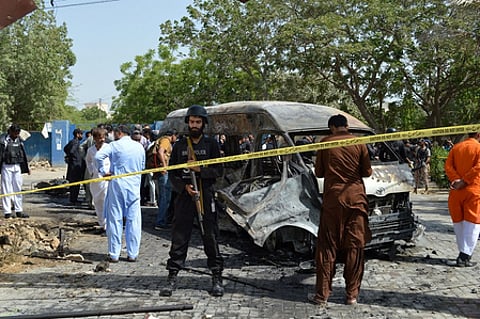
Washington, March 28 (IANS) Terrorist groups continue to operate from Pakistan despite years of military operations and policy measures, a Congressional report said this week, noting that efforts “have failed to defeat the numerous US- and United Nations-designated terrorist groups that continue to operate on Pakistani soil.”
The report by the independent Congressional Research Service identifies Pakistan as both a base and a target for “numerous armed, nonstate militant groups,” some of which have been active since the 1980s.
These groups fall into five broad categories: globally oriented, Afghanistan-oriented, India- and Kashmir-oriented, domestically focused, and sectarian outfits, it said.
CRS is an independent research arm of the US Congress that prepares periodic reports on various issues to help members of Congress make informed decisions. Its reports are not considered official positions of the Congress.
The CRS report on Pakistan notes that 12 of the 15 listed groups are designated as Foreign Terrorist Organizations under US law and “most, but not all, are animated by Islamist extremist ideology.”
Pakistan has faced a sharp rise in terrorism in recent years. After five consecutive years of declining fatalities that fell to 365 in 2019, the number of terrorism-related deaths has increased annually, “spiking to 4,001 in 2025, the highest toll in 11 years.”
The report adds that “Pakistan currently is the country most impacted by terrorism,” reflecting a resurgence of militancy following the Taliban’s return to power in Afghanistan in 2021.
Among globally oriented groups, Al Qaeda continues to operate in the region, though its “core has been seriously degraded” and maintains alliances with other militant organisations.
The Islamic State’s regional affiliate, Islamic State-Khorasan Province, has an estimated “4,000-6,000 fighters” and operates across Afghanistan and Pakistan, drawing from former members of other militant groups.
Afghanistan-oriented groups such as the Haqqani Network continue cross-border operations. The network has “several hundred core members and an estimated 3,000-5,000 armed militants” and has been linked to numerous attacks in Afghanistan.
According to the CRS, several of the India-focused groups remain active. Lashkar-e-Taiba, responsible for the 2008 Mumbai attacks, and Jaish-e-Mohammed, linked to the 2001 attack on the Indian Parliament, continue to operate from Pakistani territory and seek to alter the status of Kashmir.
Domestically, Tehrik-i-Taliban Pakistan is described as “the deadliest terrorist group operating in Pakistan,” with an estimated 2,500-5,000 fighters and a stated aim to overthrow the Pakistani state and impose Sharia law.
Separatist violence has also intensified in Balochistan. The Balochistan Liberation Army, designated as a terrorist organisation in 2025, has targeted infrastructure and foreign nationals, including projects linked to China.
--IANS
lkj/rs
Subscribe to our channels on YouTube and WhatsApp
Download our app on Play Store

