
- HOME
- OPINION
- ON GROUND
- INTERVIEW
- Neta Profile
- Editor's Pick
- INDIA
- NewsGram USA
- WORLD
- न्यूजग्राम
- POLITICS
- ENTERTAINMENT
- CULTURE
- LIFESTYLE
- ECONOMY
- SPORTS
- Jobs / Internships
- Misc.
- NewsGram Exclusive
This story written by Mong Palatino originally appeared on Global Voices on April 09, 2026.
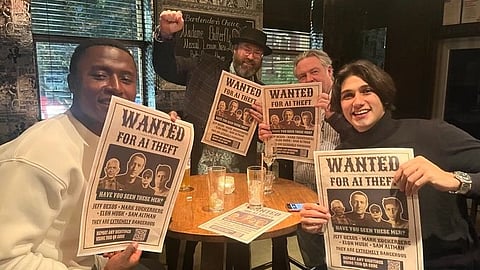
Artists, journalists, and Aboriginal cultural workers in Australia have initiated the “Stop AI Theft” campaign to demand stronger protection for their creative output amid the rising use of generative artificial intelligence (generative AI).
The Tech Council of Australia reported in August 2025 that 84 percent of Australians in office jobs use AI at work. According to Tech Council research, AI in Australia could create up to AUD 115 billion (over USD 79 billion) in economic value annually and 200,000 jobs by 2030.
But the widespread adoption of AI has also raised concerns about its potential harm to society, including significant disruptions to the creative industry. In recent years, artists have argued that AI has been undermining their livelihoods and, in some cases, stealing their work altogether. Many of the most popular generative AI models illegally scraped content from the internet without creators’ permission, which the models then use to generate “new” content. In some cases, the models spit out nearly identical materials to the original copyrighted item.
A group of voice actors said their work was cloned without their knowledge. Local journalists said their reports were plagiarized and used on AI-generated news websites. A January 2026 report published by the University of Sydney warned that journalists are increasingly being rendered invisible in Generative AI search results. Meanwhile, Indigenous activists say people have used generative AI models to produce and sell fake Indigenous art.
Citing the need to counter the detrimental impact of AI, artists and media workers have banded together in launching the “Stop AI Theft” campaign. Media, Entertainment and Arts Alliance chief executive Erin Madeley summed up the rationale of the campaign.
Activists launched the campaign with the hashtag #PayUp, to emphasize how big tech companies are profiting off artists’ work while the artists themselves are continually losing business.
As authorities seek to boost AI-related investments, they initially considered revamping copyright laws to allow AI to mine and train local online content. This was opposed by local content creators and media institutions.
In July 2024, MEAA appeared at the Senate Select Committee hearing on Adopting Artificial Intelligence and raised the following demands to the government.
Aside from lobbying for the enactment of policy measures, the “Stop AI Theft” campaign also encouraged local artists to sign an open letter addressed to Silicon Valley tech companies.
“We already know that big tech has been profiting from stealing the work of Australia’s creative workers and journalists, and calls to legitimize this theft are incomprehensible,” said Joseph Mitchell, assistant secretary of the Australian Council of Trade Unions.
The “Stop AI Theft” campaign held a dialogue with tech companies in August 2025 about the demand for transparency and remuneration.
It celebrated the Federal government’s announcement in October 2025 to maintain copyright laws to protect local artists and creative workers.
This commitment was reflected in the National AI Plan unveiled by the government in December 2025.
The latest update in the “Stop AI Theft” campaign acknowledged the success in blocking the push of tech companies to change copyright laws that would have given them free access to Australian creative works to train AI.
[VP]
Suggested Reading:
Subscribe to our channels on YouTube and WhatsApp
Download our app on Play Store

