
- HOME
- OPINION
- ON GROUND
- INTERVIEW
- Neta Profile
- Editor's Pick
- INDIA
- NewsGram USA
- WORLD
- न्यूजग्राम
- POLITICS
- ENTERTAINMENT
- CULTURE
- LIFESTYLE
- ECONOMY
- SPORTS
- Jobs / Internships
- Misc.
- NewsGram Exclusive

William Dalrymple criticised The Guardian’s report that questioned India’s reading culture, calling it “ignorant and irritating.”
He cited crowded Jaipur Literature Festival sessions and over 44,000 books sold in five days as proof of active readership.
The debate sparked online reactions, with many arguing literary festivals reflect engagement with literature rather than superficial interest.
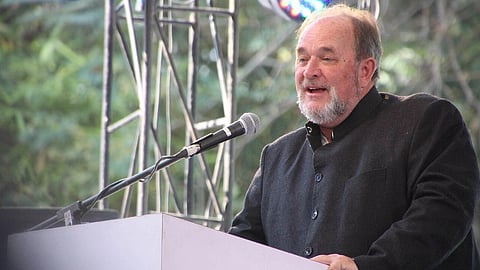
The Guardian published a report on 9 February 2026 questioning the need for India to host a series of literary festivals when “reading for pleasure” lies at an allegedly lower level. The publication quickly turned into a controversy as historian and author William Dalrymple called it out, criticizing it as “ignorant and irritating.”
Dalrymple, being the co-founder and co-director of the Jaipur Literature Festival (JLF), stated the strong public engagement with books at literary events across the country. He laid out the attendance figures, audience participation and book sales as evidence of active readership, rejecting “The Guardian’s” claim.
Dalrymple took to his X handle to clarify the situation. He called out the article, reasoning that the Jaipur Literature Festival was “massively crowded” and attended by “passionate, nerdy young readers from all walks of life.” He further highlighted the fact that the 2026 festival was a massive hit, which led to the sale of over 44,000 books in just five days as people waited in queues to get them signed by the authors.
This was the 19th edition of the Jaipur Literature Festival, which featured more than 500 speakers from over 40 countries and concluded in January. The festival can be called one of the world’s largest free literary gatherings, with attending writers coming from all over the world. The participants were Nobel laureates Esther Duflo and Olga Tokarczuk, International Booker Prize winner Banu Mushtaq and Booker Prize winner Kiran Desai.
The internet was divided in the case. Some came up to support Dalrymple as they echoed his argument that large literary festivals do not cancel reading culture but are a way to make reading more inclusive. India has a long tradition of storytelling and street-level book markets that negates claims that the country has weak reading habits.
One user wrote on X, “The story that ‘Indians don’t read’ is a very bad ‘reading’ of Indian readership.” Many even pointed out how major global events combine glamour with serious readership, giving the example of the famous Frankfurt Book Fair. Many users thanked Dalrymple for standing up against such misconceptions, describing themselves as people who “grew up surrounded by nerds who read only for pleasure.”
Another user also wrote about Kolkata Book Festival as he highlighted, "Forget all these Lit Fests, the Kolkata Book Fair, one of the largest of its kind in the world and which I visit regularly showed me the love of books among people of all ages, people patiently standing for hours in queues without any pushing or shoving to buy a book."Many criticised the assumptions that directly related large crowds and celebrity participation to superficial engagement. It was also further noted that these festivals provide a cultural space for readers, authors and publishers to come together to share their common interest rather than replacing individual reading.
The debate further raises a question quite prevalent in publishing as to whether public literary events provide a measurement of reading culture or are merely cultural consumption. India’s literary ecosystem has always been filled with festivals, book fairs, second-hand markets and multilingual publishing, which come together to reflect a diverse reading landscape that may vary from the Western metrics of “reading for pleasure.”
Suggested Reading:
Subscribe to our channels on YouTube and WhatsApp
Download our app on Play Store

