
- HOME
- OPINION
- ON GROUND
- INTERVIEW
- Neta Profile
- Editor's Pick
- INDIA
- NewsGram USA
- WORLD
- न्यूजग्राम
- POLITICS
- ENTERTAINMENT
- CULTURE
- LIFESTYLE
- ECONOMY
- SPORTS
- Jobs / Internships
- Misc.
- NewsGram Exclusive

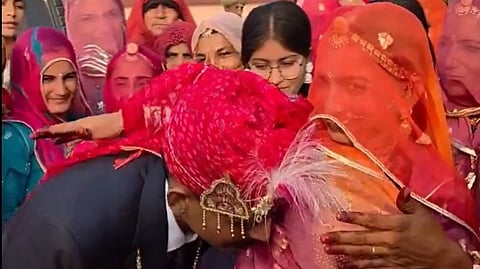
Symbolic Rajasthani ritual marking a groom’s transition into married life with his mother’s blessing.
Viral video sparked mixed reactions over tradition, dignity and consent.
Debate highlights clashes between cultural context and social media exposure.
Indian weddings can be described as a blend of ceremonies and social events ornamented with music, colour, lineage, and centuries-old customs that make them a shared celebration rather than a private emotion. There is the involvement of many rituals, with every state having its own kind. One such tradition is Doodh Pilai from the state of Rajasthan. It is a rare symbolic ritual performed before the groom leaves with the baraat.
The tradition recently got a lot of public attention after a viral clip from Bijolia went viral where the groom, Suresh Bhadu, was seen receiving milk from his mother under her pallu. The video was widely circulated throughout social media, which further explained the act as a reminder to the son to never forget the “debt of his mother’s milk.” The unfamiliar view drew a lot of discussion throughout the nation, though for locals it was a simple tradition.
The tradition of Doodh Pilai is a symbolic representation rather than literal breastfeeding. As the wedding procession gets ready to leave, the groom is offered milk by his mother or any other elderly woman of the family by covering him with her veil. The gesture of offering milk seems like mimicking infancy. The tradition is performed in front of the relatives attending the wedding, lasting for just a few moments.
The tradition is a symbolic representation of the end of the boyhood of the groom as he leaves to bring his bride home and enter a new phase of his life. The act is seen as a maternal blessing to the groom along with a moral reminder to uphold family honour in the future. It is often expressed as “maa ke doodh ki laaj rakhna” and functions more as a ceremonial farewell than a private maternal interaction.
There are many communities that follow the custom, especially in the Bhilwara region, which include Brahmin, Rajput, Jat, Vishnoi and Kumhar families. It has been associated with the worship of the mother goddess in village temples. Cultural commentator Shyam Meera Singh described the ritual as a rite of passage that marks a young man’s transition to marital responsibility from his mother’s household.
In the historic context, north-western Indian weddings were not just a union between two individuals but a social transformation. The marriage showcased a shift in the loyalty of the boy from mother to wife and household responsibility, as he entered adulthood and left home dressed in regal attire.
The milk-feeding custom is not just limited to Rajasthan but has also been documented in several parts of Haryana, western Nepal and regions of Bihar. However, the version seen in Rajasthan is the one most widely recorded and publicly performed. There is no similar ritual for the bride at her home, which showcases the patriarchal household structure where daughters had to move away while sons remained at their parental home.
The custom has stirred quite a reaction online with divided opinions. Some argue the ritual to be a way of honouring motherhood and should not be misunderstood just because of an unfamiliar regional tradition. Others have raised concerns regarding the filming of such intimate moments that could violate a person’s dignity and consent. There are also questions regarding the public circulation of the custom, which changes the meaning behind the private practice, raising debate related to the participant’s approval before sharing such videos on social media.
The controversy surrounding the ritual is not about culture but privacy, where people are more concerned about the digital exposure of the tradition rather than questioning the tradition itself. Social media does not provide context once the video is shared; as a result, it gets judged within the broader social framework. The culture is converted into viral content as tradition clashes with modern perception in this scenario.
Suggested Reading:
Subscribe to our channels on YouTube and WhatsApp
Download our app on Play Store
