“We need to treat clean air as a public-health duty, and not a seasonal emergency.” In Conversation with scholar Mr Asif Iqbal on Delhi’s worsening air pollution crisis

Asif Iqbal, a PhD scholar and AICTE Senior Research Fellow in the Department of Computer Science and Engineering at Jadavpur University, Kolkata, explains the adverse impacts of air pollution, and how it is a public health crisis in India today.
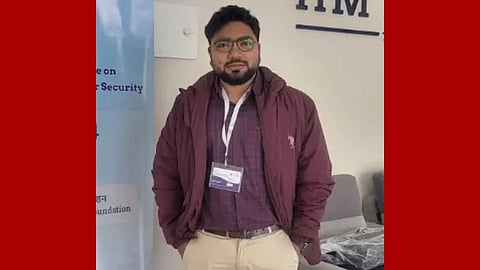
Mr Asif Iqbal
Mr Asif Iqbal, a researcher on air quality and pollution in India. He is a PhD scholar and AICTE Senior Research Fellow [NG Creatives]
Author:
Agniva Ray
Published on: 
Updated on: 

AS THE ENTIRE NORTH INDIAN heartland celebrated the auspicious occasion air quality reached its recorded worse (1760), with certain social media posts and videos showcasing the AQI level at 3000 and above. 

The numbers worsened on October 12, 2026, the daily average AQI was 109, and it reached 434 on November 4, 2026. In the morning of November 5, 2026, the live AQI reading stood at 500, which falls in the category of “Hazardous air quality.” AQI.in also mapped the data of live AQI on the night of November 8, which showcased a reading as high as 2052 at Rohini’s Sector 15. 

Given the alarming concerns related to air pollution and environmental crisis in India, NewsGram spoke to Mr Asif Iqbal, a researcher on air quality and pollution in India. He is a PhD scholar and AICTE Senior Research Fellow in the Department of Computer Science and Engineering at Jadavpur University, Kolkata.

Q

Agniva Ray (AR): India today sits at the top in air pollution levels, and the rising AQI globally. So much so, that of the top 50 cities with worst air quality or pollution, 49 are in India. Why do you think the level of pollution and quality of air is so bad? I mean is there anything specific to India, that makes it rank at the top in worst air quality? Of course there can be multiple reasons for this, and the list is not exhaustive, but what do you think are the key factors that are driving this ranking for India?

A

Mr Asif Iqbal (AI): No single source can explain the cause of air pollution in India. India’s ranking in the list of the “most polluted” cities comes from emissions across multiple sectors, a geographical arrangement that traps them in winter, and finally a plethora of rules that are implemented, but not adequately enforced by the government or the bureaucracy. 

If we look at the ranking by AQI.in, the figure that 49 of the world’s 50 most polluted cities are from India were part of the real-time ranking on November 9-10, 2026. So, this is just a snapshot of one morning, and AQI.in uses a scale that is not capped at 500 like India’s official index. 

Given that, the annual data by IQAir’s 2025 World Air Quality Report places India at the sixth position out of 143 countries with an average PM2.5 of 48.9 µg/m³. That is nearly ten times more than the World Health Organization’s guideline of 5 µg/m³. 

So, the overall picture of India’s pollution is quite bleak in terms of safety. And this situation is created by multiple sources: Vehicle emissions, coal power usage, industry and construction, road dust, crop-residue burning, household solid fuels, as well as open waste burning. Gases from these sources further react in the air to form secondary particles, which add to PM2.5— of which Delhi is a prime example.

What adds to these emissions and secondary particle formation is the geography. Across the Indo-Gangetic Plan, winter brings low wind speeds, a shallow boundary layer and stagnant air, resulting in the emissions staying near the ground. In such a situation, the pollution crosses cities, borders of states, and travels elsewhere. Thus, the issue is not a regional problem; one that a single city can solve on its own. 

Now, if we come to Delhi, there is a clear enforcement gap in place. Let us say for instance the Supreme Court judgement regarding the green firecrackers. The apex court allowed only “certified green firecrackers” in Delhi-NCR, with a timing of 6-7 a.m, and 8-10 p.m. on November 7 and 8, 2026. But we all saw what happened right. These limits were widely ignored. And the cases registered by the Delhi Police were just 200 in a city of more than 20 million people.

I am not trying to speculate on the motives and make it sound so. But, one cannot disagree that the court order was ignored at scale, and enforcements were mere tokenism. The outcome of what happened during Diwali has been documented, and it is quite clear that, whatever be the reason, the authorities chose not to enforce the law — something which is precisely their duty. 

Let me conclude the causes of India’s pollution with a research study on India’s flagship programme on clean air; the National Clean Air Programme (NCAP). The NCAP began in 2019. By January 2026, 28 of its 130 cities had no continuous monitoring station, and 40 of them had not completed a source-appointment study. So, the lacuna is at the very basic stage. One cannot curb pollution, until it has measured its intensity or traced its sources. 

The India Gate
The India Gate was almost invisible a few days before DiwaliAgniva Ray
Q

AR: As a researcher on air quality, and of course the environment in that sense, you have had the experience of noting or tracking the air quality of a lot of places. Could you elaborate on some instances of your work on noting air quality, preferably Kolkata and Delhi. I would ask you to narrate your experience and understanding of the air and pollution scenario in both these cities. What did you find out in these places during your study? Was there anything in these two cities or during your research that caught your attention in a major way?


A

AI: The main lesson that I could gather from my work is that a city’s single AQI number conceals the real conditions in which people actually breathe. My research focuses on low-cost IoT air-quality monitors and how pollution varies at the level of streets and neighborhoods. At Jadavpur University, Kolkata, we built and deployed a lost-cost monitor called PolluSense. It measures PM2.5, PM10, as well as several gases, temperature and humidity levels.  

Using that in my research, I could see how within a small area, the air quality was not uniform. Sites near busy roads, or areas with more population density and traffic showed higher particulate levels. Simultaneously, sites with more vegetation and open space were generally lower. 

So, taking a cue from my study, I have always questioned the reliability of city-wide AQI values. One reference station can describe its surroundings, but given the diversity at multiple levels, it cannot represent the situation in every street, or junctions in a city. To speak about Kolkata and Delhi, they have far fewer stations than their size demands. You would also notice something interesting; most of the monitoring stations tend to be situated in better-off areas, which keeps a lot of neighbourhoods or zones out of effective measurement. 

The case of Kolkata and Delhi is a bit different, in the sense that Delhi’s air pollution levels are much higher than that of Kolkata. A study by the Centre for Science and Environment found in 2025 that the average PM2.5 was at safer levels in Kolkata during October 1, 2024, to January 31, 2025. However, Delhi recorded a number three times higher than Kolkata. 

So, pollution for me has to be understood at two scales; at the regional scale and the street scale.


Delhi's air quality plummeted to hazardous levels post-Diwali, with AQI peaking at 1,760 in the night of November 8, 2026
Delhi's air quality plummeted to hazardous levels post-Diwali, with AQI peaking at 1,760 in the night of November 8, 2026Sumita Roy Dutta, CC BY-SA 4.0, via Wikimedia Commons
Q

AR: The season of Diwali and the winters specifically are dangerous for the North Indian cities, as the pollution levels rise sky-high. This year too you have noticed the AQI levels in Delhi, and other north Indian cities. My question to you would be, why does winter and air quality in Delhi turn so worse every year? What are the reasons for such poor air quality? I mean there are plenty of reasons being given in the media, by professionals, by politicians, of which “stubble-burning” by farmers in Punjab, Haryana and Rajasthan are cited as the major reason for such poor air quality in Delhi during the winters. My question to you would be, why is the air quality so poor in Delhi during the winters? Is it because of the farmers only? Or are there factors that lead to such devastating air quality?

A

AI: See, if we blame the farmer alone for the pollution, it would be scientifically wrong. Crop burning matters when we discuss air pollution, but for Delhi it is not the sole reason. In October and November stubble burning emits particles that harm the air quality, but Delhi’s winter crisis cannot be studied by isolating the impacts of year-round emissions. 

Winter changes the atmosphere in certain ways, and Delhi emits pollution all around the year, from vehicles, industries, construction work, road dust, as well as waste burning. In the summers, the particulate matter in the atmosphere mixes better, and it disperses. However, in the winters, low wind speeds, a shallow boundary layer, and stagnant air keeps it close to the ground. 

Adding to that is Delhi’s geographical location. It sits in the Indo-Gangetic plain, so pollution from neighbouring districts and states flows in. If we see the data from the Commission for Air Quality Management (CAQM) we would find that both local emissions and transboundary movement across the airshed contributes heavily to the pollution. A press release by CAQM on February 20, 2026, shows that there are multiple factors that dominate air quality in Delhi winters. 

For PM2.5 in winters, secondary particles contribute about 27%, transport emissions 23%, biomass or stubble burning 20%, dust particles 15%, and industrial emissions 9% respectively. 

So, to hint that stubble burning is the primary source of Delhi’s pollution during winters would be highly incorrect. In turn it is a multiplicity of sources that contribute to the existing state of Delhi’s pollution. But the real problem still lies in policy and its execution. 

If we take the case of farmers, they face real constraints. A study by the Council on Energy, Environment and Water (CEEW) of 1,478 farmers in 11 districts across Punjab found major barriers to access and affordability of residue-management machines. Over 63% of farmers using in-situ machinery rented it. Thus, blaming won’t work alone, if affordable machines, rental capacity and markets for residue are not forged. 

Q

AR: As someone who has been living in Delhi for the last 2 years, I have seen the winters in Delhi. The air quality is unbearable. There is a white-layered atmosphere around for these 2 to 3 months. I think, and I call that “Smog”. So what is that thing basically? And what is this winter pollution in Delhi? What does it contain? How harmful is it? And given the situation we are witnessing, what do you think is at stake for a city like Delhi, and its people? If the data are precise, that at the level of 300 to 400 aqi, we are actually smoking 10 to 20 cigarettes a day, where are we actually heading as a society? Basically, I am asking you to help me understand the gravity of the alarming situation we are in. How bad is it? Give a relatable example for us to understand.

A

AI: The white-grey layer that you are talking of is smog. It is a mixture of fine particles, droplets and toxic gases trapped close to the ground. So, it's not just fog, and everyone breathes it.

The word, as we know, comes from smoke plus fog. In the winter season, fog droplets mix with the pollutants, resulting in the formation of a thick, persistent haze.

However, the most harmful element is PM2.5 — particles of 2.5 micrometres or smaller. In Delhi, especially during the winters, the air contains organic matter, black carbon, sulphates, nitrates, ammonium, as well as chlorides. Furthermore, the coarser PM10 adds to the crisis. 

If we want to visualize the particles let us understand it through an example. The human hair is roughly 70 micrometres wide. So, around 30 of the largest PM2.5 particles would fit in it. So, if the particulate matter in the air is this small, it would reach our lungs, and the finest of those could even pass into our bloodstream. This is why there are a lot of respiratory infections, asthma, weakened lung capacity, heart diseases, strokes, as well as lung cancer. 

So, this is the situation we are living in, and the dangerous aspect of this entire state of affairs is that we are normalizing it. Closing schools, colleges, or office hours would not solve this issue. Children are growing up in this poor air quality. The workers who work outdoors cannot remain inside their homes, even when restrictions are imposed.

Can everyone afford air purifiers? So, the biggest concern for me at this moment is that we are normalizing it. If the clean air is something only the well-off can afford, then this does not limit itself to an environmental crisis. It is a crisis of public-health, social and economic justice, alongside the diminishing rights to a healthy life. 

A bike passes through a high pollution road
The AQI and visibility on Delhi roads on the night of Diwali[Agniva Ray]
Q

AR: What is the impact of firecrackers and peak-pollution periods on people and the environment?

A

AI: Firecrackers create a short, intense burst of toxic particles, gases and metals. It is very harmful for anyone breathing the same air. Now, during winters, when the air cannot disperse the particles with vigor, they linger on, and harm individuals who have never lit a single cracker in their life. 

The Firecrackers release fine and ultrafine particles of sulphur dioxide, nitrogen oxides, carbon monoxide and metals. As soon as they burst, it affects the eyes, nose, causes throat irritation, coughing, breathlessness, chest discomfort and even headache. Particularly, people with asthma, bronchitis, COPD or any kind of heart disease are largely impacted. 

Let me cite evidence from Indian cities. A longitudinal study of Diwali in Delhi (2019-2021) revealed that fireworks accounted for about 85% of the elemental component of PM2.5 during the festival. Similarly, in Kolkata, a 2025 study recorded festival PM2.5 at speaking 246.9 µg/m³.

The problem is that we tend to dismiss these events as temporary instances of celebration once a year. But for a child with asthma, or an older person with a heart disease , or a construction worker, even a few hours of extreme pollution is serious. 

Festivals are an important part of the Indian populace. But there is no contradiction between preserving one's cultural heritage, and keeping the environment safe, secure and sound. 

Q

AR: Finally, if this is the situation, what is the way out of this? Every political party in power, every government has made air pollution a major agenda of their governance. They claimed to erase air pollution during their rule. And for the sake of arguing, let us say that they are taking adequate measures to do so. They are putting in policy, research and steps to reduce air pollution. In this situation, what do you think is the way out? What are the policy steps, both social, political and scientific policy measures that can, in some way, put us in a better position with this air pollution and environmental crisis today?

A

AI: Given my study of air quality and pollution, and the associated interventions at the level of policy, I cannot strongly agree with your premise. The government is not really taking adequate measures, and this can be attributed to their own data. What is alarming is that the government is not admitting the crisis at hand. We need to treat clean air as a public-health duty, and not a seasonal emergency. 

Let us look at the data now. Under NCAP, only 23 of the 100 cities with adequate data met the revised target of a 40% cut in PM10. About 68% of NCAP spending went to road dust; industry and household fuels received under 1% each. India’s ambient air standards have not been revised since 2009. And finally, on Diwali night this year, the CPCB’s official averages excluded every reading above 1000 µg/m³. So, this is the condition of our environment and air pollution policy. Can we say that these are only implementation gaps? Aren’t they clear policy choices?

Now, if you ask me, I would begin by saying that it is high time that we accept the reality on ground. The first step would be to shed all political interests and admit the horrific situation on ground. Without this, no policy would ever work. 

Secondly, one needs to manage the airshed and the atmosphere, and not just Delhi. Pollution crosses borders, so there needs to be a binding framework for Delhi, Haryana, Punjab, Uttar Pradesh and Rajasthan — all under one framework with binding targets and specified responsibilities. 

Thirdly, we can focus on cutting emissions at source, around the year. This could include a change in the transport policy that focuses on green, sustainable sources of energy round the year, instead of a seasonal policy. This should be complemented with a better management policy for industrial and construction work, where emissions limits are set, independent audits are made, and penalties imposed. Furthermore, a better management of waste disposal. Open burnings should be stopped, and new waste management technologies should be adopted. 

Fourth, the farmers ought to be put at the centre of such policy proposals. We need to provide them with a fair transition from existing burning practices. They should be provided with affordable residue management machineries,  government-supervised machine rental centres, markets for straw, and also an incentive to diversify their crop cultivation.  Mere bans would not suffice the gravitas of the problem we are dealing with. 

Finally, air pollution and the environment should be treated as connected to public health. Periodic audits of the pollution levels by state and districts should be published as an accountability mechanism. 

NewsGram thanks Mr Asif Iqbal for his time and insights.


[OG/AR/RS]

Mr Asif Iqbal
Delhi chokes at 1700+ AQI as Diwali fever takes on the National Capital; yearlong moderate air quality worsens within days

Subscribe to our channels on YouTube and WhatsApp

Download our app on Play Store