
- HOME
- OPINION
- ON GROUND
- INTERVIEW
- Neta Profile
- Editor's Pick
- INDIA
- NewsGram USA
- WORLD
- न्यूजग्राम
- POLITICS
- ENTERTAINMENT
- CULTURE
- LIFESTYLE
- ECONOMY
- SPORTS
- Jobs / Internships
- Misc.
- NewsGram Exclusive
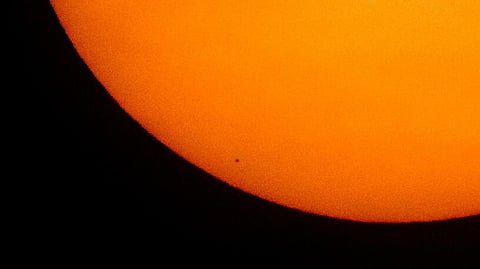
Stargazers witnessed a rare celestial event on Monday, as Mercury passed directly across the face of the sun.NASA
Mercury, the solar system's smallest planet and closest to the sun, won't make the next such transit until 2032.
The tiny planet traveled directly between Earth and the sun on Monday, creating a perfect alignment.
The best views of the event took place in North and South America, while viewers in Europe and Africa were able to see part of Mercury's passage.

Mercury, the solar system's smallest planet and closest to the sun, won't make the next such transit until 2032. Pixabay
Stargazers had to use solar-filtered binoculars and telescopes to spot Mercury, which appeared as a small black dot on the face of the sun.
For those who could not see the event directly, the U.S. Space agency, NASA, live-streamed images of the celestial transit, which took about five and a half hours. (VOA)
Subscribe to our channels on YouTube and WhatsApp
Download our app on Play Store
