
- HOME
- OPINION
- ON GROUND
- INTERVIEW
- Neta Profile
- Editor's Pick
- INDIA
- NewsGram USA
- WORLD
- न्यूजग्राम
- POLITICS
- ENTERTAINMENT
- CULTURE
- LIFESTYLE
- ECONOMY
- SPORTS
- Jobs / Internships
- Misc.
- NewsGram Exclusive
By- Khushi Bisht
The size of the Pacific Ocean is staggering. It is larger than the whole of land surfaces altogether and encompasses roughly one-third of the planet's surface. With the exception of some small yet isolated islands, the area is mainly uninhabited, which implies that if you get lost here, there's a high possibility no one will ever locate you, which makes the tale of Jose Salvador Alvarenga's survival even more intriguing.
He now maintains the world record for the longest solitary surviving, stranded at sea and no one is likely to break it. Alvarenga was adrift but somehow, he succeeded in surviving 438 days in the Pacific, traveling nearly 6,700 miles.
But, how did he survive lonely and adrift in the Pacific? The response to this question can be found at the beginning of his misadventure in 2012.
Alvarenga is a skilled Mexican fisherman, and on November 17, 2012, he and another fisherman named Ezequiel Córdoba sailed on their small canoe from the little Mexican Pacific coast hamlet of Costa Azul. They only intended to fish for 30-hours, therefore their boat was rather tiny and unprepared for the ordeal that lay ahead.

Even though they were aware that a storm was approaching, they chose to take a chance and went 120 kilometers away from shore. A storm attacked their sailboat soon after they left the coast. The ship was blown off route, and the motor and most of the equipment aboard were destroyed. Before the radio failed, Alvarenga somehow managed to communicate their situation to the supervisor, but he couldn't do anything.
When the storm struck and threatened to wreck their canoe, the two fishermen cut their fishing nets and threw all they had caught, as well as the majority of their equipment, to make them more maneuverable. They were close to the shore so they sped through the storm in a frantic attempt to return.
However, terrible fortune struck them when their engine stopped and an extremely high storm pushed their boat back out into the ocean.
The destructive storm continued for five days and nights. Alvarenga and Córdoba had no clue as to where they were or how to go home when the storm stopped. Their supervisor organized a search team to hunt for them for days, but as their boat sailed far out into the Pacific, it became increasingly difficult to locate them. As a result, they were compelled to quit after only five days.
Their sailboat was so tiny, and they were encircled by nothing other than a wide ocean in every way. They were well aware that they would almost certainly never be seen from the aircraft. As a result, they were compelled to feed themselves by catching little fishes and other marine creatures that flew over their canoe. It's obvious to see how someone may go mad in these circumstances.
They floated for months, subsisting on rainwater and capturing marine creatures but Alvarenga's friend gave up all hope after 4 months. He quit eating and died of starvation. Alvarenga admits that he contemplated quitting as well, but he persisted. Alvarenga was suddenly lonely and stranded in the midst of nothingness, without any other human beings visible as far as the eye could see. He was a tiny spot in the vast Pacific. He attempted to signal every vessel he spotted, but no one noticed him.
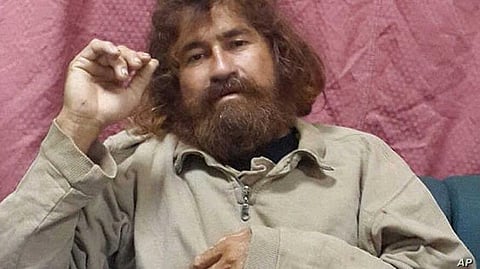
Alvarenga was eventually saved and brought back to his native country of El Salvador. Voice of America
ALSO READ: Plato's "Lost City Of Atlantis"
Eleven months passed and Alvarenga had traveled 8,000 kilometers across the huge Pacific in his tiny little canoe. His clothing was ripped, and that the only thing he had to cover himself from the hot sun was a sweatshirt. However, in 2014, he noticed a coconut floating about his sailboat. He sensed the shore was close, and after a little more floating, he came upon an isolated island. He finally got out of his canoe and swam ashore, where he spotted a home and knocked on the door, getting acquainted with the very first human he had seen since leaving his town in Mexico 438 days earlier.
Salvador Alvarenga was eventually saved and brought back to his native country of El Salvador. He was treated at a hospital and made a complete recovery there. He was on the verge of losing his mind for 438 days. According to Alvarenga, "You only get one life, so make the most of it."
Subscribe to our channels on YouTube and WhatsApp
Download our app on Play Store
