
- HOME
- OPINION
- ON GROUND
- INTERVIEW
- Neta Profile
- Editor's Pick
- INDIA
- NewsGram USA
- WORLD
- न्यूजग्राम
- POLITICS
- ENTERTAINMENT
- CULTURE
- LIFESTYLE
- ECONOMY
- SPORTS
- Jobs / Internships
- Misc.
- NewsGram Exclusive

Key Points
The Supreme Court of India observed that courts must be cautious in declaring long-held religious beliefs of millions as erroneous.
Judges raised concerns over judicial overreach and questioned the validity of PILs filed by non-adherents in religious matters.
Senior Advocate Abhishek Manu Singhvi argued that courts should not apply external standards to judge religious practices, criticising the Essential Religious Practices test.
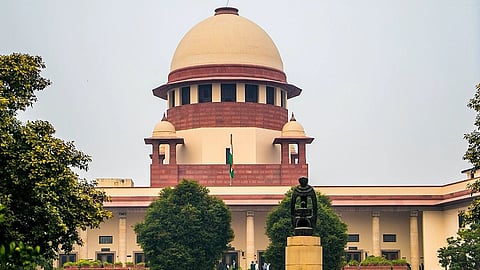
On Wednesday, April 15, the Supreme Court began the fourth day of the proceedings in relation to the Sabarimala reference case. The nine-judge bench hearing the matter held that a religion cannot be stripped of its essential practices in the name of social reform. Calling it one of the ‘hardest things’ to declare the beliefs of millions of people as wrong or erroneous, the court weighed the scope of the judiciary in matters pertaining to religion and its practices during the hearing.
A nine-judge Constitution Bench, comprising Chief Justice of India (CJI) Surya Kant along with Justice BV Nagarathna, Justice MM Sundresh, Justice Ahsanuddin Amanullah, Justice Aravind Kumar, Justice Augustine George Masih, Justice Prasanna B Varale, Justice R Mahadevan and Justice Joymalya, is hearing the Sabarimala reference case. This stems from the 2018 Supreme Court verdict that allowed women of all ages to enter the Sabarimala temple, which had traditionally restricted entry of women aged 10-50. The matter was later referred to a larger bench to settle bigger questions on religious rights. The maiden hearing of this matter was held on April 7th. 2026.
Justice Sundresh questioned whether courts can pass judgment and decision upon such matters, without the consultation of the millions of people who follow the faith. Echoing similar concerns, Justice Nagarathna remarked that such Public Interests Litigations (PILs) should not be entertained wherein the petitioner is only an interloper. "We cannot hollow out religion in the name of social welfare reform," Justice Nagarathna added.
Senior Advocate Abhishek Manu Singhvi, appearing on behalf of the Travancore Devaswom Board (TBD), questioned the “essential religious doctrine” in front of the bench. He argued that the court cannot test religious matters based on external external standards.
During the hearing, Senior Advocate Singhvi made several key remarks:
Courts should not judge or test religious beliefs using external standards. The Court’s role is only to check if a belief genuinely exists within the community, not to decide its importance or correctness.
He criticised the “Essential Religious Practices” test used by courts in the past, calling it flawed. Once a practice is clearly part of a religion, courts should not interfere by calling it unnecessary or irrational.
On PILs in religious matters: Singhvi said courts should be very careful. Such petitions by non-believers should face a much higher threshold (“ten times higher”). However, in extreme cases involving serious threats to public order, health, or morality, the Court may intervene.
On Sabarimala specifically: The temple worships Lord Ayyappa as a naisthika brahmachari (eternal celibate). The restriction on women of certain age is linked to preserving this unique character of the deity and is not a general ban on women. Women can worship Ayyappa in other temples.
See also: UCC not against any religion, aims at equal rights: Gujarat Deputy CM
The bench expressed concern over courts entering religious domains too freely and emphasised the need to respect the faith of millions.
The hearing will continue on 16th April, 2026, as the Supreme Court examines the balance between religious freedom and social reform.
Suggested reading:
Subscribe to our channels on YouTube and WhatsApp
Download our app on Play Store

