
- HOME
- OPINION
- ON GROUND
- INTERVIEW
- Neta Profile
- Editor's Pick
- INDIA
- NewsGram USA
- WORLD
- न्यूजग्राम
- POLITICS
- ENTERTAINMENT
- CULTURE
- LIFESTYLE
- ECONOMY
- SPORTS
- Jobs / Internships
- Misc.
- NewsGram Exclusive

AI generated summary, newsroom-reviewed
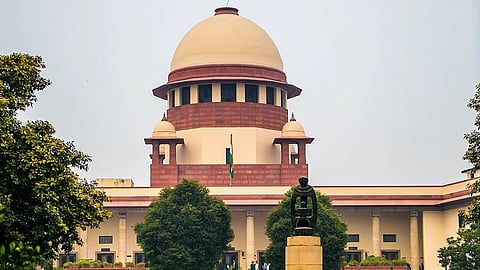
On Thursday 7th April 2026, the 13th day of hearing pertaining to the momentous Sabrarimala Reference Case commenced. The Supreme Court’s nine-judge bench observed that the denominational custom of Female Genital Mutilation (FGM) is a violation of a girl’s health and dignity, and constitutes as a crime under the Protection of Children from Sexual Offenses (POCSO) Act.
The apex court also held that that court intervening in matters of religion and religious practices could lead to disruption of religions, and therefore must be dealt with caution and careful consideration.
FGM stands for Female Genital Mutilation, an age-old practice happening across communities in Africa, Middle East, and Asia. In India, the Dawoodi Bohra community is the predominant faction undertaking the practice, citing it as an essential denominational practice. FGM involves the partial or complete removal of external female genitalial, or inflicting other injuries to female genital organs for religious, cultural, or non-medical reasons.
See also: ‘Why File This PIL?’: Supreme Court Questions Lawyers’ Body Part in Sabarimala Case
While the Sabarimala case is, essentially, related to the 2018 supreme court verdict that allowed women of menstruating age (10-50) entry into Lord Ayyappa’s Sabarimala Temple, the apex court has also clubbed together other matters pertaining to issues of “essential religious practices” (ERP), gender exclusion, and constitutional morality that affects other faiths as well.
This includes entry of women into mosques, entry of Parsi women into fire temple if they married outside their community, and the practice of Female Genital Mutilation. The verdict of the Sabaraimala Reference case will have an impact on these issues as well.
Senior advocate Sidharth Luthra, appearing on behalf of petitioner Masooma Ranalvi, argued that as FGM is perfomed on girls as young as seven years of old, the practice is in no way consensual, and parents decide against raising dissent amidst fear of getting ex-communicated from the community.
Luthra further agued that the fear of ex-communication, which may involve social boycott to cutting of social and economic ties with other community members, prohibits many from challaning the FGM custom.
Expressing her astonishment, Justice Nagathana remarked that she is surprised that FGM still remains unbanned and without being under official jurisdiction of any government law, even though the government is constitutionally mandated to usher in social and religious reforms through legislation.
Continuing his arguments, Advocate Luthra said that this matter is no longer related to religious autonomy and instead relates to constitutional and criminal scrutiny. "Where a child is subjected to physical pain, bodily alteration, coercive participation, or mental suffering in the name of religious observance, the matter ceases to remain one of protected religious autonomy and enters the domain of constitutional and criminal scrutiny," he argued before the bench.
"No denomination can claim constitutional protection for a practice that causes harm to minors whose parents and whose actions follow that religious denomination and may be the perpetrators or complicit in the harm. Judicial intervention in such cases is not interference with religion but enforcement of the constitutional duty to protect the dignity, bodily integrity, and future of every child," he added.
See also: Sabarimala Reference Case: Supreme Court Asks— Who Really Has the Rights to Enter a Temple?
Additionally, Justice Ahsaanuddin Amanullah called the practice an ‘aberration to physical autonomy.’ “Mutilation, the word itself means that it doesn’t serve any purpose. It is like a contortion to a human anatomy…This is pure and pure aberration to a normal physical anatomy.’ he remarked.
Justice BV Nagarathna remarked though India is a ‘democratic sovereign republic’, it remains a civilisation of ‘many diversities and pluralities.’ She further added that in the nation, religion is something that is dear and deeply intimate to many.
“If everybody starts questioning certain religious practices or matters of religion before a Constitutional Court, then what happens to this civilisation where religion is so intimately connected with Indian society? There will be hundreds of petitions questioning this right, that right, opening of temples, closure of temples... we are very, very conscious of this,” said Justice BV Nagarathna.
The nine-judge bench headed by Chief Justice of India Surya Kant, also includes Justices BV Nagarathna, MM Sundresh, Ahsanuddin Amanullah, Aravind Kumar, Augustine George Masih, Prasanna B Varale, R Mahadevan and Joymalya Bagchi.
The hearing concluded without any firm verdict. The next hearing of the case is scheduled for Tuesday, 12th May, 2026.
Suggested reading:
Subscribe to our channels on YouTube and WhatsApp
Download our app on Play Store

