
- HOME
- OPINION
- ON GROUND
- INTERVIEW
- Neta Profile
- Editor's Pick
- INDIA
- NewsGram USA
- WORLD
- न्यूजग्राम
- POLITICS
- ENTERTAINMENT
- CULTURE
- LIFESTYLE
- ECONOMY
- SPORTS
- Jobs / Internships
- Misc.
- NewsGram Exclusive

Key Points
The Supreme Court held that customs duty on electricity supplied from an SEZ to the domestic tariff area has no legal basis.
The ruling sets aside a 2019 Gujarat High Court judgment that had denied relief to Adani Power.
The court ordered refunds of duty collected for a defined period and barred further demands under the same levy.
The Supreme Court on Monday, 5 January 2026, granted relief to Adani Power Ltd. by holding that customs duty cannot be levied on electricity supplied from a Special Economic Zone (SEZ) to the Domestic Tariff Area (DTA). The judgment set aside a 2019 ruling of the Gujarat High Court and relieved the company of the duty imposed on power generated at its Mundra plant in Gujarat.
A bench of Justices Aravind Kumar and NV Anjaria ruled that the levy lacked statutory authority, meaning it was not supported by any clear provision in law. The court directed the jurisdictional Commissioner of Customs to verify Adani Power’s claim and issue refunds within eight weeks. It also cautioned authorities against raising “hyper technical objections” that could undermine the relief granted.
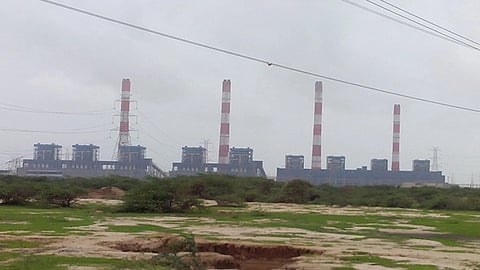
Adani Power operates a coal based thermal power plant within the Mundra Special Economic Zone in Gujarat’s Kutch district. The energy plant has an installed capacity of about 4,620MW and supplies electricity under long term power purchase agreements to distribution companies in Gujarat and Haryana, apart from meeting the power needs of the SEZ itself.
At the heart of the dispute was whether electricity generated inside an SEZ and supplied to the DTA – which is any area outside the SEZ – can be treated as an imported good and subjected to customs duty. Customs duty is typically levied on goods imported into India, this, however, does not apply to electricity.
The controversy began in February 2010, when the Centre amended customs rules to impose duty on electricity supplied from SEZs to the domestic area. The amendment also sought to apply the levy retrospectively from June 2009. Adani Power challenged this move, leading to a 2015 judgment of the Gujarat High Court.
In July 2015, the High Court struck down part of the levy framework and held that Adani Power was entitled to exemption from customs duty on electricity supplied from the SEZ to the domestic area for a limited period between June 2009 and September 2010. The SC later declined to interfere with that ruling.
After the 2015 decision, SEZ authorities maintained that the exemption applied only to that specific window and that customs duty remained payable on electricity supplied after September 2010. Adani Power challenged this interpretation and returned to the Gujarat High Court in 2016, seeking a declaration that it had no duty liability beyond September 2010 and asking for a refund of amounts already paid.
In June 2019, the High Court rejected Adani’s plea. It held that the earlier relief was consciously restricted to a defined period and could not be extended. The court also observed that later levy regimes had not been independently challenged and warned that extending the exemption could result in a double benefit for the company.
The SC has now overturned that reasoning. It held that there was no meaningful distinction between the levy struck down in 2015 and the levy sought to be enforced later through subsequent notifications.
“In our view, the High Court, in its judgment of 2019, fell into error in accepting the submission of the Union that the later notifications continued to operate merely because they were not specifically set aside in the decision of 2015,” the bench said. Once a levy has been declared without authority of law, the court added, it cannot be revived through similar or successive notifications unless Parliament provides a fresh statutory basis.
The court stressed that judicial decisions are binding and not advisory. It said administrative authorities were required to align their conduct with the 2015 judgment and should have extended its benefit uniformly until the law was changed by legislation.
The Bench declared that the levy of customs duty on electricity supplied by Adani Power from its SEZ unit to the DTA between September 16, 2010 and February 15, 2016 was without authority of law. It ordered refunds of amounts deposited during this period and directed that no further demands be enforced for the same levy.
The ruling reinforces the constitutional principle under Article 265 that no tax can be imposed without the authority of law, and is likely to have wider implications for SEZ units supplying goods or services to the domestic market.
[DS]
Suggested Reading:
Subscribe to our channels on YouTube and WhatsApp
Download our app on Play Store

