
- HOME
- OPINION
- ON GROUND
- INTERVIEW
- Neta Profile
- Editor's Pick
- INDIA
- NewsGram USA
- WORLD
- न्यूजग्राम
- POLITICS
- ENTERTAINMENT
- CULTURE
- LIFESTYLE
- ECONOMY
- SPORTS
- Jobs / Internships
- Misc.
- NewsGram Exclusive

The Muslim Brotherhood, founded in Egypt in 1928, is banned in several countries
The ban was due to concerns over extremism and political unrest.
India has never banned the group because it has no active presence or organisational structure in the country
Have you ever heard of the Muslim Brotherhood? If you follow international news, you’ve likely come across it many times — usually when a country announces a ban on the organisation or cracks down on groups linked to it. But what exactly is the Muslim Brotherhood, and what is its core idea?
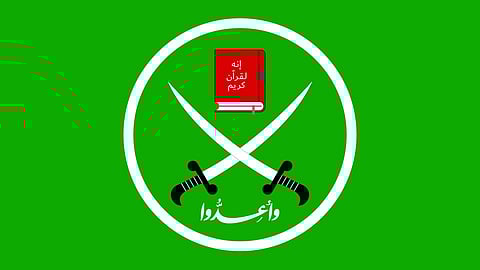
The Muslim Brotherhood is a major Islamic religiopolitical organisation founded in Egypt in 1928. Its goal is to shape society according to Islamic laws and principles. Over the decades, it has become one of the most influential Islamist movements in the Middle East. Many Muslim-majority countries have outlawed the organisation due to concerns over extremism, political instability, or national security. Despite the Muslim Brotherhood being banned in several nations across the Middle East and beyond, India has never taken a similar step.
The Muslim Brotherhood (MB) was founded by Hassan al-Banna, an Egyptian teacher and Islamic scholar. He started the organisation after the fall of the Ottoman Empire, believing that Muslim societies could become stronger and more united by following Islamic morals, values, and laws. The group is a Sunni Islamist organisation that promotes the idea of building society around Islamic principles.
After it was formed, the Muslim Brotherhood spread quickly across Egypt and later to countries like Sudan, Syria, Palestine, Lebanon, and parts of North Africa. Within a few years, it attracted hundreds of thousands of followers. Over time, it grew into a large pan-Islamist movement that aimed to push back against Western influence and support the idea of Islamic-style governance. Although many of its supporters participate peacefully in politics and social work, some factions have taken a more hardline or militant path.
In Egypt, the current leader of the Muslim Brotherhood is Mohamed Badie, who became the organisation’s eighth “General Guide” in 2010. He is currently serving multiple life sentences for allegedly planning violent activities after the 2013 military coup that removed President Mohamed Morsi. Several of the Brotherhood’s top leaders are also in prison with him.
In its early years, the Muslim Brotherhood focused on education and social services. But by the 1930s and 1940s, it began taking a strong political role. An armed wing, formed in the early 1940s, was linked to bombings and political killings, which even the founder al-Banna struggled to control.
Governments across the Middle East have long viewed the Muslim Brotherhood as a threat because it can mobilise large numbers of supporters and influence political systems. The group insists it has renounced violence and now prefers political participation. However, many countries disagree.
Many countries have banned the Muslim Brotherhood, citing national security concerns and fears of political instability. Egypt outlawed the group in 2013 after the military removed President Mohamed Morsi, a Muslim Brotherhood leader and the country’s first democratically elected president. Under President Abdel Fattah al-Sisi, Egypt has imprisoned most of the organisation’s top leaders, including Mohamed Badie, who is serving multiple life sentences for allegedly planning unrest.
Several other nations also classify the Muslim Brotherhood as a terrorist organisation. These include Saudi Arabia, the United Arab Emirates (UAE), Russia, and Syria. Jordan, which had tolerated the group for decades and where it enjoyed strong grassroots support, fully banned it in April 2025, shutting down its offices and seizing its assets.
Even some Western countries have taken steps against the Brotherhood. In France, President Emmanuel Macron ordered his government to prepare plans to limit the group’s influence and curb the spread of political Islam. In the United States, the Trump administration began the process of designating certain Muslim Brotherhood chapters as Foreign Terrorist Organisations, which would lead to sanctions.
More recently, in December 2025, Florida Governor Ron DeSantis declared the Muslim Brotherhood and the Council on American-Islamic Relations (CAIR) as “foreign terrorist organisations.” The state of Texas had taken a similar action earlier.
Today, the Muslim Brotherhood is banned or restricted in many countries — especially in the Middle East — because governments believe its activities could threaten political stability or national security.
The Muslim Brotherhood does not operate openly or prominently in India. While some of its ideas may resonate with certain global Islamic movements, there is no Indian chapter, no political party, and no organised network linked to it. India has never viewed the Muslim Brotherhood as a direct security threat that requires a ban. At the same time, a few Indian Islamic organisations are sometimes seen as ideologically similar, but they are rooted in India’s own history and not connected to the Muslim Brotherhood’s Egyptian origins.
In Indian politics, debates usually revolve around communal relations, secularism, minority rights, and domestic political representation. Middle Eastern Islamist groups, including the Muslim Brotherhood, rarely feature in these discussions. When the Muslim Brotherhood does appear in Indian conversations, it is usually as a comparison or rhetorical reference, not because of any real activity in India.
A few Indian organisations — like Jamaat-e-Islami Hind (JIH) or the banned Popular Front of India (PFI) — may share broad ideological themes such as Islamic social reform or political mobilisation. But none of these groups are branches of the Muslim Brotherhood, and their evolution is tied to India’s social and political environment, not Egypt.
A major controversy recently brought the Muslim Brotherhood into Indian political debate. Rahul Gandhi, India’s Leader of the Opposition and one of the most prominent figures in Indian politics, compared the Rashtriya Swayamsevak Sangh (RSS) to the Muslim Brotherhood during a talk at Chatham House in London. He argued that the RSS operates like a “secret society” that seeks to influence and control key institutions of the country — similar, in his view, to the Brotherhood’s style of functioning abroad. Rahul Gandhi said, “The RSS is a fundamentalist and fascist organisation that has basically captured pretty much all of India’s institutions.”
His remarks triggered a strong reaction from the Bharatiya Janata Party (BJP), which draws ideological inspiration from the RSS. The RSS is a right-wing Hindutva volunteer organisation founded in 1925, and it plays a major role in shaping the BJP’s worldview. BJP leader Ravi Shankar Prasad sharply criticised Rahul Gandhi, accusing him of “insulting a nationalist organisation abroad” and claiming that Gandhi was being influenced by anarchist and extremist ideologies.
In the broader debate, the Muslim Brotherhood continues to remain a controversial organisation globally, viewed differently across countries — praised by some as a social movement and condemned by others as a destabilising force.
[Rh]
Suggested Reading:
Subscribe to our channels on YouTube and WhatsApp
Download our app on Play Store


.jpg)