
- HOME
- OPINION
- ON GROUND
- INTERVIEW
- Neta Profile
- Editor's Pick
- INDIA
- NewsGram USA
- WORLD
- न्यूजग्राम
- POLITICS
- ENTERTAINMENT
- CULTURE
- LIFESTYLE
- ECONOMY
- SPORTS
- Jobs / Internships
- Misc.
- NewsGram Exclusive
This article was originally published in Radio Free Europe/Radio Liberty (RFE/RL). Read the original article.
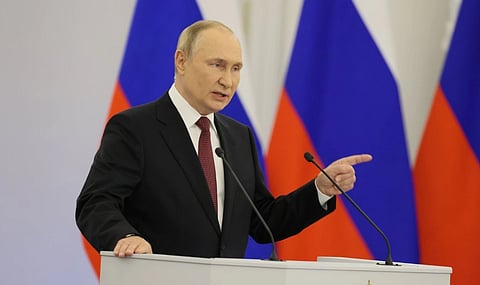
Russian President Vladimir Putin acknowledged what outside experts, many regional officials, and everyday citizens have already noticed: Russia is facing energy shortages, causing major problems for citizens and industries.
"You are well aware that problems for drivers and for businesses persist," Putin said on June 28. "Unfortunately, there are still lines at gas stations."
"We have to reduce to a minimum the impact of terrorist attacks on our civilian targets and infrastructure," apparently referring to Ukrainian drone strikes deep inside Russian territory against crucial energy infrastructure.
The Ukrainian drone strikes have targeted oil terminals, refineries, and pipelines. At least 17 regions have imposed mandatory restrictions on gasoline and diesel sales, and dozens of others reporting shortages or restrictions by private fuel companies.
Putin made his latest remarks at a meeting of senior officials of the ruling United Russia party -- Putin's instrument of power across the country -- and made similar comments in an interview published shortly thereafter by the Kremlin, even as he attempted to downplay the severity of the crisis.
In the interview -- set to be broadcast later on state TV -- Putin said: "As for strikes against critical infrastructure in general, and energy infrastructure in particular, of course these attacks on our infrastructure facilities create problems, that's obvious."
"Right now, we're observing a certain shortage, but it's not critical," he added.
See Also: Putin's 'War Trap' And The Potential Price Of Peace
Videos posted online have depicted angry drivers lining up at gasoline stations, often engaging in heated arguments with other drivers.
Putin called for measures to ensure supplies for the farming sector, and authorities were considering a ban on diesel exports in the normally energy rich country.
"The need to introduce a complete ban on the export of diesel fuel is being considered," he told the meeting
Putin said the country was now utilizing gasoline reserves, and he vowed that July production levels should be above those recorded in June.
"We need to make every effort to ensure that all seasonal fuel supply schedules are maintained for agro-industrial enterprises, because the harvest depends on it," he said.
Hours before Putin’s speech, a Ukrainian drone strike killed one person in sparked a fire in a refinery southern Russia's Krasnodar region, regional Governor Veniamin Kondratyev wrote on Telegram.
Ukrainian President Volodymyr Zelenskyy called the strike part of the "operations that weaken Russia's ability to wage this war."
"The Slavyansk oil refinery in the Krasnodar region was hit -- about 300 kilometers from the front line. We also reached a refinery in the Yaroslavl region, approximately 700 kilometers from our border," Zelensky wrote on X.
On June 25, Zelenskyy said he had approved a 40-day military operation by the country's security service to "influence the aggressor state in order to push for an end to the war," as US-backed mediation efforts appear to be faltering.
In the interview, Putin said he expects a team of US negotiators will travel to Moscow once Washington has reached an agreement with Iran over the Middle East war.
"We are ready to continue negotiations and discuss all the details," said Putin, who has so far failed to move off his hard-line demands despite the hardships faced by Russian forces since the start of his February 2022 full-scale invasion of Ukraine.
Copyright (c)2025 RFE/RL, Inc. Used with the permission of Radio Free Europe/Radio Liberty
[VS]
Suggested Reading:
Subscribe to our channels on YouTube and WhatsApp
Download our app on Play Store


