
- HOME
- OPINION
- ON GROUND
- INTERVIEW
- Neta Profile
- Editor's Pick
- INDIA
- NewsGram USA
- WORLD
- न्यूजग्राम
- POLITICS
- ENTERTAINMENT
- CULTURE
- LIFESTYLE
- ECONOMY
- SPORTS
- Jobs / Internships
- Misc.
- NewsGram Exclusive
Nepal isn't short on trekking companies. Open any search page and you'll find dozens of outfits promising the trip of a lifetime, often at very similar prices, with very similar-sounding itineraries. The problem isn't finding an agency — it's finding one that actually understands what happens above 4,000 meters: how to pace an ascent, when to hold a rest day, how permits and porters and teahouse bookings all need to line up, and what to do when the weather in the Khumbu decides not to cooperate.
Most people land on two names when they start planning a Himalayan trek: the Everest Base Camp Trek and the Annapurna Base Camp Trek. Both are bucket-list routes, both sit in Nepal's high mountains, and both get lumped together in comparison articles as if they're interchangeable. They're not. A good trekking agency in Nepal does more than sell you a package — it should be the difference between a trek that unfolds smoothly and one where small logistical gaps turn into real problems at altitude. Agencies like Adventure Great Himalaya, which work with these routes regularly, tend to know the small details that matter: which teahouses fill up in October, how a guide reads a change in cloud cover, what a realistic acclimatization schedule actually looks like versus one that's just squeezed to fit a shorter itinerary.
This guide walks through both treks — routes, difficulty, timing, accommodation, permits — and what separates a trekking operator worth booking with from one that's just selling a name.
There's a difference between booking a trek and actually being supported through one. Booking is the easy part — you pick dates, pay a deposit, get a confirmation email. Support is everything that happens after that: a licensed trekking guide who knows the trail conditions this week, not last season; a porter service that's organized properly so your gear isn't sitting in the wrong village; permits sorted before you land in Kathmandu instead of scrambled together the morning you're meant to fly to Lukla.
A specialist trekking agency handles route planning around realistic walking distances, coordinates guides and porters who actually know the region, and builds in acclimatization days rather than treating them as optional extras. They also deal with the stuff nobody likes thinking about — a flight delay out of Lukla, a trail closed by weather, a client who isn't handling the altitude well. Local knowledge counts for a lot here; someone who treks the Khumbu or the Annapurna Sanctuary every season notices things a first-timer with a spreadsheet itinerary won't.
See also: Ultimate Leh Ladakh Travel Guide: Choosing Between a Road Trip and a Bike Expedition
Price matters, sure, but the cheapest package on the page is rarely the best value once you compare what's actually included. Ask what you're getting, not just what you're paying, and pay attention to how clearly an agency communicates before you've even arrived in Nepal. That conversation tells you a lot about how they'll handle things once you're on the trail.
The Everest Base camp Trek starts, for almost everyone, with a short and famously hair-raising flight into Lukla. From there the trail climbs steadily through the Khumbu — Phakding, then Namche Bazaar, the unofficial capital of the region and a good spot to catch your breath both literally and figuratively. Beyond Namche the trail passes Tengboche, home to one of the most recognizable monasteries in the Himalayas, before continuing on through Dingboche and Lobuche toward Gorak Shep, the last settlement before Everest Base Camp itself.
What makes this trek memorable isn't a single viewpoint — it's the way everything shifts as you climb. Forests give way to open, rocky valleys. Villages get smaller and more sparse. The air thins noticeably. Prayer flags and mani walls mark the trail the whole way up, and Sherpa culture is woven through every stop, not just tacked on for tourists.
This isn't a walk in the park, and it shouldn't be treated like one. EBC tops out well above 5,000 meters at Kalapatthar, and altitude is the real challenge here, more than raw fitness. A sensible itinerary builds in acclimatization days at Namche and Dingboche rather than rushing straight up, because pushing too fast is exactly how people end up with headaches, nausea, or worse. None of this is meant to scare anyone off — thousands complete this trek every year — but it does mean respecting the mountain's pace instead of your own.
Spring and autumn are the two windows most trekkers aim for, when skies tend to be clearer and trails more settled. Accommodation is teahouse-style throughout — simple rooms, shared bathrooms once you're higher up, and food that gets more basic (and pricier) the further you climb. It's comfortable enough, just don't expect luxury at 4,900 meters.
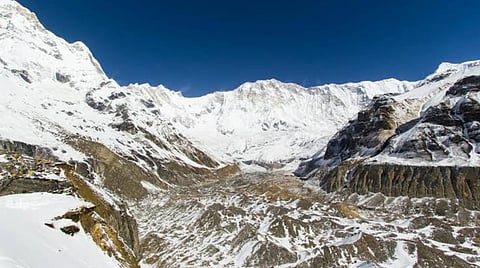
If EBC is the classic high-altitude pilgrimage, the Annapurna Base Camp Trek feels more like a journey through changing worlds. Starting from Pokhara, the trail winds through terraced farmland, dense rhododendron forest, and river valleys before climbing into the Annapurna Sanctuary itself. Villages like Ghandruk and Chhomrong are highlights in their own right — not just stopovers — with their stone houses and mountain backdrops. As you push higher, the trees thin out and Machapuchare, the fishtail-shaped peak that dominates the skyline, stays in view for much of the final approach to Annapurna Base Camp.
ABC is often described as more approachable than EBC, and in some ways it is — the altitude ceiling is lower, and the trek can be done in less time. But don't mistake that for easy. There are long stretches of stone steps, steep ascents and descents back to back, and weather that can turn quickly in the Sanctuary. Fitness still matters, even on a shorter itinerary; several consecutive days of climbing take a toll regardless of the final altitude.
Teahouses along this route tend to feel a bit more village-oriented, especially in the lower sections where you're still passing through working farmland and settled communities. Trekkers who want dramatic mountain views without committing to as many days at extreme altitude often lean toward ABC, and it's a genuinely strong choice on its own merits — not just a smaller version of Everest.
Pick EBC if the pull is Everest itself — the name, the history, the high-altitude test of it. Pick ABC if you want a slightly more compact trip with equally dramatic scenery and a stronger sense of moving through village life along the way. Neither route should be chosen purely because someone called it "the easy one" — both demand respect, just in different ways.
Before handing over a deposit, get specific about what's actually in the package. A solid trekking package inclusions list usually covers your guide, porter support, teahouse accommodation, meals on the trail, permits, and a clear day-by-day itinerary. Some agencies also handle Kathmandu arrival logistics or domestic flights to Lukla or Pokhara — others don't, and that's fine as long as it's spelled out.
What trips people up is the gap between inclusions and exclusions. International flights, travel insurance, tips, and personal gear are almost always separate, but the wording on some websites makes that easy to miss. Don't compare two agencies on headline price alone — compare what you're getting for it. It's worth asking directly about guide-to-trekker ratios, how much experience your guide actually has, what happens if you need to cancel or shift dates, and whether emergency evacuation support is part of the deal or something you'd need to arrange separately.
Spring (roughly March to May) and autumn (September to November) are the two seasons most trekkers point to for both routes, and for good reason — visibility tends to be better, trails are more settled, and temperatures are manageable even at altitude. Autumn especially draws a lot of trekkers thanks to typically stable weather right after the monsoon clears out.
That said, "best" depends a bit on what you're after. Spring brings rhododendrons in bloom on the Annapurna side, while autumn skies are often the clearest of the year. Winter is possible on both routes but comes with serious cold at higher elevations, and monsoon season (June to August) brings rain, leeches on the lower trails, and clouds that can block mountain views for days. Even in the popular months, though, mountain weather shifts fast — a clear morning doesn't guarantee a clear afternoon, so preparation matters no matter when you go.
Look for a clear itinerary with realistic daily walking distances — not one padded with extra rest days to look cautious, and not one so tight it leaves no room for weather delays. Costs and inclusions should be laid out plainly, guides should have real, verifiable experience, and permits should be handled properly rather than left for you to sort out last minute. Ask about emergency and evacuation procedures specifically, and check recent, independent reviews rather than just the testimonials on the agency's own site. Good communication before the trip is often a decent preview of how they'll handle things once you're on the trail, and flexibility matters too — trekking conditions change, and an agency that can adjust plans on short notice is worth more than one locked into a rigid schedule.
A few worth asking directly: Who exactly will be my guide, and what's their experience on this route? What's actually included in the price, and what isn't? How are acclimatization days handled if someone in the group is struggling? What happens if the itinerary needs to change because of weather or trail conditions? And what should I arrange myself before arriving in Nepal, versus what the agency takes care of?
Preparation for either trek really starts before you land in Nepal. Regular walking or hiking, especially on hills or stairs, helps more than most people expect — both routes involve consecutive days of ascent and descent that catch unprepared trekkers off guard.
On the gear side, keep it practical rather than exhaustive: broken-in hiking boots, a layering system that handles both cold mornings and warmer midday sun, rain protection, a decent daypack, a reliable hydration setup, and sun protection for the higher, thinner-air sections. Bring any personal medication you need, and don't skip travel insurance — specifically insurance that actually covers trekking at altitude, since standard policies often exclude it. None of this needs to turn into a massive packing project; a focused, sensible kit beats an overstuffed bag every time.
At the end of the day, EBC and ABC aren't competing for the same trekker — they're offering two different Himalayan experiences. One leans into the altitude and the Everest legend; the other gives you a slightly gentler climb through some of Nepal's most varied scenery. Your decision probably comes down to how much time you have, how your body handles altitude, and which landscape actually pulls at you more.
Whichever route you're leaning toward, the agency behind your trek matters more than people expect — good planning is what keeps a trip on track when mountain conditions inevitably shift. If you're still weighing EBC against ABC, it's worth sitting down with a Nepal trekking specialist and talking through your dates, fitness level, and what you actually want out of the trek before you commit to an itinerary.
1. Which is better, Everest Base Camp Trek or Annapurna Base Camp Trek?
Neither is objectively "better" — it depends on what you want. EBC offers the Everest name and a tougher high-altitude challenge; ABC offers a shorter, still demanding route through more varied scenery and villages. Think about altitude tolerance, time available, and what kind of experience you're after.
2. How do I choose a reliable trekking agency in Nepal?
Check their experience with the specific route, look at recent independent reviews, ask direct questions about guides and inclusions, and pay attention to how clearly they communicate before you book. Reliable agencies are usually upfront about both what's included and what isn't.
3. Is the Everest Base Camp Trek harder than Annapurna Base Camp?
Generally, yes, mainly due to altitude — EBC climbs higher and demands more careful acclimatization. But ABC has its own physical demands, particularly steep stone stairs and long consecutive trekking days, so individual fitness plays a big role either way.
4. What is the best month to trek to Everest Base Camp or Annapurna Base Camp?
Spring and autumn are generally the most favorable for both routes, offering clearer skies and more stable trail conditions. There's no single "best" month — it depends on whether you prioritize blooming rhododendrons, minimal crowds, or the clearest possible mountain views.
5. Do I need a guide for the Everest Base Camp Trek or Annapurna Base Camp Trek?
Regulations around independent trekking in Nepal have changed in recent years, so it's worth confirming current requirements before you go. Practically speaking, a guide adds real value on both routes — for navigation, altitude monitoring, and simply knowing the trail conditions on any given day.
6. How much does a Nepal trekking package cost?
It varies quite a bit depending on trek length, group size, the level of service, accommodation standard, and what's included in terms of guides, porters, permits, and transport. Rather than chasing a fixed number, compare specific packages side by side to see what you're actually paying for.
[GP/KS]
Suggested reading:
Subscribe to our channels on YouTube and WhatsApp
Download our app on Play Store

