- HOME
- OPINION
- ON GROUND
- INTERVIEW
- Neta Profile
- Editor's Pick
- INDIA
- NewsGram USA
- WORLD
- न्यूजग्राम
- POLITICS
- ENTERTAINMENT
- CULTURE
- LIFESTYLE
- ECONOMY
- SPORTS
- Jobs / Internships
- Misc.
- NewsGram Exclusive
This story written by Keletso Thobega originally appeared on Global Voices on March 9, 2026.
In most discussions of democracy in Africa, Botswana is among the first countries to come up. Respected for its peace and tranquillity, the country, which gained its independence from Britain in 1966, has maintained good governance and political stability, particularly compared to some of its neighbors.
For the first time in history, a coalition of opposition political parties, the Umbrella for Democratic Change (UDC), took political power in the 2024 elections. No blood was spilled, and there were no protests or public hostility. The former president Mokgweetsi Masisi handed over power smoothly, bowing out graciously.
For nearly 60 years now, Botswana has continued to reflect an impeccable democracy.
However, this is changing over time as the media becomes more outspoken and robust, and attacks on the press become more common. During the administration of Seretse Khama Ian Khama, some journalists were even arrested and thrown into jail. When President Mokgweetsi Masisi took over in 2019, he promised fair engagement and treatment of the media.
But his presidency was marked by endless rebuttals and public attacks against the press.
Fast forward to today, and the media is still fighting the same battles, particularly private media. It is well documented that private media in Botswana is under threat and seems to be dying a slow death. Newsrooms are under-resourced and functioning with poor morale, reporters are widely overworked and underpaid, and many experienced journalists are leaving to work for international media or join the corporate sector. There is also pronounced self-censorship among journalists as they fear criticism, harassment, and lawsuits for their reporting.
Botswana’s new president, Duma Boko, is a human rights lawyer. During the new administration’s inaugural cabinet meeting on November 21, 2024, President Duma Boko underscored the significance of accountability, discipline, and service to the nation. He also reiterated the “importance of unity, collective responsibility and collaboration.”
But his recent attacks on the Botswana media have threatened to undermine the ethos of democracy and also what the media represents.
President Boko has expressed disdain for the media and accused it of peddling lies, even saying that 90 percent of media outlets in Botswana spread fake news. He also criticized the quality of journalism, the standard of reporting, and reporters’ language skills. He hastened to add that he “appreciates what the media is trying to do.” But the damage had already been done.
See Also:
How does the media operate under the glare of disdain and resentment from the president?
Chairperson of the Media Institute of Africa (MISA) Botswana chapter, Thomas Nkhoma, has written endless commentary on how the president’s sentiments and attacks on local media can damage press freedom in the country.
Nkhoma noted that the Botswana media stands at a crossroads, and it is a tough position.
It appears that it is not only private media that should be “scared.”
Most recently, seasoned broadcast journalist Letumile Montsosa was removed from his breakfast slot on the government national broadcaster RB1 (Radio Botswana) following a controlled broadcast on the controversial introduction of the Constitutional Court in Botswana. It was alleged that there was a directive from the office of the president that the discussions should not include calls from the public. This was captured in a snippet of a live video by the studio guest Uyapo Ndadi, a respected lawyer in Botswana. The video went viral in a few hours. The next day, Montsosa was demoted.
Above all, the “cold war” between the new Botswana government and local media reflects increasing global hostility towards the media.
The media has played a key role in educating and empowering communities in Botswana since independence, and the private media has served as a stern national watchdog since the 1980s.
Watchdogs argue that upholding freedom of expression and media liberty should be balanced with media accountability, ethics, and quality standards.
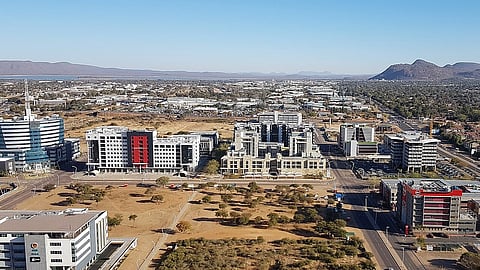
In an interview with Global Voices, the International Institute for Democracy and Electoral Assistance (IDEA) Secretary General, Kevin Casas Zamora, noted that although Botswana is performing well on the democracy front, more can still be done. He has been to Botswana on several occasions for governance engagements, including a conference on democracy in Botswana’s capital city, Gaborone, prior to the 2024 elections.
The democracy expert boasts 25 years of experience in democratic governance as a researcher, analyst, and public official. His career has focused strongly on electoral processes and democratic institutions. Zamora said Botswana is “mid-range” in terms of freedom of expression, which he explained means the situation is not good or bad but is above average in Africa. He noted that protecting the free press is essential for democracy. He said:
He added that the government would benefit from creating conducive laws and supporting the development of the media, rather than routinely stifling its operations.
A free and functioning media is a key component of democracy, said Andrew Bummel, Executive Director of Democracy without Borders, in a virtual interview with Global Voices. Bummel said media accountability must “come from strong professional standards and peer regulation, not state control.” He noted that state-owned media are a particular challenge because of their government connection. But overall, fair reporting should be paramount, he echoed. He noted:
[DS]
Suggested Reading:
Subscribe to our channels on YouTube and WhatsApp
Download our app on Play Store


