
- HOME
- OPINION
- ON GROUND
- INTERVIEW
- Neta Profile
- Editor's Pick
- INDIA
- NewsGram USA
- WORLD
- न्यूजग्राम
- POLITICS
- ENTERTAINMENT
- CULTURE
- LIFESTYLE
- ECONOMY
- SPORTS
- Jobs / Internships
- Misc.
- NewsGram Exclusive

AI generated summary, newsroom-reviewed
HISTORICAL LEGACY IS CONTESTED PHENOMENON. It encompasses appropriation, reduction, as well as valorization by different groups. Columbus Day — a national holiday in the United States observed every year on October 12 — has been one such contested event. It marks the arrival of Christopher Columbus — an Italian native — on American soil on October 12, 1492; widely known as the man who discovered ‘America.’
See Also: Indian Community in Question: Why the Indian Diaspora Has Become A Subject For The USA
However, over the years, as the discourse of Indigenous rights and identity began to take shape around critical lines — where discussions on colonialism, slavery, white supremacism became crucial — people began to question the viability of commemorating “Columbus.” The primary point that rests atop these debates is the role of Columbus’s exploration in the process of colonization in the world and the indigenous people of the Americas.
The 300th anniversary of Columbus’s arrival was celebrated as early as 1792 by the Society of St. Tammany or the Columbian Order — an American political organization for the promotion of patriotism and democracy — in New York City. This was an organization-based event, and did not involve a pan American commemoration.
In 1891, almost a century later, the demand for declaring the anniversary of Columbus’s arrival as a national holiday began to take a concrete shape. In the background was a gruesome incident, where 11 Italian Americans were brutally lynched by a mob in New Orleans, sparking a strong sympathy for the precarious immigrant lives in the US. This incident took place at a time, when the United States were witnessing the rapid proliferation of anti-immigrant sentiments.
To control the global optics of what came to be seen as anti-Italian hatred in America, the then US president Benjamin Harrison declared the celebration of the 400th anniversary of Columbus's arrival as a national holiday in 1892 — with the idea of celebrating this only once.
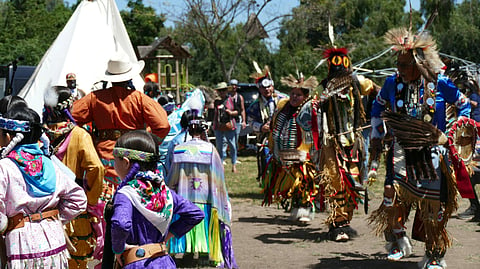
It became a federal holiday — like the one witnessed today — in 1937 under the administration of President Franklin Delano Roosevelt. But, by 1992, the day also came to be associated with the conversations on European colonization of the Native Americans, and the wrath of oppression around the world. Civil society groups, scholars, activists and the members of the Indigenous community began to propose an alternative: the Indigenous Peoples’ Day.
A major reason for the reservation against the celebration of Columbus Day is the history of colonialism and white supremacism. The advocates of “Indigenous People’s day” point out that the lives, memories and experiences of the Native Americans are removed from the discourse of the American society, and the events such as that of the “Columbus Day” seek to foster that invisibility.
Columbus discovered America, and it paved the pathway for brutal repression, loot, and plunder on the indigenous people, and sits as a symbol of European Colonization. Speaking to the University of Michigan News, Professor Gregory Dowd — an expert on Native American and early American History —, said that the celebration of “Columbus’ so-called discovery” overlooked the violent means through which the conquest of the local native-Americans took place.
“In celebrating Columbus’ so-called discovery, they were overlooking (or worse, supporting) his violent efforts at conquest. These were knowable. Even in his own time, Columbus came under criticism for cruelties toward Indigenous peoples from Bartholome de Las Casas, a Dominican priest, and even Queen Isabella for whom Columbus sailed,”
Professor Dowd said to the University of Michigan News.
This proposal of replacing “Columbus day” with “Indigenous Peoples’ Day” was made in 1977 at the United Nations International NGO Conference on Discrimination Against Indigenous Populations in the Americas. After almost a decade, the first state to replace Columbus day was South Dakota, and celebrated Native Americans’ Day in the year 1990. Following South Dakota was Berkeley, California, which became the first city to adopt Indigenous People’s Day in 1992. Puerto Rico also celebrates this day as Día de la Raza ( Day of the Race or Day of the People) to honour and celebrate Hispanic heritage and the Latin American Indigenous people.
This contest is a matter of representation. The advocates of the Indigenous peoples day, are forging the attempts to ensure that the history of the United States should not only be about the man who discovered America and subsequently showered brutal repression on the Indigenous people of the land.
See Also: Columbus’ Own Writings Reveal how Tightly Religion and Conquest Were Intertwined From the Start
In the same interview with the University of Michigan News, Professor Dowd detailed the lens through which the proponents of the “Indigenous Peoples’ day view this entire discourse."They say Native Americans, not Columbus, were first to this hemisphere. They say Native Americans deserve more of a place than Columbus as founders. They say that they are not to be erased. They have had some success so far, and Indigenous Peoples Day is being celebrated on an increasing scale," Professor Dowd said to the University of Michigan News.
The history of the land should remember the voices, experiences, and the memories of those who were cherishing the land before Columbus. The struggle, thus, is about realigning the history of the land and its people, where the voices of the Indigenous people are heard.
(Edited by Harsh Pandey)
(OG/AR/HP)
Suggested Reading:
Subscribe to our channels on YouTube and WhatsApp
Download our app on Play Store


