
- HOME
- OPINION
- ON GROUND
- INTERVIEW
- Neta Profile
- Editor's Pick
- INDIA
- NewsGram USA
- WORLD
- न्यूजग्राम
- POLITICS
- ENTERTAINMENT
- CULTURE
- LIFESTYLE
- ECONOMY
- SPORTS
- Jobs / Internships
- Misc.
- NewsGram Exclusive
This story written by Kelly Yu originally appeared on Global Voices on March 2, 2026.
When US President Donald Trump announced plans to withdraw aid to Ukraine in early 2025, 31-year-old Hongkonger Nid made a decision that would change his life: he would join the fight himself.
“I felt it was very unfair,” Nid told Global Voices over a crackling video call from his military base in Ukraine. “When those in power don’t do anything, those below have to act. We, ordinary citizens, have to do it.”
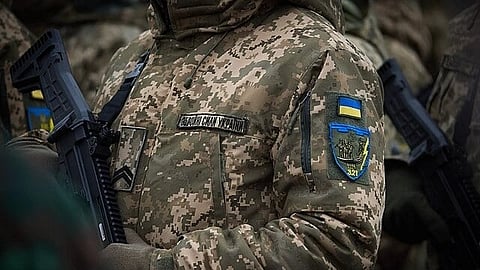
Nid arrived in Ukraine in March 2025, leaving behind his job as a chef. Now a combat medic in the 3rd Separate Assault Brigade, he evacuates wounded soldiers using robots after serving several months as an infantryman.
Nid sees parallels between Ukraine’s resistance and Hong Kong’s own struggles. Both were forced to ramp up their fight for autonomy in 2014, after Russia’s annexation of Crimea and the resistance campaigns in the Special Administrative Regions of China (SAR), known as the Umbrella Movement.
“We’re both being occupied by a neighboring power that’s gradually eroding our political autonomy and assimilating us,” Nid said, praising his unit’s effort to preserve the Ukrainian language and wishing the same for Cantonese.
After Beijing’s crackdown on the 2019 pro-democracy protests and the implementation of the National Security Law, Nid felt increasingly hopeless about participating in Hong Kong society.
In 2019, protesters drew inspiration from Ukraine’s Euromaidan revolution, portrayed in the film “Winter on Fire.” People screened the film across neighborhoods throughout Hong Kong to learn resistance tactics. By 2022, solidarity reversed: Hongkongers flocked to Ivan the Kozak, a Ukrainian restaurant in the city, expressing support through donations and messages.
Russia’s full-scale invasion of Ukraine entered its fifth year on February 24, 2026, marking Europe’s largest military conflict since World War II. At least 15,000 civilians have been killed since the invasion began, including 763 children, according to data by the United Nations.
The Center for Strategic and International Studies (CSIS) estimates Russia has suffered around 1.2 million casualties, including around 325,000 killed. For Ukraine, CSIS estimates military casualties between 500,000 and 600,000, including up to 140,000 deaths.
Russia has intensified attacks on energy infrastructure during one of Ukraine’s coldest winters in recent years, leaving millions without consistent power, heat, or water. “It’s minus 20 degrees Celsius, and there’s electricity for just two hours a day. Residents in apartment buildings in Odesa can’t burn wood for warmth. Life is very hard for them,” said Nid.
International support remains divided. The European Union (EU) has provided over EUR 193 billion (USD 228 billion) in aid, but unity faltered when ministers failed to agree on new sanctions against Russia. Trump’s proposed 28-point peace deal would require Ukraine to cede territories to Moscow.
In December 2025, two Hong Kong volunteer soldiers, known as Pin and Shui, were killed during their first frontline deployment in Zaporizhzhia while attempting to recover a comrade’s remains. Nid, who had been in contact with Pin, was devastated. He said:
In January, the city’s security secretary, Chris Tang, suggested that some Hongkongers joining Ukraine’s military might be seeking training to later use against their own government.
Nid dismissed this claim: “If the government doesn’t need violence or bloodshed [to act], who wants to die?” He urged functional dialogue over fear, recalling the peaceful July 1 marches of old, when grievances were resolved naturally.
On February 21, Hong Kong Anti-war Mobilization held a protest at the Tsim Sha Tsui Cultural Center to mark the fourth anniversary of the war. The group mourned fallen soldiers before being stopped by the Leisure and Cultural Services Department staff for not applying for an official permit.
In their statement, the group condemned Putin’s expansionist war and criticized the US for sidelining Ukraine in peace negotiations. “We also condemn European countries for continuing to import Russian natural gas, and criticize Russia's allies for providing diplomatic, military, and economic support,” the statement read.
Speaking at a screening event on February 24, Harvey Rouse, head of the EU office in Hong Kong, emphasized the bloc’s unwavering commitment to Ukraine.
Rouse said Moscow’s ability to obtain dual-use goods for its war machine remains a major concern. He said:
For Anna Odnokopyla, society representative of the Ukrainian Society of Hong Kong, watching the war from thousands of miles away brings its own anguish. Born in Kyiv, Anna has lived in Hong Kong for almost 10 years, but her family remains in Ukraine. She told Global Voices at the EU screening event:
Anna noted the recent escalation of missile attacks on Kyiv. “The news every day is not great, and lots of family members are on the battlefield, and they have to go to serve. It’s the reality of having a Ukrainian notice,” she said.
The Ukrainian Society of Hong Kong has organized events for the diaspora community while also collaborating with local institutions to share Ukrainian culture, Anna added.
Asked about the passing of two Hong Kong volunteers, Anna said:
Anna hopes for lasting peace:
Back at his base in Ukraine, Nid reflected on what keeps him going: the Ukrainian people, his fallen comrades, and hope for the future.
Meeting older Ukrainian soldiers reinforced his resolve:
Nid was injured by an enemy drone a few months ago, but that didn’t stop him.
As the war grinds into its fifth year, Nid plans to fight until the end. “I find life here quite comfortable,” he says. “I want to learn new skills and knowledge, like how to use drones, unmanned ground vehicles, and combat medicine to save people.”
[VP]
Suggested Reading:
Subscribe to our channels on YouTube and WhatsApp
Download our app on Play Store


.jpg)