
- HOME
- OPINION
- ON GROUND
- INTERVIEW
- Neta Profile
- Editor's Pick
- INDIA
- NewsGram USA
- WORLD
- न्यूजग्राम
- POLITICS
- ENTERTAINMENT
- CULTURE
- LIFESTYLE
- ECONOMY
- SPORTS
- Jobs / Internships
- Misc.
- NewsGram Exclusive

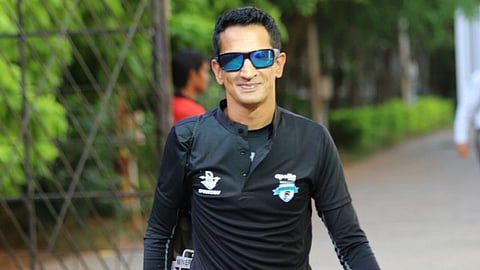
THE FUTURE OF INDIAN FOOTBALL received a major breakthrough with Ranjit Bajaj being appointed as the Team Manager of the U-15 Indian squad for its campaign in the 2026 FIFA World Cup at Azerbaijan. The AIFF also announced the retention of Bibiano Ferandes as the head coach of the team. This is the first edition of the U-15 Football tournament and is set to be held from October 26, 2026 to October 31, 2026. However, in a post on social media, Ranjit Bajaj has announced that he would not take up the assignment. He believes that different approaches to the game might harm the team's future and that of the country's pursuits for the sport.
India harbors a rich history and tradition of footballing brilliance that traverses the vast geographical expanse of the country. But the story of Indian Football is yet to be engraved in the Global hall of fame. The highest ranking, i.e. 94th, was achieved in the year 1994. And since then, the performance has been bleak. At present in 2026, the Men’s National Team stands at the 139th position.
In this background, Ranjit Bajaj—the owner and coach of the Minerva Youth Academy—was able to envision the light at the end of the tunnel. Scouting some of the best talents from across the country, the Minerva youth academy set a major footprint at the global stage in 2025. Its U-14 team became the first team in football history to win the world’s three biggest youth tournaments in the same year— the Gothia Cup (Sweden), Dana Cup ( Denmark), and the Norway Cup (Norway). The team’s records were particularly bewildering in the Norway cup. It clinched the title, while scoring 130 goals across eight matches in the tournament !
Last month, July 2026, the academy added another feather to its cap. Its Boys U12 team won the Helsinki Cup 2026, defeating Finland’s HJK, the tournament favourites.
See Also: Football: India brace for Bangladesh challenge in SAFF U20 Championship
The All India Football Federation (AIFF) on August 6, 2026 announced Ranjit Bajaj as India's U-15 Football Team Manager. The decision comes ahead of the upcoming U-15 FIFA world cup to be held in Azerbaijan in the month of October. The official declaration was followed with virtual celebrations flooding Social media. The netizens and football fans also celebrated their longstanding wish to see Mr. Ranjit Bajaj in this important position.
It is important to note that this appointment comes amid the criticisms against the existing condition of Indian football. Indian football has been mired with severe lacunas for quite some time. Critics have pointed out the poor performances of the National team, irregularities in the Indian Super league (ISL), the lack of proper fundings and the overall administrative mechanism of the Football federation (AIFF).
Ranjit Bajaj too, had been avidly vocal about the issues tempering the future of India’s Football. Through social media, podcasts and most importantly, through his team’s performance, Ranjit Bajaj had been advocating for reforms in India’s football for quite some time. In the past few months, he had also been appealing to the AIFF and to the people of the entire country, to hand him the responsibility of the youth U-15 team. Social media influencers, podcasters, football experts too, were rallying in support of Mr. Ranjit Bajaj. And with this appointment, things appeared to be moving in the similar direction.
See Also: Football: India start SAFF U20 Championship with victory over Pakistan
Things have not sailed smoothly since the declaration. In an exclusive interview with India Today, Ranjit Bajaj informed that he was not aware of this decision. Nobody from the AIFF had contacted him prior to the announcement. It was only through the congratulatory messages, that he got to know of the decision. In the same exclusive interview, Mr. Bajaj showcased his disappointment with the manner of appointment, and voiced his concerns over the professionalism of the federation.
The situation unfolded further when Mr. Ranjit Bajaj shared his views on social media on August 7, 2026. In the video, Ranjit Bajaj began by sharing his heartfelt gratitude to those supporting him throughout. He also informed that the AIFF has sent him a letter of appointment.
This was followed by his criticisms. Citing the differential philosophy of gameplay and match tactics, Mr. Bajaj flagged the potential conflict of interest in such an arrangement, and rejected the offer. However, he also mentioned unequivocally that there were no issues with Bibiano Fernandez. It was just the differences in approach that were of major concern.
The concerns raised by Ranjit Bajaj and the rejection of the offer could be deliberated upon. There could also be opinions on the viability of such a stance. But they firmly hold one thing for sure. Coaching profiles, gameplay approach, and visions are crucial things in a team sport like football.
Instances have been plenty of how differential approaches played out amongst teams across the globe. The lack of partnership between the former Manchester City football club Coach Robert Mancini and the then Sporting Director Brian Marwood is also well-known. Their differences led to improper player signings and lack of transfer activity, thereby, harming the team spirit in the 2012 season.
However, differences must not be conflated with conflict. Often, it is the diversity of ideas that curate the best outcome. Take the example of the Footballing giants, Borussia Dortmund, in Germany. In the 2016 to 2018 season, the team was filled with internal rivalry among the staff. The then-coach, Thomas Tuchel, did not bond well with the then-sporting director, Michael Zorc. Despite that, Dortmund went on to win the German Cup.
Instances of successful collaboration amid conflict are also available closer to home. In the I-League season of 2011—the National Club football Tournament in India—Mohanbagan, one of the top football teams of the country, witnessed a similar stint. After a sudden departure of the existing coach, the Team brought in Subrata Bhattacharya as the football team’s technical director and Prasanta Banerjee as the coach. Both these veteran players had a strained relationship during their time at the club. But keeping the stark differences aside, they managed to take Mohanbagan from a difficult situation to finish the League in the fourth position. Mohanbagan also defeated their arch-rivals—EastBengal Football club—in the iconic Kolkata derby that season.
Thus, past instances in the sporting world showcase both sides of the coin. But most importantly, it projects a condition of possibility. Bibiano Fernandes has earned his reputation by bagging Five U17 SAFF Championships as a coach. His experience to guide the team at the global stage has been sharpened over the years. It is true that the team has not yet made a dent beyond the SAFF championships. But Bibiano Fernandes’s long stint with the team has drawn him closer to the team's heartbeat. On the other hand, Ranjit Bajaj is the master of grassroot scouting, shaping talents, and preparing them for the national stage. His achievements with the Minerva Youth Academy are a testament to his capabilities.
Therefore, when the competencies of execution meet the experience of Team management, there is a possibility of something great. There might be a possibility of brilliance brewing silently in the background.
As India takes a step towards strengthening its youth football team, it is for the entire country to keep its hopes high. And closely monitor how things materialize in the coming days.
Suggested Reading:
Subscribe to our channels on YouTube and WhatsApp
Download our app on Play Store
