
- HOME
- OPINION
- ON GROUND
- INTERVIEW
- Neta Profile
- Editor's Pick
- INDIA
- NewsGram USA
- WORLD
- न्यूजग्राम
- POLITICS
- ENTERTAINMENT
- CULTURE
- LIFESTYLE
- ECONOMY
- SPORTS
- Jobs / Internships
- Misc.
- NewsGram Exclusive

Key Points
Advocate Rajvinder Singh Bains rejected claims that Jaswant Singh Khalra held pro-Khalistani views, describing such allegations as misinformation.
Bains defended Khalra's findings on alleged extrajudicial killings in Punjab, arguing that official investigations and human rights reports substantiate his claims.
The debate has resurfaced after the film Satluj, based on Khalra's life, was removed from ZEE5 shortly after its release.
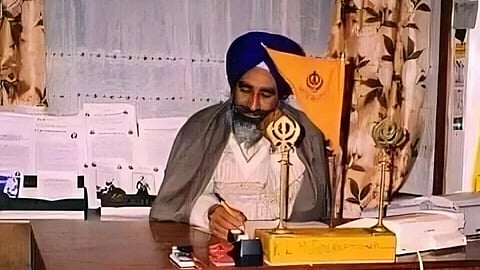
THE LIFE OF PUNJAB-BASED HUMAN RIGHTS ACTIVIST Jaswant Singh Khalra has become a topic of intense debate, after the movie based upon his life and activism, Satluj, was removed from the streaming platform ZEE5 48 hours after his debut. Jaswant was known for revealing the extrajudicial killings and unceremonious cremation of an alleged 25,000 Sikh youths during the militancy period in Punjab. After Satluj’s departure from the platform, the discourse around Jaswant and his revelations have taken on newfound interest.
Rajvinder Singh Bains, a known associate of Jaswant Singh Khalra and the advocate who represented the activist’s family in legal proceedings after Jaswant’s abduction and extra judicial killings, recently gave an interview to India Today. Rajivinder came forth in Jaswant’s defense, refuting claims that the activist held pro-Khalistani views and exaggerated the statistics that 25,000 Sikhs youths were unjustly killed by the Punjab police.
During the 1990s, human rights activist Jaswant Singh Khalra found a publication that advocated for a Sikh separatist state — the Liberation Khalistan magazine. The monthly magazine was founded in 1992 by Jaswant, wherein he worked as editor and writer. In an archive article of the magazine dating back to 1992 published by Baaz News, Jaswant wrote about the nature of electoral politics during that time, and highlighted his thoughts on Sikh liberation and on ‘Khalistan.’
See also: Who was Jaswant Singh Khalra? Human Rights Activist Whose Life Inspired Diljit Dosanjh’s ‘Satluj’
During the 1992 Punjab Legislative Elections in the state, Sikh political factions and militant groups refused to participate. Commenting on the electoral scenario of that time, when pro-Khalistan statements were at its peak, Jaswant said that participating in the elections will not result in strengthening of the Khalistan movement. He further stated that participating in the elections would be an automatic sign of defeat for the Sikh separatist state movement.
Reiterating that the Sikh community has been waging a war against the ‘Indian Hindu state’ for its independence, Jaswant wrote: “More than 50,000 freedom fighters have made the ultimate sacrifice for Khalistan. About 50,000 Khalistani heeray (diamonds) have been languishing in jails for years.”
Jarnail Singh Bhindranwale, a prominent Sikh separatist leader and head of the Damdami Taksal — became the posthumous face of the Pro-Khalistani movement that gained traction after the 1984 Operation Blue Star. While Bhindranwale did not outright advocate for a separate Sikh state, he did support the ‘Anandpur Sahib resolution’ that demanded greater religious and political autonomy for the Sikh community in Punjab. Following his death in the 1984 military operation, Bhindranwale became an icon of the pro-Khalistan insurgency.
In a 1995 interview with Ankhila Punjab TV in Canada, Jaswant was seen calling Bhindranwale as a Sant (meaning saint), and calling him a ‘national hero’ whose ‘martyrdom’ has proven to be very effective today in changing Sikh relations.
Addressing the narrative that alleges that Jaswant Singh Khalra has ‘strong anti-India or Khalistani sentiments,’ Rajvinder dismissed it as “a complete lie” and “misinformation.” He asserted that Khalra’s thinking was as secular as his own. Bains pointed out that Khalra came from a family of freedom fighters — his grandfather had fought for India’s independence — and that no criminal case was ever filed against him. The police themselves admitted in court that Khalra was not wanted in any crime.
Bains further noted that Khalra’s recorded speeches from the 1992 parliamentary elections contained no mention of Khalistan or of a separatist movement or anything of that sort. Instead, Rajvinder says, Jaswant spoke consistently about good governance, rule of law, and justice.
According to Bains, Khalra stood against injustice — a principle that every right-thinking Sikh, Punjabi, and Indian citizen should uphold. In his view, a country and its constitution need such courageous citizens to ensure that those in power remain lawful and humane.
One of the reasons Jaswant Singh Khalra is revered as a prominent human-rights activist is him publicly revealing that during the militancy period in the state, the Punjab state and police had illegally detailed and murdered around 25,000 Sikh youths on suspicion of them being ‘terrorists.’ Jaswant also said that these individuals were cremated without proper rituals in an ‘unceremonious manner,’ and too without the presence or knowledge of their families. The instigator behind this relentless illegal persecution of Sikhs youths during the Khalistan insurgency was Director General of the Punjab Police at that time, Kanwar Pal Singh Gill.
When asked whether the figure of 25,000 Sikhs being unjustly killed and cremated was an inflated figure, Rajvinder refuted the claim. He remarked that 2000 cases of extrajudicial killings have been upheld in the supreme court on the basis of a Central Bureau of Investigation (CBI) report. Later, the National Human Rights Commission (NHRC) verified the identities of an additional 1,513 individuals who were abducted and killed by the police.
Rajvinder also referred to international human rights Ram Narayan Singh, who, in his book ‘Reduced to Ashes,’ pointed out 2,700 more such cases. The advocate said that 17,000 cases of Sikhs being killed and cremated by the Punjab police have been documented, supported by evidence and FIRs and information of the deceased Rajvinder said that Jaswant’s claim of 25,000 extrajudicial killings isn't an exaggeration, but in actuality is a lesser figure.
(Edited by Ritik Singh)
Suggested reading:
Subscribe to our channels on YouTube and WhatsApp
Download our app on Play Store
