
- HOME
- OPINION
- ON GROUND
- INTERVIEW
- Neta Profile
- Editor's Pick
- INDIA
- NewsGram USA
- WORLD
- न्यूजग्राम
- POLITICS
- ENTERTAINMENT
- CULTURE
- LIFESTYLE
- ECONOMY
- SPORTS
- Jobs / Internships
- Misc.
- NewsGram Exclusive

Key Points
The United States has set a 30 April deadline for Zambia to grant preferential access to minerals or risk losing HIV funding.
Around 1.3 million people in Zambia depend on US-supported treatment programmes that could be disrupted.
Aid cuts and restructuring have already weakened HIV prevention systems, raising concerns of rising infections and deaths.
30 April 2026 marks the deadline for Zambia to agree to the US’s terms for preferential rights over mineral supplies – including copper, cobalt and lithium – or risk losing HIV treatment funding for 1.3 million citizens. The HIV epidemic in Zambia, with over 10% of the population infected, is among the worst in the world, and the fight against it has been dependant on US health aid for over 20 years.
The proposed arrangement reflects a broader shift in US foreign aid policy. Under the “America First” approach, the Trump Administration has moved away from traditional aid models towards bilateral agreements that tie funding to strategic and economic interests. In Zambia’s case, this includes reported demands for preferential access to critical minerals, mandatory healthcare expenditure and long-term data-sharing provisions.
Zambia has been a major beneficiary of US health assistance for decades, particularly through the President’s Emergency Plan for AIDS Relief (PEPFAR), which has supported antiretroviral treatment and helped reduce infections. However, the restructuring of US aid since 2025 has disrupted this system.
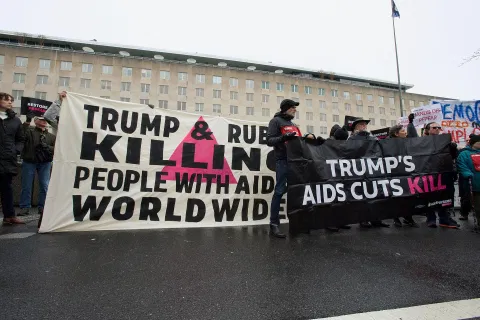
The dismantling of the United States Agency for International Development (USAID) and funding cuts under Trump have forced Zambia to scale back key services. While most patients receiving treatment in early 2025 continue to access medication, about 100,000 people stopped treatment during the upheaval, with tens of thousands yet to return to care.
Health facilities that once provided comprehensive HIV services have been forced to cut back to basic treatment. Programmes such as contact tracing, community outreach, and early infant testing have been reduced or eliminated. Clinics have shifted from digital systems to paper records due to lack of funding, slowing down diagnosis and follow-up.
In parts of northern Zambia, clinicians report a rise in advanced HIV cases. In Mpongwe, a mission hospital recorded dozens of new cases in early 2026, compared to one or two per month previously. Health workers say patients are arriving late, often with severe complications linked to untreated infections.
Prevention efforts have also been weakened. Earlier systems that identified infections through contact tracing accounted for about 70% of detected cases, but these have been shut down. Testing has been restricted and community-based drug distribution networks have been dismantled. Vulnerable groups, including pregnant women, infants, and high-risk populations, have seen reduced access to specialised care.
Under the proposed terms, Zambia would receive around $1 billion in funding over five years – less than 50% of earlier amounts. This comes with the following conditions: $340 million in new health expenditure, strict performance targets, and long-term sharing of biological and health data.
One of the main contentions, which rights groups have decried as ‘exploitative’, is the linkage of health aid to mineral access. Zambia is one of Africa’s largest copper producers and holds significant reserves of cobalt and other minerals critical to global supply chains. One of the main conditions laid down by the Trump Administration for continued aid is providing American businesses with first access to these resources.
Zambian officials have expressed reservations about the agreement, stating that some provisions do not align with national interests. Critics have argued that the deal further undermines public health and national sovereignty. Though the country has already increased domestic health contributions, it cannot rapidly replace the scale of US funding.
Modelling studies suggest that even short interruptions in HIV services could lead to tens of thousands of new infections and deaths. Longer disruptions could reverse decades of progress, significantly increasing HIV prevalence and mortality rates.
Across Africa, similar tensions are emerging as countries respond differently to US demands. Zimbabwe has walked away from negotiations, citing concerns over data-sharing requirements, while Ghana has rejected a proposed deal on the grounds of national sovereignty. Kenya has agreed to the terms, though civil society organisations continue to fight the conditions legally. In South Africa, reductions in aid have disrupted HIV prevention programmes and research collaborations.
For Zambia, the situation has highlighted long-standing structural issues. Despite years of efforts to localise health systems, Zambia remains heavily dependent on external funding for medicines, supply chains and workforce support. The current crisis has exposed gaps in domestic capacity and the difficulty of transitioning to self-reliance.
As negotiations continue, the outcome will shape not only Zambia’s health system but also the evolving model of global health assistance. The country’s decision will determine whether it secures continued support under new conditions or faces a deeper disruption to programmes that millions rely on for survival.
[DS]
Suggested Reading:
Subscribe to our channels on YouTube and WhatsApp
Download our app on Play Store

