- HOME
- OPINION
- ON GROUND
- INTERVIEW
- Neta Profile
- Editor's Pick
- INDIA
- NewsGram USA
- WORLD
- न्यूजग्राम
- POLITICS
- ENTERTAINMENT
- CULTURE
- LIFESTYLE
- ECONOMY
- SPORTS
- Jobs / Internships
- Misc.
- NewsGram Exclusive
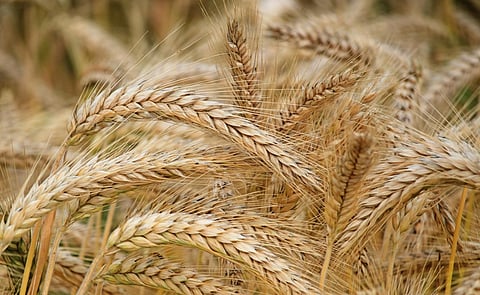
New Delhi, Dec 10: Nearly half of India’s at-home protein intake now comes from cereals such as rice, wheat, suji, and maida, according to a study on Wednesday.
Protein supports the body’s growth, repair, and immune function, and Indians consume an adequate average of 55.6 g of protein per day at home.
However, the study by non-profit policy research think tank the Council on Energy, Environment and Water (CEEW) showed that cereals supply nearly 50 per cent of this protein despite their low-quality amino acid profile and poor digestibility.
The study also found under-consumption across major food groups, such as vegetables, fruits, and pulses, and overuse in cooking oil, salt, and sugar intake.
“This study spotlights a silent crisis in India's food system: over-reliance on low-quality proteins, excess calories from cereals and oils, and stark under-consumption of diverse, nutrient-rich foods,” said Apoorve Khandelwal, Fellow, CEEW.
“In a week, a person in the poorest decile consumes just 2-3 glasses of milk and fruits equivalent to just 2 bananas, compared to 8-9 glasses and 8-10 bananas for those in the richest decile. These consumption gaps mirror broader inequities in access to balanced diets. At the same time, the country's heavy dependence on a narrow crop base for nutrition and income reduces its climate resilience. Diversification, from fork to farm, must be a national priority,” she added.
The study analyses Indian dietary trends based on the latest 2023-24 NSSO Household Consumption Expenditure Survey (HCES) dataset.
It showed that India’s diet remains heavily skewed toward cereals and cooking oils, with both contributing to significant nutritional imbalance.
Nearly three-fourths of all carbohydrates come from cereals, and direct cereal intake continues to be 1.5 times the RDA, reinforced by the widespread availability of subsidised rice and wheat through the PDS in lower-expenditure deciles.
Notably, coarse grains such as jowar, bajra, and ragi have seen the steepest at-home decline -- nearly a 40 per cent drop in per capita consumption in a decade -- resulting in Indians meeting barely 15 per cent of the recommended intake.
“At the same time, the proportion of households consuming more than 1.5 times the recommended fat intake has more than doubled in the last decade, with higher-expenditure households consuming almost twice as much fat as lower-expenditure groups,” the study showed.
The study recommended reforming major public food programmes --including the PDS, PM POSHAN, and Saksham Anganwadi; POSHAN 2.0 -- to shift away from cereal-dominant provisioning and expand access to coarse grains, pulses, milk, eggs, fruits, and vegetables.
This report is from IANS news service. NewsGram holds no responsibility for its content.
[VS]
Suggested Reading:
Subscribe to our channels on YouTube and WhatsApp
Download our app on Play Store