
- HOME
- OPINION
- ON GROUND
- INTERVIEW
- Neta Profile
- Editor's Pick
- INDIA
- NewsGram USA
- WORLD
- न्यूजग्राम
- POLITICS
- ENTERTAINMENT
- CULTURE
- LIFESTYLE
- ECONOMY
- SPORTS
- Jobs / Internships
- Misc.
- NewsGram Exclusive

Key Points:
The Centre argued that courts should not question religious practices unless they violate public order, morality, or health.
The bench is examining the scope of “essential religious practices” under Articles 25 and 26 of the Constitution.
Judges stressed that while reform is important, it cannot dilute the fundamental identity of a religion.
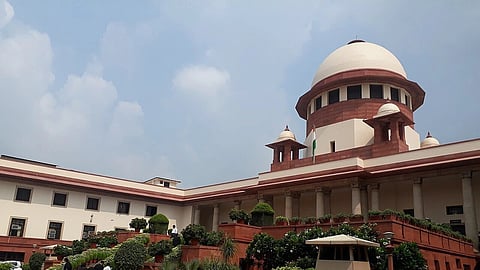
The nine-judge bench of the Supreme Court, led by Chief Justice Surya Kant, continued its second day of hearings on the Sabarimala review case on Wednesday, 8th April 2026. The bench is looking into important questions about religious freedom under Articles 25 and 26 of the Constitution, including issues of women’s entry into temples and other religious places.
The bench includes Chief Justice Surya Kant and eight other judges: Justices B.V. Nagarathna, M.M. Sundresh, Ahsanuddin Amanullah, Aravind Kumar, Augustine George Masih, R. Mahadevan, Prasanna B. Varale, and Joymalya Bagchi.
Solicitor General Tushar Mehta, representing the Central Government, presented his arguments. He said that if a religious belief or practice does not harm public order, morality, or health, then courts should not examine or question it on the basis of logic, science, or rationality.
Mehta referred to a 1972 Supreme Court judgment in the Seshammal case. In that judgment, the court had said that the government cannot interfere with religious practices in a way that pollutes or defiles a religious image, as it would violate the religious rights of devotees under Article 25.
Mehta quoted senior lawyer Nani Palkhivala from the 1972 judgment. He said that under the excuse of social reform, the government cannot destroy or change a religion completely.
Justice B.V. Nagarathna agreed and observed that in the name of social reform, a religion cannot lose its basic identity. She added that reforms should not hollow out or weaken the core of any religion. Mehta also stated that the fundamental core of a religion cannot be sacrificed for the sake of reform.
Justice Nagarathna said the court should check what is an essential religious practice by looking at the philosophy of that religion itself, and not by comparing it with other religions. She clarified that this is still subject to public order, morality, and health.
Justice M.M. Sundresh remarked that the court cannot completely give up its power to hear such matters. He explained that logic and science cannot always be applied to matters of faith and religion. The Solicitor General agreed, saying that logic may not always fit with religious beliefs.
Justice Joymalya Bagchi noted that courts sometimes use the reductio ad absurdum principle (taking an argument to its extreme to test its logic) to understand arguments better.
The hearing began around 11 am and continued with detailed discussions. The Supreme Court is expected to hear the matter further in the coming days.
This important case has reopened the 2018 Sabarimala judgment, which had allowed women of all ages to enter the temple. The nine-judge bench is now trying to clearly define the limits of judicial interference in religious matters.
Suggested reading:
Subscribe to our channels on YouTube and WhatsApp
Download our app on Play Store

