
- HOME
- OPINION
- ON GROUND
- INTERVIEW
- Neta Profile
- Editor's Pick
- INDIA
- NewsGram USA
- WORLD
- न्यूजग्राम
- POLITICS
- ENTERTAINMENT
- CULTURE
- LIFESTYLE
- ECONOMY
- SPORTS
- Jobs / Internships
- Misc.
- NewsGram Exclusive

AI generated summary, newsroom-reviewed
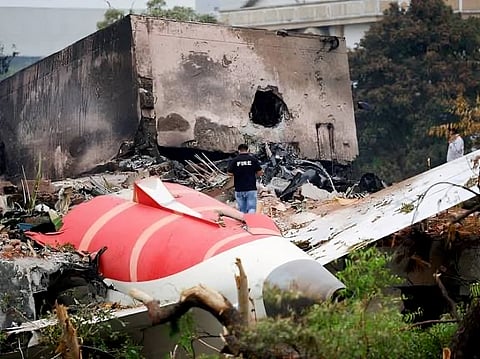
AROUND A YEAR HAS PASSED since the tragic crash of the Air India Flight 171, which claimed the lives of 260 people. The official cause of one of the deadliest aviation incidents in history has been encased with doubts and uncertainty for a while, as the Aircraft Accident Investigation Bureau's (AAIB) final report is still awaited. In the meantime, the Federation of Indian Pilots (FIP) has flagged concerns about possible technical failures and asked the bureau to closely examine certain technical and other issues. The pilot body has issued a detailed report — consisting of a letter and supporting documents — on Friday, June 5, 2026, and directed it to the Prime Minister’s Office, the Civil Aviation Ministry, the Directorate General of Civil Aviation (DGCA), and the AAIB in this regard.
As per international aviation regulations, a report detailing the probable reason of an aircraft crash incident must be released within a year. If the concerned authorities fail to do so, then they must release an update on their investigation every year on the crash’s anniversary. However, reports alleged that the AAIB would be releasing an interim report, in place of the final detailed report, solely to meet the deadline criteria.
FIP president Captain RS Randhawa has urged the Directorate General of Civil Aviation not to allow the AAIB to release the interim report. The letter highlights that an interim report may create more confusion and speculation and would be “detrimental” to the AAIB’s investigation.
Additionally, the pilot body has raised fresh concerns in the AI-171 crash probe over unexplained technical signals, possible electrical disturbances, and engine shutdown mechanisms.
In the letter, Capt. Randhawa urged a closer examination of Communications Addressing and Reporting System (ACARS) maintenance messages transmitted after takeoff, Full Authority Digital Engine Control (FADEC) system features that allow auto-shutdown of both engines, and earlier flagged issues related to electrical disturbances and RAT (Ram Engine Turbine) deployment. The pilots’ body stressed the need for a fresh technical review before ruling out technical causes behind the crash.
Attaching supporting documents, the FIP stated that Aircraft Communications Addressing and Reporting System (ACARS) maintenance messages transmitted before and after takeoff, along with the Full Authority Digital Engine Control (FADEC), design feature that allows auto-shutdown of both engines, and reports of Captain Sumeet Sabharwal’s body being recovered while still gripping the control column, rebut the “pilot suicide theory.”
In the months that followed the flight crash, AAIB’s interim report and other reports by international media shifted the blame of the crash onto the Pilot-in-Command Captain Sumeet Sabharwal. The reports hinted that Capt. Sabharwal may have been the one who moved the fuel cut-off switches from RUN to CUTOFF after the takeoff, essentially depriving the two engines of fuel and thrust.
The FIP submitted ten ACARS messages sent by AI-171 at 1:38:39 hours on June 12 and referred to a US patent on FADEC fail-safe logic. It explained that a failure in the minor fuel control loop can lead to minimum fuel flow, resulting in in-flight shutdown (IFSD).
The letter also highlighted eyewitness accounts of the captain’s tight grip on the controls and suggested that an electrical disturbance could have triggered simultaneous FADEC protective shutdown of both engines.
FIP urged the AAIB to direct Air India to submit the original ACARS messages and explain why they were not shared earlier. It also asked Boeing to decode the messages and questioned why the autopsy and preliminary report did not address the captain’s grip on the control column.
On June 12, 2025, the Boeing aircraft 787-8 Dreamliner with 230 passengers and 12 crew members aboard took off from an airport in Ahmedabad, Gujarat. 32 seconds after the takeoff, the airplane crashed into a hospital’s hostel and erupted into a massive fireball. All those aboard the plane, sans one person, were killed. In addition, 19 people were killed at the crash site.
Civil Aviation Minister Kinjarapu Ram Mohan Naidu said the AAIB is approaching its “final stage” of the investigation and a report is expected on the plane crash’s one anniversary on June 12, 2026. “The investigation is being done by the Aircraft Accident Investigation Bureau (AAIB) and we don't interfere in it,” Ram Mohan Naidu stated to reporters. “We are giving them all the resources they need.”
Suggested reading:
Subscribe to our channels on YouTube and WhatsApp
Download our app on Play Store
