
- HOME
- OPINION
- ON GROUND
- INTERVIEW
- Neta Profile
- Editor's Pick
- INDIA
- NewsGram USA
- WORLD
- न्यूजग्राम
- POLITICS
- ENTERTAINMENT
- CULTURE
- LIFESTYLE
- ECONOMY
- SPORTS
- Jobs / Internships
- Misc.
- NewsGram Exclusive
By Arpan Dagar
Warehouses in India are changing, and this is because businesses are trying to handle a larger volume of orders in a limited space. As e-commerce is growing in various cities of India, it is expected that warehouses will store a larger volume of goods and deliver them in a quicker manner compared to previous times. The traditional design of a warehouse is facing a tough time in meeting this requirement.
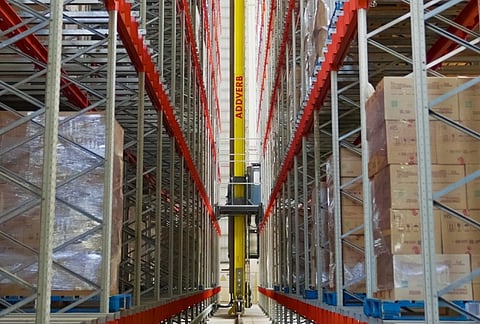
This is where ASRS automation is beginning to change the way warehouses are planned. No longer are companies just expanding outward, but they are now working to use their vertical space more efficiently. Warehouse layouts are now designed based on how systems operate, not just how humans move. As land costs rise and delivery times get shorter, there is a shift towards a more efficient and sustainable design that is suitable for long-term warehouse operations.
Automation provides a change in the manner in which the warehouse is designed at a basic level. The focus is no longer on the movement of goods but rather the manner in which the systems store and retrieve the goods. This makes the process more organised and manageable.
The use of height becomes an important aspect in the design. Warehouses are able to store more inventory without additional floor space. At the same time, there is a more direct connection between incoming, storage, and outgoing areas. This helps to facilitate a constant and predictable flow of goods throughout the Indian warehouse. It results in a more practical design, enabling smoother operations.
To be able to utilise the high-density storage efficiently, there is a need to plan the layout with structure and purpose.
Separate zones are created for ASRS aisles, buffer areas, and input and output points.
Aisles are kept narrow, and racks are arranged to store more items in the same space.
Dock and staging areas are placed closer to system workflows to reduce delays.
Movement between key areas is kept short to improve speed and reduce effort.
The above changes are helpful in utilising space more effectively while keeping things simple.
For automation to function properly in a warehouse, the warehouse has to be well-designed for this purpose. The building has to be strong enough to allow for the installation of the system, and its height has to be sufficient for vertical storage.
Software connection is equally important. The systems need to be connected in a way that operations are coordinated at all times. Planning for future expansion is also important. The warehouse needs to be in a position to expand without affecting operations in any way. These factors need to be taken into account at the initial stages to maintain operations in a stable manner.
If the layout is designed with ASRS automation in mind, the movement of goods becomes more direct and easier to manage. This is because the products move around key system points for storage and retrieval, rather than long travel paths.
Inbound, storage, and outbound areas are directly connected to system entry and exit points.
Goods move through shorter and clearer paths within the warehouse.
Layouts are designed around system nodes instead of large manual picking zones.
The need for extensive picking areas is reduced as systems manage inventory access.
These changes make the process faster and more efficient by reducing unnecessary movement in an Indian warehouse.
Addverb’s ASRS automation solutions are designed to serve the needs of today’s warehouse operations, where space and efficiency are of primary concern. The company focuses on designing solutions that fit in with existing operations and still offer room for expansion.
By integrating ASRS with other automation technologies like robotics and material movement systems, Addverb ensures that everything runs smoothly in a warehouse environment. Its systems are designed to accommodate changing demands and layout adjustments when necessary, helping businesses in India become more efficient without significant changes to their structure.
The design of warehouses in India is changing to simpler and more practical ones. The implementation of vertical storage and system-based warehouse layouts helps manage greater volume without increasing space. The use of automated warehouse systems is also improving the movement of goods from one place to another, creating more efficient operations. The implementation of ASRS and automation solutions from Addverb is helping businesses develop more flexible, scalable warehouse environments.
Suggested Reading:
Subscribe to our channels on YouTube and WhatsApp
Download our app on Play Store

