
- HOME
- OPINION
- ON GROUND
- INTERVIEW
- Neta Profile
- Editor's Pick
- INDIA
- NewsGram USA
- WORLD
- न्यूजग्राम
- POLITICS
- ENTERTAINMENT
- CULTURE
- LIFESTYLE
- ECONOMY
- SPORTS
- Jobs / Internships
- Misc.
- NewsGram Exclusive
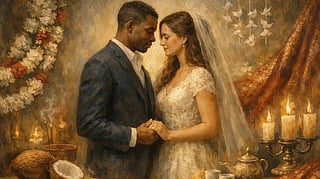

A wedding is a ceremony celebrated across the world. While customs and rituals differ from culture to culture, the bond between two people remains the same. Marriage represents a deep emotional and spiritual connection, where two individuals choose to share their lives together. For some, it is a responsibility built on commitment and understanding, while for others, it is a life goal that represents companionship, love, and happiness.
In today’s world, weddings are no longer bound by strict rules. Couples have the freedom to celebrate their special day in ways that reflect their personalities and values. They can choose which traditions to follow and which to leave aside, making the ceremony more personal and meaningful. While many long-standing customs continue to be cherished for their emotional and cultural value, modern weddings balance tradition with individual choice, turning the occasion into a unique and memorable celebration of lifelong partnership.
But did you know that some wedding traditions around the world are truly strange? From India to Indonesia, many countries follow unusual and surprising wedding customs that may shock you. Here are the top 7 wedding customs:
Most people are scared of spiders and don’t like seeing them—especially on special occasions like weddings. Spotting a spider on your wedding outfit can be unsettling, particularly when you’re already feeling nervous before the ceremony. For many, spiders cause discomfort or fear, making the moment feel even more stressful.
However, in English wedding traditions, a spider appearing on the wedding day is considered a good omen. It is believed to bring happiness, prosperity, and good fortune to the couple’s future life. So, if a spider happens to show up on your big day, tradition suggests staying calm and taking it as a positive sign rather than something to fear.
In some cultures, breaking a glass is seen as bad luck, while in others it is considered a sign of good fortune. In Jewish wedding traditions, the breaking of a glass by the groom is a meaningful ritual filled with symbolism and is usually performed at the end of the ceremony. The groom steps on a glass wrapped in cloth to remember the destruction of the ancient Temple in Jerusalem, reminding everyone that even moments of great joy are touched by history, loss, and reflection. The sharp sound of the glass breaking is also believed to drive away evil spirits, allowing the couple to begin their married life on a positive note.
The ritual also reflects the fragile nature of love and marriage, much like glass itself. It represents the couple’s commitment to face life’s challenges together with care, patience, and resilience. An unspoken prayer accompanies the act—that the marriage should last as long as it would take to repair the broken glass. As the glass shatters, guests cheer “Mazel Tov,” marking the joyful conclusion of the ceremony and celebrating the couple’s new beginning.
In parts of North India, especially in Bihar and eastern Uttar Pradesh, there is a wedding custom that many find unusual. These regions follow a long-standing tradition of singing folk songs during weddings, but the songs are not what one might expect. Known as Gaari or Gaali Geet, these songs are sung mainly by women from the bride’s side as part of the wedding rituals and include teasing lines directed at the groom and his family.
Gaari or Gaali Geet are playful, humorous, and often bawdy in nature. While they may sound abusive, they are not meant to offend. Instead, the songs help break social barriers, reduce formality, and create a relaxed atmosphere where both families can bond. Over time, this practice has become an accepted and integral part of wedding traditions in the region, serving as a cultural tool for interaction and social integration.
In Janitzio Island in Mexico, a wedding ceremony drew attention to a traditional custom in which the bride grinds corn as soon as she arrives at her husband’s family home after marriage. This ritual is an important part of local wedding practices and is often performed publicly in the presence of family members and villagers.
Using a traditional grinding stone, the bride begins preparing corn, a staple food in the community, as her first symbolic act in the new household. The custom represents her readiness to embrace married life and her responsibilities within the family she is joining. In this culture, grinding corn is not just a daily chore but a sign of dedication, respect for tradition, and commitment to family life.
In China, there is a community known as the Tujia community that follows a unique and emotional pre-wedding tradition called the Crying Marriage Ritual. As part of this custom, the bride begins crying one month before the wedding and is expected to cry for about an hour every day. This ritual is an important part of the wedding ceremony and is deeply rooted in Tujia culture.
Over time, the crying becomes a shared activity, with the bride’s mother, relatives, and close friends joining her. The tears are not a sign of sadness, but an expression of gratitude and respect. Through this ritual, the bride thanks her parents for raising her and shows appreciation to her future in-laws for accepting her into their family. It is also believed that these shared tears bring blessings, good fortune, and harmony to the couple’s married life.
There is an unusual custom followed by the Tidong tribe in parts of Indonesia and Malaysia, where marriage is considered a deeply sacred institution. This belief is reflected in a strict post-wedding ritual observed by newlywed couples. After the wedding, the bride and groom are kept together in a room for three days and are forbidden from using the washroom during this period. Family members closely monitor the couple to ensure the rules are followed, and in some cases, the room is even locked.
During these three days, the couple is given very little food and water to reduce the urge to relieve themselves. The purpose of this custom is to preserve the purity and sanctity of the marriage. The Tidong people believe that using the toilet during the first three days would make the couple impure and invite bad luck into their married life. Toilets are also believed to carry negative energy that could harm the bond between the newlyweds.
You may have heard of men having multiple wives in some societies, but have you ever heard of a woman having multiple husbands? In parts of Himachal Pradesh, an age-old polyandrous marriage tradition known as Jodidara has been practised among the Hatti tribe. Under this system, a woman marries two or more men, who are usually brothers. Historically, the practice helped prevent the division of ancestral land and preserved joint family structures in remote, hilly regions.
The tradition also ensured shared responsibility over scattered agricultural land and provided social and economic stability. The wedding, known as Jajda, begins with the bride arriving in a procession to the groom’s village, followed by the Seenj ritual, during which a priest chants mantras and sprinkles holy water. The ceremony concludes with the offering of jaggery and blessings from the Kul Devta for a harmonious life. While Jodidara holds historical and cultural significance, it is important to note that polyandry is not permitted under Indian law today.
Suggested Reading:
Subscribe to our channels on YouTube and WhatsApp
Download our app on Play Store
