
- HOME
- OPINION
- ON GROUND
- INTERVIEW
- Neta Profile
- Editor's Pick
- INDIA
- NewsGram USA
- WORLD
- न्यूजग्राम
- POLITICS
- ENTERTAINMENT
- CULTURE
- LIFESTYLE
- ECONOMY
- SPORTS
- Jobs / Internships
- Misc.
- NewsGram Exclusive

AI generated summary, newsroom-reviewed
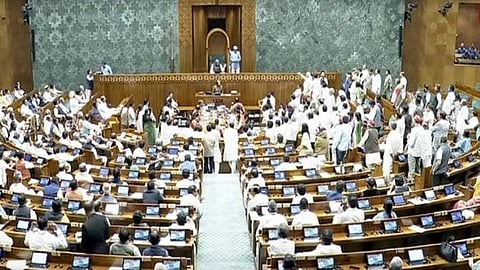
On Thursday 2nd April 2026, the parliament gave the green light to the Jan Vishwas bill (Amendment of Provisions) Bill, 2026, a comprehensive legislation aimed at decriminalizing minor offences and doing a complete overhaul of compliance regulations across multiple sectors.
The Rajya Sabha gave its assent via a Voice Vote, after the Commerce and Industry minister Piyush Gopal’s response to the debate on the matter, whilst the Lok Sabha passed the legislation a day prior on 1st April, 2026. The bill was brought forth in a bid to foster “trust-based governance” and to improve the business environment.
Introduced in the Lok Sabha on 27th March 2026, the new bill seeks to amend 80 central acts. The new bill replaced the earlier Jan Vishwas (Amendment of Provisions) Bill, 2025 introduced on August 18, 2025. The earlier version of the act covered 17 Acts, which was later referred to a Select Committee headed by Tejasvi Surya. The panel submitted its report on March 13, 2026, recommending revisions not only to those 17 laws but also suggesting amendments to 65 additional Acts. Subsequently, the earlier bill was withdrawn on March 17, 2026.
See also: Lok Sabha approves Insolvency and Bankruptcy Code Bill
This new legislation addresses 784 provisions across 79 central laws administered by 23 ministries, including coal, commerce and industry, shipping, urban development, and transport. Out of these, 717 provisions are being modified to do away with the criminal liability for minor violations, while 67 changes are aimed at enhancing the “ease of living”.
A notable feature of the new bill is the focus on replacing imprisonment clauses with civil penalties for some offenses. For example, under the National Highways Act, 1956, making a highway impassable or less safe is punishable with imprisonment up to five years, a fine, or both. The Bill instead imposes a civil penalty between Rs 10 lakh and one crore rupees.
Similarly, under the Drugs and Cosmetics Act, 1940, manufacturing and sale of cosmetics in violation of the Act is punishable with imprisonment up to one year, a fine up to Rs 20,000, or both. The Bill, instead, imposes a civil penalty of one lakh rupees or three times the value of cosmetics confiscated, whichever is greater.
In many cases, the jail punishment has been completely revoked. Under the Indian Succession Act, 1925 and the Electricity Act, 2003, offences that earlier carried up to 3 months of imprisonment will now only include monetary fines. The fines have been made higher than before.
The bill also completely eliminates some offences. These include giving a false fire alarm under the Delhi Police Act, 1978; failing to report births and deaths under the Delhi Municipal Corporation Act, 1957; and making wrong entries in copyright registers under the Copyright Act, 1957.
The new law brings in a step-by-step (graded) approach for enforcement. In many cases, for the first offence, the person or business will only get an advisory notice. If the offense is repeated a second time, a warning would be issued . Only after that will civil penalties (fines) finally be imposed. For example, under the Apprentices Act, 1961, violations like refusing to give information or forcing overtime work will first be handled with softer measures instead of immediate punishment.
See also: Lok Sabha gives nod for referring Corporate Laws Bill to JPC
The Bill also introduces “improvement notices” under the Legal Metrology Act, 2009. This gives businesses a chance to correct the violation within a given time period before the issue of any penalty.
The bill will discard the prison sentences in 57 provisions and fines in 158 provisions. It will also lessen prison sentences in 17 provisions, while the prison term and fine will be changed to a penalty in 113 provisions. Notably, it will also make several changes to the Motor Vehicle Act, such as allow vehicle registration throughout the state (removing jurisdictional constraints), in addition to allowing driving license renewal to be effective from the date of renewal rather than the date of expiry (if applied for after expiry).
To make enforcement quicker and more efficient, the Bill proposes appointing Adjudicating Officers and setting up Appellate Authorities. Officials said these changes are crucial in helping resolve cases faster, ease the burden on courts, and still follow the principles of natural justice.
Suggested reading:
Subscribe to our channels on YouTube and WhatsApp
Download our app on Play Store
