
- HOME
- OPINION
- ON GROUND
- INTERVIEW
- Neta Profile
- Editor's Pick
- INDIA
- NewsGram USA
- WORLD
- न्यूजग्राम
- POLITICS
- ENTERTAINMENT
- CULTURE
- LIFESTYLE
- ECONOMY
- SPORTS
- Jobs / Internships
- Misc.
- NewsGram Exclusive

Key Points:
Gad Saad stated in one of the episodes of The Rubin Report, aired on August 11, 2017, that “Islamism is part of Islam.”
Born in Lebanon to parents of Jewish origin, Saad expressed that dividing Islam into several categories is not an ideal approach.
Saad criticises what he calls the “cafeteria version of Islam,” where individuals selectively accept certain aspects of the religion while ignoring others.
More than 2 billion people worldwide practised the faith of Islam by 2020, marking a sharp increase of 347 million people since 2010. With 2030 just a few years away, the number of people practising Islam continues to rise. According to a study by the Pew Research Centre, Muslims are the second-largest religious group in the world, following Christians.
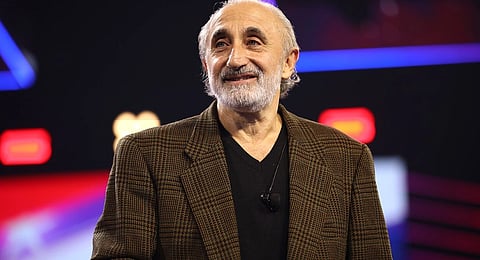
With the rising numbers, the religion has been heavily criticised for the violent elements associated with it in many parts of the world. Gad Saad, a Canadian professor and author, sheds light on the recurring debate on “Islam and Islamism” in a conversation with host and American conservative Dave Rubin. Saad stated in one of the episodes of The Rubin Report, aired on August 11, 2017, that
Born in Lebanon to parents of Jewish origin, Saad expressed that dividing Islam into several categories is not an ideal approach. He said, “It is a misnomer to constantly come up with qualifiers before the word Islam, and let me explain why that is. There is no separate Islam and no separate Islamism. Islamism is part of Islam.”
Saad stated that “Islam is a set of codified ideas that has a spiritual element and it has a political element. That political element is Islamism. The manner in which now people are talking about Islamism is it's something that is outside of Islam.”
The Canadian author elaborated on his understanding behind this, saying, “It's because they feel as though it's too gauche to frontally attack a religion. So if you attack something that has magically ISM at the end of it, Islamism, that's okay.”
“But the reality is if we're truly going to have a serious and honest conversation about this topic, we have to recognise that it's not radical Islam, it's not Islamism, it's not militant violent extremism and every other permutation of a euphemism that you come up with. It's Islam,” said Saad.
He criticised people for selectively choosing certain aspects of Islam that they prefer while disregarding or turning a blind eye to other aspects of the religion. He described this as a “cafeteria version of Islam.” He said that
They pick the parts that they like and they ignore the endless parts that they don't like and that becomes their personal relationship with Islam.
Saad asked Rubin how most people do that with most religions. He added, “Most people do that with most religions, but you (Rubin) and I and everybody else don't stay up worrying about Seventh-day Adventists.”
“So to the extent that Islam is now on the radar and we have to talk about it honestly, we have to stop trying to give a free pass to Islam, but the real problem is something else, some variant of it. Islam is codified in the Quran, it's codified in the Hadith, it's codified in the Sirah, the biography of Muhammad. That's it. Now, is there a way that I could read those texts and come up with a message of brotherly love and love for Jews? No. That's not Islamism. That's not radical Islam. That's Islam,” said Saad.
The Canadian marketing professor has authored several books, including The Saad Truth About Happiness: 8 Secrets for Leading the Good Life (2023) and Suicidal Empathy: Dying to Be Kind (2026). Saad is also an active advocate for the integration of evolutionary psychology into marketing and consumer behaviour.
[VS]
Suggested Reading:
Subscribe to our channels on YouTube and WhatsApp
Download our app on Play Store

.jpg)
.jpg)