
- HOME
- OPINION
- ON GROUND
- INTERVIEW
- Neta Profile
- Editor's Pick
- INDIA
- NewsGram USA
- WORLD
- न्यूजग्राम
- POLITICS
- ENTERTAINMENT
- CULTURE
- LIFESTYLE
- ECONOMY
- SPORTS
- Jobs / Internships
- Misc.
- NewsGram Exclusive
By Faiz Muhammad
Google Pixel phones are precision-engineered devices, but that sophistication comes with a price — literally. A single drop onto a hard surface can crack the screen, damage internal components, or render the phone completely unusable, leaving you facing repair bills that can rival the cost of a new device. For active users who spend time outdoors, at the gym, or on job sites, and for parents whose children regularly handle these phones, the risk of accidental damage is a daily reality rather than a distant possibility.
The challenge isn't simply finding any case — it's finding one that genuinely absorbs impact without turning your sleek Pixel into a bulky, awkward brick. With hundreds of options flooding the market, each claiming to offer the best protection, knowing what actually matters can feel overwhelming.
This guide cuts through the noise. You'll learn exactly what to look for in a protective case, from the materials that determine long-term durability to the engineering behind shock-absorbing corners and military-grade certifications. Whether you're a parent looking to child-proof your device or an active individual who needs a case that keeps up with your lifestyle, this comprehensive breakdown will give you the knowledge to make a confident, informed decision.
Replacing a cracked Pixel screen isn't cheap. Depending on the model, screen repairs can run anywhere from $150 to over $300 through official service centers, and that's before considering damage to internal components like the camera system or charging port. For many users, a single bad drop effectively turns a premium smartphone into an expensive repair bill — or forces an early upgrade they hadn't budgeted for. A quality protective case, by contrast, costs a fraction of that and pays for itself the moment it absorbs its first serious impact.
The risk isn't hypothetical, either. Active individuals face constant exposure to drop scenarios — setting a phone down on gym equipment, pulling it from a jacket pocket on a trail run, or fumbling with it after a sweaty workout. Job site workers deal with even harsher conditions, where phones encounter concrete floors, metal surfaces, and debris on a daily basis. For these users, the question isn't whether a drop will happen, but how much damage it will cause when it does.
Families with young children face a different but equally real challenge. Kids drop phones — repeatedly, enthusiastically, and often from surprising heights. A case that survives one tumble off a couch needs to survive dozens more across different surfaces and angles before a parent can truly trust it.
Beyond preventing outright breakage, a durable case also protects against the slow accumulation of damage: scratches that degrade resale value, minor impacts that weaken structural integrity over time, and dust or debris that works its way into ports. For anyone who depends on their Pixel daily, investing in serious protection isn't optional — it's practical.
Walk into any phone accessories aisle or browse online, and you'll encounter cases made from a dizzying range of materials — each marketed as the toughest, most protective option available. Understanding what these materials actually do helps you cut through the marketing language and focus on what genuinely matters for your specific situation. The three most common materials you'll encounter are TPU, polycarbonate, and silicone, and each brings distinct advantages to the table.
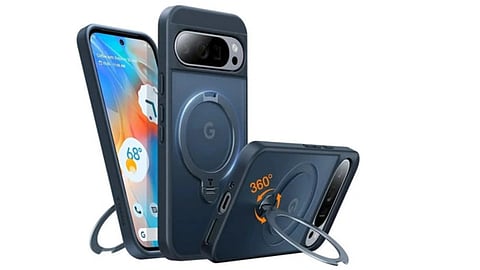
TPU, or thermoplastic polyurethane, is the workhorse of protective case construction. It's a flexible rubber-like plastic that naturally absorbs and disperses impact energy rather than transferring it directly to your phone. TPU cases grip surfaces well, resist yellowing better than pure silicone, and maintain their shape after repeated compression. Polycarbonate, on the other hand, is a rigid engineering plastic known for exceptional hardness and scratch resistance. It holds its structure under pressure and provides a firm outer shell that prevents crushing damage. The trade-off is that rigid materials can transmit sharp impact forces rather than absorbing them. Silicone offers excellent grip and a soft feel, but it tends to attract lint, degrades faster under UV exposure, and provides less structural rigidity than either TPU or polycarbonate. Many of the best protective case for google pixel combine materials — a hard polycarbonate back with TPU bumpers around the edges — to capture the benefits of both. Brands like TORRAS have built their Google Pixel case lineup around exactly this kind of dual-layer construction, pairing reinforced polycarbonate shells with impact-absorbing TPU frames.
Quality isn't always visible at first glance, but there are reliable indicators. Reputable brands publish the specific grade of TPU or polycarbonate used in their cases, and those with genuine durability claims will back them with independent certifications rather than vague marketing terms. Look for cases that specify reinforced or impact-resistant TPU rather than generic rubber compounds. Check whether the polycarbonate layer is a single molded piece or assembled from thinner sections — seamless construction resists separation under repeated stress. For active users, prioritize cases with documented material testing, and for parents, look for cases that explicitly address repeated low-height drops, which are more common than single catastrophic falls.
Not all protective features are created equal, and two stand out as genuinely meaningful indicators of a case's ability to handle real-world punishment: reinforced shock-absorbing corners and military-grade certification. Understanding what these features actually do — rather than just recognizing them as marketing terms — helps you distinguish between cases that perform under pressure and those that simply look the part.
Physics tells us that corners and edges absorb the majority of impact force during a drop. When a phone falls, it rarely lands flat — it tumbles, and one corner typically strikes the ground first, concentrating the full force of the impact into a small area. Standard cases with uniform wall thickness distribute that energy poorly, allowing it to transfer directly into the phone's frame and screen. Reinforced corners change this dynamic entirely. Cases engineered with thicker, often air-cushioned corner sections create a crumple zone that compresses on impact, absorbing and dispersing energy before it reaches the device. Some designs incorporate honeycomb internal structures or layered TPU pockets specifically at the four corners, where drop damage is statistically most likely to occur. When evaluating a case, look for visible corner reinforcement — raised bumpers, distinct material thickness at the edges, or explicitly marketed air-pocket technology. These aren't cosmetic additions; they represent a meaningful engineering decision that directly affects how much force your Pixel absorbs during an accidental fall.
The term "military-grade" appears on countless cases, but it carries real meaning when properly applied. MIL-STD-810G is a testing standard developed by the U.S. Department of Defense that evaluates equipment performance across a range of environmental stressors, including drop tests from specified heights onto hard surfaces, temperature extremes, humidity, vibration, and shock. For phone cases, the most relevant component is the drop test protocol, which subjects devices to multiple falls from 4 feet across 26 different angles and orientations. A case that has genuinely passed this testing has demonstrated consistent protection across repeated impacts — not just a single favorable drop. For active individuals who encounter unpredictable drop scenarios daily, and for parents whose children subject phones to relentless handling, MIL-STD-810G certification provides an independently verified baseline of durability that marketing language alone cannot replicate. Always verify that a brand references actual third-party testing rather than self-certified claims when using this designation.
Before comparing specific cases, take an honest inventory of how you actually use your phone. An office worker who occasionally drops their device needs something fundamentally different from a construction worker or a parent handing their Pixel to a five-year-old. Ask yourself how often your phone hits the ground, what surfaces it typically encounters, and whether you need weather resistance alongside impact protection. Active individuals should prioritize cases with MIL-STD-810G certification and reinforced corners, while parents should focus on grip texture and the ability to survive repeated low-height drops across varied surfaces. Identifying your real-world risk profile first prevents you from either over-engineering your solution or underestimating what your phone actually faces daily.
Once you know what you need, evaluate cases against a consistent set of criteria rather than responding to marketing language. Start with material construction — confirm whether the case uses reinforced TPU, polycarbonate, or a dual-layer combination, and check whether the manufacturer specifies material grades. Next, examine corner design: look for raised, visibly thickened bumpers or documented air-cushion technology at all four corners. Verify any military-grade certification by checking that the brand references third-party testing rather than self-certification. Beyond protection, consider raised bezels around the screen and camera cutout to prevent contact with flat surfaces, and assess whether port covers or raised edges add meaningful protection for your specific environment. Finally, weigh these factors against your budget — the most expensive option isn't always the most protective, but suspiciously cheap cases rarely deliver on bold durability claims.
Narrow your shortlist to two or three candidates, then dig into verified user reviews specifically from people with lifestyles similar to yours. A case praised by office users may perform poorly for gym-goers or parents. Check the manufacturer's warranty — brands confident in their product typically offer replacement guarantees for manufacturing defects, which signals genuine quality assurance. Confirm the case fits your exact Pixel model, since even minor version differences affect button alignment and camera cutout precision. If possible, handle the case before purchasing to assess grip and bulk. The right case feels secure in hand, doesn't add unnecessary weight, and gives you confidence that your Pixel is genuinely protected — not just covered.
Protecting your Google Pixel isn't about paranoia — it's about making a smart, practical decision before an accident forces a costly one. Throughout this guide, we've covered the real financial stakes of leaving your device unprotected, the materials that separate genuinely durable cases from cheaply made alternatives, and the engineering principles behind shock-absorbing corners and military-grade certification. Each of these factors plays a specific role in determining whether your case handles real-world punishment or simply provides the appearance of protection.
The step-by-step selection process brings it all together. By honestly assessing your lifestyle first, then evaluating cases against concrete criteria — material construction, corner reinforcement, verified MIL-STD-810G certification, and proper fit — you move from guesswork to a genuinely informed decision. Whether you're an active individual who puts your phone through daily physical stress or a parent whose device faces the unpredictable enthusiasm of young children, the right case exists for your needs.
Investing in serious protection means investing in peace of mind. The best case is one you stop thinking about — because it quietly does its job every time your Pixel slips from your hand, bounces across a gym floor, or survives another round with a curious toddler. Make the choice once, make it well, and your Pixel will be there when you need it.
Suggested Reading:
Subscribe to our channels on YouTube and WhatsApp
Download our app on Play Store

