
- HOME
- OPINION
- ON GROUND
- INTERVIEW
- Neta Profile
- Editor's Pick
- INDIA
- NewsGram USA
- WORLD
- न्यूजग्राम
- POLITICS
- ENTERTAINMENT
- CULTURE
- LIFESTYLE
- ECONOMY
- SPORTS
- Jobs / Internships
- Misc.
- NewsGram Exclusive

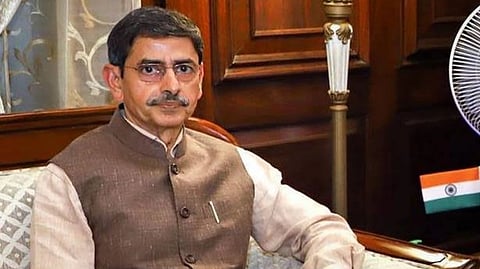
Governor R N Ravi walked out of the Tamil Nadu Assembly for the fourth consecutive year without delivering the customary address.
Raj Bhavan cited procedural violations, misleading claims, and alleged disrespect to the National Anthem as reasons for the walkout.
Chief Minister M K Stalin rejected the allegations, accusing the Governor of undermining legislative traditions and the Assembly’s dignity.
Raj Bhavan and the state government of Tamil Nadu were once again in a sharp confrontation as Governor R.N. Ravi walked out of the Assembly on Tuesday, 20 January 2026, making this his fourth consecutive walkout in four years. He once again declined to address the Legislative Assembly on the opening day of the first session of the year.
Speaker of the Assembly M. Appavu directed the Governor to read only the address prepared and approved by the State Cabinet at the start of the House proceedings at around 9.30 am. The Speaker then stated that only elected members were entitled to express opinions on the floor of the House, establishing the primacy of legislative procedure amid objections from the treasury benches.
Governor Ravi objected to the interruption of his speech, describing it as “unfortunate.” He then alleged that the National Anthem was not given due respect and claimed that he was prevented from speaking as his microphone was repeatedly switched off. He subsequently walked out of the House without formally delivering or completing his address.
The walkout was followed by a detailed statement from the Governor’s office, Lok Bhavan, explaining the decision. As per the official announcement, it claimed that the Governor was not allowed to speak and that the prepared address contained “numerous unsubstantiated claims and misleading statements,” which failed to reflect several concerns raised by the Governor.
Raj Bhavan outlined several objections, among which a key highlight was the claim made by the Tamil Nadu government regarding investments worth over ₹12 lakh crore. This figure was alleged to be inaccurate, with the statement asserting that actual investment flow is significantly lower and that memoranda of understanding signed with prospective investors remain only on paper. It also added that Tamil Nadu has slipped from fourth to sixth place over the past four years in terms of receiving foreign direct investment.
The statement further claimed that several serious issues were omitted from the address, including concerns over a sharp rise in crimes against women. It cited reports suggesting a 55 per cent rise in POCSO cases, a 33 per cent increase in incidents of sexual molestation, growing drug abuse among youth, increasing atrocities against Dalits and sexual violence against Dalit women, and nearly 20,000 suicides annually.
Additional concerns flagged included declining education standards due to 50 per cent faculty vacancies, delayed local body elections resulting in non-functional village panchayats, stress in the MSME sector, and the functioning of thousands of temples in the absence of boards of trustees. The Governor’s office also pointed to what it described as a disregard of a fundamental constitutional duty, alleging that the National Anthem was “yet again insulted.”
The allegations were strongly denied by the Chief Minister of Tamil Nadu, who in turn accused Governor Ravi of failing to respect the sentiments of the Tamil people. He added that the government had not disrespected the Governor or his office, but alleged that Ravi had disrespected long-standing legislative traditions and the dignity of the Assembly, raising questions over his conduct. He further reiterated a remark by DMK founder C. N. Annadurai that questioned the necessity of Governors in states.
Similar occurrences have taken place in earlier years. In 2023, the Governor walked out after the Chief Minister announced the inclusion of references to Dravidian leaders Thanthai Periyar and C. N. Annadurai, which had been excluded by the Governor. Walkouts were also witnessed in 2024 and 2025 over disputes related to the playing of the National Anthem and the contents of the address.
The consecutive standoffs highlight the growing rift between Raj Bhavan and the elected state government, as political debate in Tamil Nadu continues to be shaped by deepening friction over constitutional convention and institutional boundaries.
(SY)
Suggested Reading:
Subscribe to our channels on YouTube and WhatsApp
Download our app on Play Store
