
- HOME
- OPINION
- ON GROUND
- INTERVIEW
- Neta Profile
- Editor's Pick
- INDIA
- NewsGram USA
- WORLD
- न्यूजग्राम
- POLITICS
- ENTERTAINMENT
- CULTURE
- LIFESTYLE
- ECONOMY
- SPORTS
- Jobs / Internships
- Misc.
- NewsGram Exclusive

AI generated summary, newsroom-reviewed
DURGA PUJA marks one of the most culturally significant events in West Bengal. More than a religious festival, it is a cultural carnival that brings together every individual in Bengal irrespective of their religious and cultural beliefs. In this carnival lie several practices which are unheard of, but hold deep significance.
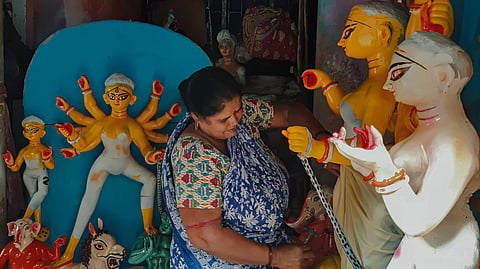
One such practice is the use of soil or mud from the homes of the sex workers in Kolkata’s Sonagachi — one of the most prominent red-light districts in the world — to make the Durga Maa’s (Goddess Durga) idol by the potters.
See Also: Gajraj Rao shares glimpses of his Onam feast with his best people
This is a practice that has travelled generations, and is considered to be sacred, where potters use the “Punya Mati” or Sacred soil from the “red-light districts” to make the idol of Durga Maa. This tradition is an inherent part of Kolkata’s Kumartuli, where generations of potters have given shape to magnificent idols over time.
Potters in Kolkata’s Kumartuli visit the homes of Sex Workers in Sonagachi, and take soil from their homes. This soil is mixed with the clay used for making the idol of Goddess Durga. This soil is considered to be “Punya Mati” or Sacred Soil in Bengal’s tradition of Durga Puja.
Potters visit the sex workers' residence, offer them some gifts — usually a saree — and with a lot of reverence, ask for some soil from their house. Upon receiving the soil, it is taken back to Kumartuli, and used with the clay used to make Durga’s idol. This practice is a fundamental aspect of Durga Puja in Bengal, and initiates the process of idol-making by the artisans.
Religious traditions and their rituals hold the considerations of purity and pollution very strongly. However, a place or a set of people, who are often considered to be “socially forbidden” or outcasts, have come to play such an indispensable role in one of the biggest festivals in Bengal.
There are plenty of explanations behind this sacred practice. One of the most common is the interpretation of purity. A man entering a brothel leaves his virtue or purity outside the door. Hence, the soil at the doorstep is the one that is pure, punya, virtuous or sacred, and used for making the idols of Goddess Durga.
Another interpretation for this ritual is the ethic of belonging and societal inclusivity. By taking the soil from a sex workers’ home, the ritual brings into its fold those individuals who have been marginalized in the society. The soil from the homes of those who have been socially excluded are used to make the idols of Goddess Durga.
See Also: Devotees across country flock to temples for Durga Ashtami prayers
This is a symbolic statement. It provides a centre-stage to the voices and stories of these individuals, who are otherwise at the margins of the society.
This practice of Punya Mati or sacred soil is one of the most unique practices in the country. It is a radical practice that goes beyond the established traditions and stigmas of the society. It seeks to alter the normative conceptions and stereotypes associated with sacredness, purity, etc.
(OG/AR)
Suggested Reading:
Subscribe to our channels on YouTube and WhatsApp
Download our app on Play Store


