
- HOME
- OPINION
- ON GROUND
- INTERVIEW
- Neta Profile
- Editor's Pick
- INDIA
- NewsGram USA
- WORLD
- न्यूजग्राम
- POLITICS
- ENTERTAINMENT
- CULTURE
- LIFESTYLE
- ECONOMY
- SPORTS
- Jobs / Internships
- Misc.
- NewsGram Exclusive

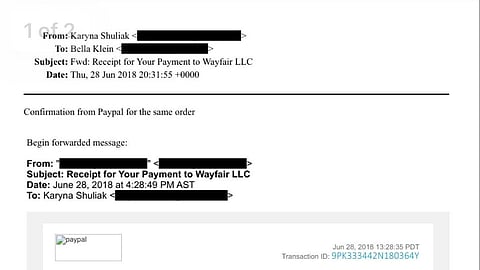
Wayfair’s name resurfaced in newly released Epstein files after a 2018 receipt showed a one-time purchase worth $8,453 by Epstein’s assistant
Social media users revived the 2020 QAnon-linked conspiracy claiming Wayfair was involved in child trafficking, despite past investigations finding no proof.
Wayfair has repeatedly denied the allegations, explaining that product names and prices were generated by standard algorithms
Wayfair, a major American e-commerce company specializing in online retail of furniture, home décor, and housewares, has recently drawn renewed attention and online speculation. The company’s name resurfaced after appearing in a newly released batch of Epstein-related documents published by the US Department of Justice on January 30, 2026. This has led to a revival of unfounded claims against Wayfair.
The Boston-based company had earlier faced similar allegations in 2020, when conspiracy theories falsely accused it of involvement in child trafficking. The latest documents reference a purchase made by Karyna Shuliak, identified as Jeffrey Epstein’s longtime assistant and reportedly his final girlfriend before his death. According to the records, she bought a single unlabeled item worth $8,453 from Wayfair.
A review of the newly released DOJ files shows that this is the only Wayfair-related invoice found in the Epstein records. No other documents indicate similar purchases, and there is no evidence of repeated transactions involving the company. Despite this, the receipt has triggered renewed online speculation linking Epstein’s network to the long-debunked Wayfair human trafficking conspiracy.
Following the circulation of the document, several users on X revived old claims. One user wrote, “Remember the story about names of overpriced furniture on Wayfair matching up with names of missing children?” while another alleged that Epstein had been “using Wayfair to traffic and sell children.” Some posts also claimed that searching Wayfair references in the Epstein files revealed multiple purchases, though these claims remain unverified.
The current controversy mirrors a conspiracy theory that first emerged in 2020 within QAnon-linked online communities. At the time, users claimed that Wayfair was secretly selling trafficked children disguised as expensive storage cabinets. The theory began after a QAnon activist tweeted about high-priced cabinets listed with women’s names. Followers alleged that these names matched those of missing children, suggesting the listings were a front for trafficking.
The theory gained wider attention in July 2020 after being discussed on the Reddit forum r/conspiracy. Users attempted to link furniture names to missing persons cases. However, later investigations found no evidence to support these claims. Some of the children mentioned were no longer missing, and at least one woman publicly stated that she had never gone missing, directly refuting the allegations.
Wayfair responded in 2020, telling BBC News that “there is of course no truth to these claims.” The company explained that product names are generated by an internal algorithm, a common practice among online retailers. It also clarified that the high prices were due to the items being large, industrial-grade cabinets intended for commercial use.
At the time, Wayfair temporarily removed some listings to rename products and provide clearer descriptions and images. QAnon users had also claimed that entering Wayfair product Stock Keeping Units (SKUs) into the Russian search engine Yandex produced images of women, which they argued supported trafficking allegations. Investigations later showed that this was caused by a search engine glitch, not any deliberate connection.
Wayfair has again been mentioned in the latest tranche of Epstein documents released by the US Department of Justice, leading to a renewed wave of unfounded claims linking the company to child trafficking. However, many of these posts originate from unverified accounts, and no credible evidence has been presented to support the allegations.
On January 30, 2026, the Department of Justice released more than 3.5 million documents as part of the latest batch of Epstein files. Alongside recurring names such as former US President Bill Clinton and current US President Donald Trump, several new names also appeared, drawing public attention. From rapper Jay-Z to Mira Nair, the Indian-American filmmaker and Cannes award recipient, the disclosures sparked widespread online discussion.
Suggested Reading:
Subscribe to our channels on YouTube and WhatsApp
Download our app on Play Store
