
- HOME
- OPINION
- ON GROUND
- INTERVIEW
- Neta Profile
- Editor's Pick
- INDIA
- NewsGram USA
- WORLD
- न्यूजग्राम
- POLITICS
- ENTERTAINMENT
- CULTURE
- LIFESTYLE
- ECONOMY
- SPORTS
- Jobs / Internships
- Misc.
- NewsGram Exclusive

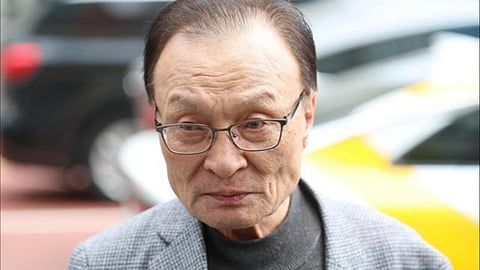
South Korea began official mourning as former Prime Minister Lee Hae-chan’s remains were repatriated from Vietnam to Seoul.
Lee died of cardiac arrest in Ho Chi Minh City on January 25, 2026, with a five-day funeral to be held with government honors.
A veteran pro-democracy leader and political “kingmaker,” Lee played a key role in shaping South Korea’s liberal leadership.
South Korea mourns the death of former Prime Minister Lee Hae-chan, with political leaders paying tribute as the remains were brought back to Seoul from Vietnam amid solemn ceremonies. This marks the beginning of official mourning for the veteran statesman. He died earlier this week, on 25 January 2026, in Vietnam.
The casket containing Lee's body arrived at a funeral home at Seoul National University Hospital in central Seoul, hours after its repatriation aboard a Korean Air flight at Incheon International Airport, west of Seoul. A Korean Air flight carrying Lee's body, as well as bereaved family members and a group of ruling Democratic Party (DP) lawmakers who had gone to Vietnam after he fell ill, arrived at Incheon International Airport earlier in the day.
Lee, who was serving as executive vice chairperson of the Peaceful Unification Advisory Council (PUAC), died at a hospital in Ho Chi Minh City on Sunday after suffering cardiac arrest. The funeral service will be held for five days through Saturday with government honors but not as a state funeral, reflecting his family's wishes and his contributions to society.
Prime Minister Kim Min-seok, who heads Lee's funeral committee, National Assembly Speaker Woo Won-shik, and other senior government officials, as well as politicians close to Lee, were present at the funeral home to receive the casket, Yonhap news agency reported. A former seven-term lawmaker, Lee served as prime minister during the Roh Moo-hyun administration from 2004 to 2006. He was appointed executive vice chairperson of the PUAC in October last year. He entered politics through student activism and opposition activities, taking part in the pro-democracy movement during South Korea's military regimes.
He was crowned with the nickname “kingmaker” for his role as a political ally and adviser. He had close ties with former liberal presidents Kim Dae-jung, Roh Moo-hyun, Moon Jae-in, and President Lee Jae Myung.
He was honored with a short memorial service as his flight arrived at Incheon International Airport, which was followed by his casket being transferred to the funeral home. It was escorted by honor guards as senior political figures and close associates gathered to receive him, highlighting Lee’s lasting impact on South Korea’s political landscape.
With inputs From IANS
(SY)
Suggested Reading:
Subscribe to our channels on YouTube and WhatsApp
Download our app on Play Store
