
- HOME
- OPINION
- ON GROUND
- INTERVIEW
- Neta Profile
- Editor's Pick
- INDIA
- NewsGram USA
- WORLD
- न्यूजग्राम
- POLITICS
- ENTERTAINMENT
- CULTURE
- LIFESTYLE
- ECONOMY
- SPORTS
- Jobs / Internships
- Misc.
- NewsGram Exclusive
This story written by Sanjib Chaudhary originally appeared on Global Voices on May 26, 2026.
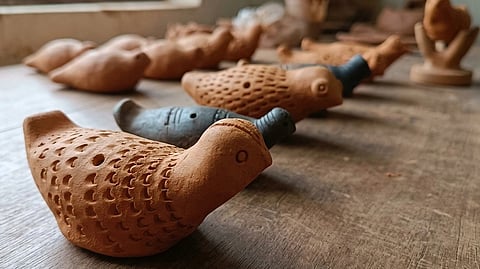
Pilru, a terracotta musical instrument shaped like birds, made by Indigenous Tharu and Kumhar communities from Nepal’s southern plains, traveled from a village in Western Nepal to an art store in Kathmandu Valley, thanks to an art initiative led by Tharu artist Lavkant Chaudhary.
For generations, Indigenous peoples have been using musical instruments made from clay in ceremonies, social events, and celebrations, not only to amuse and entertain the gathering but also to communicate and connect with deities and souls.
“Pilru — Songs of Resistance is a community-led initiative dedicated to documenting, protecting, and reclaiming the Pilru, a handcrafted musical instrument passed across generations by Adivasi Tharu and Kumhar communities of the Tarai,” says artist Lavkant Chaudhary in his statement.
“The project records oral histories, songs, and techniques, centering community voices and asserting the Pilru as a living practice, rather than a passing trend.”
“I learned to play and make Pilru during my childhood,” said Roinu Chaudhary, a 70-year-old man from Deukhar of Lamahi in Western Nepal, in an interview with Global Voices. He was praised for his contribution to preserving the practice of Pilru at the event in Kathmandu. “We used to play it while grazing cattle and going to the jungle.”
“I haven’t seen anyone other than Tharus using this instrument,” said Chhabilal Kopila, a Tharu litterateur and activist, during the event. “It’s a matter of concern that the young generation isn’t interested in this instrument.”
One of the proficient users of Pilru is Santu Chaudhary from Dang in Western Nepal, according to Kopila. He can create music with this instrument for any type of song.
Xutuli, a similar musical instrument made of either clay or bamboo, is used during the Bihu festival in Assam, India. Made in the shape of a bird, people believe the sound of Xutuli invites rain according to Assamese folk culture.
Lavkant Chaudhary says, “The project also challenges cultural appropriation by non-Indigenous institutions that replicate, market, and strip this art of its meaning without acknowledging its makers.”
Many institutions have been reproducing and selling Indigenous art and cultural products without informing and acknowledging the communities, let alone the Pilru.
“Traditional cultural expressions (TCEs) and traditional knowledge (TK) involve important aspects of the culture and traditions of Indigenous Peoples, who should have the right to prohibit, or allow, the use of this knowledge,” writes Esther Aburto Olague, attorney, OZM Legal & Business Consulting Services, Mexico. “The use by third parties outside the community may even result in an offense to the cultural heritage of these Indigenous Communities.”
Seconding Lavkant’s statement, Kopila wrote on Facebook, “As Tharu and Kumhar communities continue their struggle for recognition, it is crucial to center authorship, dignity, and cultural justice.”
The Indigenous practitioners who are conserving the TCEs and TK will get due credit and returns only when the local law recognizes that they are holders of rights over works, of any kind, where they manifest elements of their culture and identity, as in the case of Mexico.
[VP]
Suggested Reading:
Subscribe to our channels on YouTube and WhatsApp
Download our app on Play Store

