
- HOME
- OPINION
- ON GROUND
- INTERVIEW
- Neta Profile
- Editor's Pick
- INDIA
- NewsGram USA
- WORLD
- न्यूजग्राम
- POLITICS
- ENTERTAINMENT
- CULTURE
- LIFESTYLE
- ECONOMY
- SPORTS
- Jobs / Internships
- Misc.
- NewsGram Exclusive

Key Points
Assam’s Special Revision of electoral rolls, ordered on November 17, 2025, has drawn allegations of bulk and fraudulent Form 7 objections, particularly in districts such as Udalguri, Sribhumi, Barpeta, Darrang, Goalpara and others.
This coincides with increasingly evocative rhetoric being used by state officials, especially CM Himanta Sarma, to target Bengali-speaking Muslims ahead of Assembly elections.
Opposition parties, civil society groups and individual voters claim harassment and selective targeting, while election officials maintain that due process and verification are being followed.
The Special Revision (SR) of electoral rolls in Assam, ahead of Assembly Elections in early 2026, has turned into a major political and legal flashpoint as Muslim voters in the state face bulk deletions and unprecedented discrimination from government and election officials.
Opposition parties and concerned citizens have raised objections to violent rhetoric being used by BJP officials and the misuse of state machinery, even filing complaints with Guwahati High Court and the Chief Justice of India (CJI).
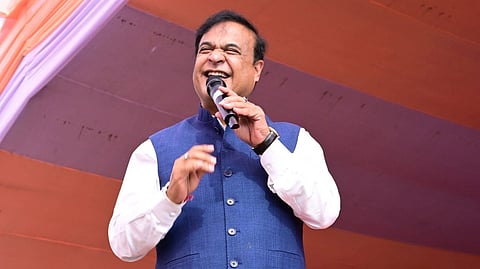
In late January 2026, Chief Minister Himanta Biswa repeatedly targeted Bengali-speaking Muslims in the state, pejoratively referred to as ‘Miyas’. “Everyone in Assam knows that Bangladeshi Miya immigrants have entered the state,” Sarma said in one instance, “That is why our [BJP] workers have filed over five lakh complaints.”
Parallelly, multiple complaints have emerged across the state of Election Commission of India (ECI) officials disproportionately targeting Muslims in the state with disenfranchisement, through deletions, objections, and complaints. “Vote chori means we are trying to steal some Miya votes,” Sarma had said on 27 January 2026. He had also instructed BJP workers to file Form 7 complaints against ‘Miyas’ wherever possible.
Form 7, intended for limited corrections such as deletion due to death or permanent relocation, is at the centre of the controversy. In Udalguri district, residents from Devpukhuri village near Orang reported that nearly 300 voters, including Lamar Ali and Abdul Rafik, received notices stating objections had been filed against their inclusion. Voters allege the objections were submitted in bulk, without individual verification or supporting evidence.
Akbar Ansari from Tangla described the exercise as “a blanket” move without factual basis. Affected voters have been summoned before Revenue Circle Offices acting as Electoral Registration Officers (EROs). With the February 2 deadline for disposal, observers question whether individual hearings, mandated under the Registration of Electors Rules, 1960, can be meaningfully conducted at scale.
In Sribhumi district, booth level officer (BLO) Sumana Choudhury reported being handed objection forms against 133 voters from her booth, all Bengali-speaking Muslims, allegedly filed by a single individual. She stated she had personally verified these voters during enumeration. The list reportedly included the complainant’s own name, and when contacted, he denied filing the objections. Similar patterns of alleged identity misuse have surfaced in other districts.
Recent reports have documented multiple cases where individuals said their voter identity details were used without consent to file objections against others. Instances also involved electoral officers collecting signatures from voters under false pretences. In Nagaon, hearings in three constituencies were suspended following complaints of fake Form 7 applications. Officials in Lakhimpur and Morigaon issued public warnings against dubious complaints.
Hearings have drawn large numbers. On 27 January 2026, hearings were reportedly held for over 2,200 people, followed by more than 4,000 across districts the next day. In villages such as Deva Pukhuri and Bishkuti, dozens to over a hundred families have reportedly received notices. Even families of recognised freedom fighters in Goalpara said they were served notices, prompting protests on 29 January 2026.
Advocate Shajid Khan cited provisions under the Representation of the People Act, 1950, noting that filing false Form 7 objections is punishable, though prosecution requires action by election authorities.
The political dimension sharpened after CM Himanta Sarma said BJP workers had filed over five lakh complaints during the SR, calling it a “national duty”. He also made remarks stating that notices were being issued to “Miya” Muslims and that “trouble” was being given to them. “It is my job to make the Miya people suffer,” he had said on 27 January, drawing sharp criticism from opposition leaders who said such statements were unconstitutional and polarising.
Congress organised protests in Kamrup district on 28 January 2026, alleging “vote theft” through SR and accusing BJP workers of interfering in electoral offices. TMC MP Sushmita Dev and other opposition leaders said FIRs would be filed against those misusing Form 7. A joint opposition press conference demanded an extension of the February 2 deadline and accused authorities of communal bias.
On 28 January 2026, senior Congress leader Debabrata Saikia wrote to the CJI seeking Supreme Court intervention, describing the situation as a “constitutional crisis”. He alleged that the right to vote under Article 326 was being undermined through executive interference and communal targeting.
On the same day, Guwahati High Court listed a Public Interest Litigation (PIL) filed by advocate FZ Mazumder under Article 226, alleging false and fraudulent Form 7 filings and seeking an independent judicial enquiry. The court directed the Centre, Assam Government, ECI and State Electoral Officer to respond by 24 February 2026.
Separately, the Assam unit of Trinamool Congress wrote to the Guwahati High Court Chief Justice seeking suo motu cognisance of communal statements by public functionaries, warning of potential law and order consequences.
Election officials have said filing a Form 7 does not automatically lead to deletion. Udalguri election officer Gunjan Sarma stated that every objection undergoes field verification and hearing and clarified that if a person files more than five objections, the ERO reviews them individually, and tens of thousands of objections have already been rejected.
The draft electoral rolls showed Assam with around 2.51 crore voters after deletions of deceased, shifted and duplicate entries were identified, though the Commission clarified final removal depends on due process.
As hearings continue toward the deadline, with final rolls due on 10 February 2026, the SR process in Assam remains under intense political, legal and public scrutiny. Unlike 12 other states and Union Territories where Special Intensive Revision (SIR) is underway, Assam’s SR involved door-to-door verification between 22 November and 20 December 2025, without documentary proof checks. Critics argue this gap has shifted the burden to the claims and objections phase, creating scope for misuse.
The SR timeline placed the publication of draft rolls on 27 December 2025, with claims and objections open until 22 January 2026, disposal due by 2 February 2026, and final rolls to be published on 10 February 2026.
[DS]
Suggested Reading:
Subscribe to our channels on YouTube and WhatsApp
Download our app on Play Store
