
- HOME
- OPINION
- ON GROUND
- INTERVIEW
- Neta Profile
- Editor's Pick
- INDIA
- NewsGram USA
- WORLD
- न्यूजग्राम
- POLITICS
- ENTERTAINMENT
- CULTURE
- LIFESTYLE
- ECONOMY
- SPORTS
- Jobs / Internships
- Misc.
- NewsGram Exclusive

Key Points
The CAG found ₹3,541.16 crore in excess expenditure under Maharashtra's Mukhya Mantri Ladki Bahin Yojana during 2024-25.
The audit also flagged ₹15,586 crore parked in Virtual Personal Deposit Accounts without immediate expenditure requirements, calling it a violation of financial propriety.
The report cited serious deficiencies in budget estimation, expenditure control and financial management, and recommended stricter budgeting and fund utilization practices.
THE COMPTROLLER AND AUDITOR GENERAL OF INDIA (CAG) has found major financial discrepancies in the implementation of Maharashtra’s Mukhya Mantri Ladki Bahin Yojana. The audit report showcases how the state-sponsored scheme, during 2024-25, recorded an excess expenditure of Rs 3,541.16 crore. In addition, thousands of crores were parked in deposit accounts, and other significant deficiencies in financial management were also reported in the scheme’s implementation.
The CAG’s audit report for the state’s finances for 2024-25 was tabled in the state legislature on Friday, July 10, 2026. It highlighted how the Women and Child Development Department, under which the Ladki Bahin Yojna is implemented, did not provide an explanation about the substantial excess funds that were spent.
The department was allotted a budget of Rs 29,693.09 crore for the scheme, that comprised Rs 26,200 crore through supplementary provisions and an additional Rs 3,490.75 crore re-appropriated from the Lek Ladki Yojana. However, Rs 33,237.24 crore were spent on the scheme, resulting in the excess expenditure of Rs 3,541.16 crore.
The CAG report also notes that Rs 15,586 crore were drawn between January and March 2025, which were then transferred to the Virtual Personal Deposit Accounts (VPDAs).
“This large-scale withdrawal indicates that the funds were not required for immediate use and were drawn from the treasury without actual expenditure needs,” the report said.
Both the excess expenditure, and the withdrawal and parking of funds of VDPA without immediate requirement, were termed as being “contrary to principles of budgetary discipline and financial propriety.” The CAG report stated that these practices “undermined legislative control over public finances.” It further observed that implementation of the Ladki Bahin Yojna was marked by “significant deficiencies in budget estimation, expenditure control, and financial management”.
Expenditure on women’s welfare during 2024-25 recorded a sharp increase from the previous year. Rs 33,500 crore were spent in 2024-25, in contrast to Rs 261.78 crore in the previous year This, said the CAG report, “reflects a significant shift toward welfare-oriented transfers rather than capital asset formation.”
This isn't the first time the Ladki Bahin Yojana has reported financial discrepancies. In 2024, 12,431 men were listed as beneficiaries under the scheme, an Indian Express report revealed. Before being removed from the beneficiaries list, the men received Rs. 24.24 crore. In addition, around 77,980 women who were identified as ‘ineligible’ also reviewed benefits under the scheme, with Rs 140.28 crore disbursed to them.
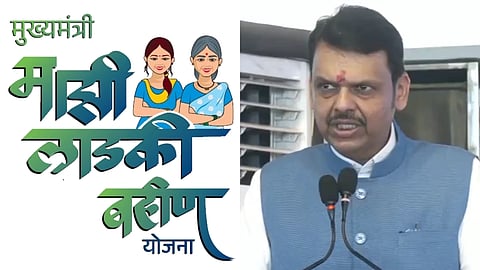
The Mukhyamantri Majhi Ladki Bahin Yojana was approved by Devendra Fadnavis on June 28, 2024, months before the 2024 Maharashtra Legislative Assembly election. The scheme aimed to promote women’s economic independence by providing eligible women with a monthly stipend. Under the Ladki Bahin scheme, women aged 21 to 65 years received Rs 1,500 per month directly into their bank accounts via Direct Benefit Transfer (DBT).
The CAG recommended that for large-scale DBT schemes such as the Ladki Bahin, the department should conduct a realistic assessment of beneficiary coverage and fund requirements while formulating and allotting budget for the scheme, so as to avoid unnecessary supplementary demands or unauthorized excess expenditure.
It also advised the government against parking funds in VPDAs or in other similar accounts, emphasizing that fund withdrawals should strictly be linked to actual and immediate expenditure needs.
(Edited by Vaishnavi Sivadasan)
Suggested reading:
Subscribe to our channels on YouTube and WhatsApp
Download our app on Play Store
