
- HOME
- OPINION
- ON GROUND
- INTERVIEW
- Neta Profile
- Editor's Pick
- INDIA
- NewsGram USA
- WORLD
- न्यूजग्राम
- POLITICS
- ENTERTAINMENT
- CULTURE
- LIFESTYLE
- ECONOMY
- SPORTS
- Jobs / Internships
- Misc.
- NewsGram Exclusive

Key Points
The Delhi High Court set aside the expulsion of a Dr B R Ambedkar University student accused of participating in a peaceful sit in protest
The court held that universities cannot restrict peaceful dissent or expression of ideas merely because they conflict with institutional ideology
Justice Jasmeet Singh termed the expulsion “highly disproportionate” and restored the student’s academic status after she lost an academic year
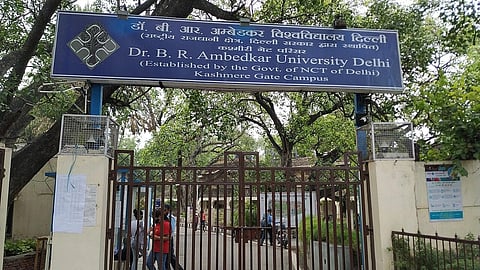
The Delhi High Court, in an order made public on 23 March 2026, set aside the expulsion of a student from Dr BR Ambedkar University Delhi, holding that universities cannot penalise peaceful dissent or restrict expression of ideas merely because such views do not align with the institution’s ideology.
In an order dated 13 March 2026, Justice Jasmeet Singh emphasised that universities are not merely spaces for academic instruction but also institutions that foster independent thought, critical questioning, and democratic engagement.
The court observed that universities, as instrumentalities of the State, perform a vital public function in shaping future citizens and must therefore create an environment where students feel free to express views and participate in discussions on academic and public issues.
“Peaceful protest and non-violent dissent are a natural part of such an environment,” the court said, adding that disagreement expressed in an orderly and peaceful manner cannot be treated as misconduct. The court further stated that a university that accepts only obedience and discourages protests or criticism would fail in its broader educational role.
The case concerned a student enrolled in the Global Studies programme who challenged two university orders issued in June and August 2025 that resulted in her expulsion. The disciplinary action followed allegations that she participated in a sit-in protest on campus. According to the petition, the student had earlier alleged that she was subjected to severe ragging, bullying, and gender insensitive remarks, which drove her to self harm. She later took part in complaints and protests related to the incident, after which the university suspended her.
In April 2025, the High Court had allowed the student to attend classes while restraining her from participating in protests during the pendency of an inquiry. Subsequently, the university accused the student of participating in a campus wide boycott and issued a show cause notice in May 2025, alleging violation of court directions and the student code of discipline.
The student maintained that she had not actively participated in the protest and was merely present near the protest site to meet a friend when she was photographed by campus security. Despite this explanation, the university proceeded with disciplinary action and expelled her for alleged participation in the protest. The student then approached the High Court seeking to quash the orders.
In its ruling, the court held that even if it were assumed that the student had participated in a peaceful protest, expulsion would still amount to a disproportionate punishment. The court noted that there were no allegations that the protest disrupted academic activities or interfered with university functioning.
Justice Singh observed that penalising participation in a peaceful sit-in protest strikes at the core of democratic values, including freedom of speech and the right to peaceful assembly guaranteed under Article 19(1)(a) and (b) of the Constitution. The court also clarified that any action for alleged violation of a court order must be taken by the court itself and not by the university administration.
In setting aside the disciplinary orders, the High Court restored the student’s academic status and directed that she be allowed to resume her studies. The court noted that the student had already lost an academic year during the proceedings and observed that the lost time itself could be treated as a consequence of the dispute, stating that the clock could not be turned back.
Suggested Reading:
Subscribe to our channels on YouTube and WhatsApp
Download our app on Play Store

