
- HOME
- OPINION
- ON GROUND
- INTERVIEW
- Neta Profile
- Editor's Pick
- INDIA
- NewsGram USA
- WORLD
- न्यूजग्राम
- POLITICS
- ENTERTAINMENT
- CULTURE
- LIFESTYLE
- ECONOMY
- SPORTS
- Jobs / Internships
- Misc.
- NewsGram Exclusive
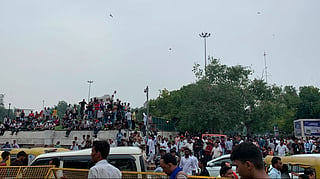

IT HAS BEEN five days since the Cockroach Janta Party (CJP) protest ended on July 25, 2026, with the resignation of Education Minister Dharmendra Pradhan. While the protest was underway, it dominated political discourse and media coverage. People across India, and even internationally, were following news related to the CJP. What began as a satirical platform after a remark by Chief Justice of India Surya Kant eventually turned into something much bigger.
The party started a movement that soon grew into a nationwide campaign, drawing lakhs of students, job aspirants, and young professionals to the streets of Jantar Mantar. The protesters were demanding accountability from the government over the repeated NEET paper leaks, with their primary demand being the resignation of Education Minister Dharmendra Pradhan. After multiple paper leak controversies and a lack of satisfactory answers from the government, many people were left frustrated and angry.
The movement also became a platform for broader public frustration over issues such as unemployment, paper leaks, scandals, and governance. The Gen Z-led protest was later joined by several activists and prominent public figures. Among them was Sonam Wangchuk, who remained on a fast for 26 days before ending it after receiving assurances from the government and Members of Parliament regarding the protesters' demands. During the course of the protests, many students were detained, and several other incidents unfolded.
The protest reached its peak during the July 20, 2026, march to Parliament, after which many believed the movement would lose momentum because of the arrests of numerous students. However, instead of ending, the protesters expanded their list of demands. Along with the resignation of the Education Minister, they demanded ₹1 crore in compensation for the families of students who allegedly died by suicide due to repeated paper leaks. They also called for the release of all students arrested during the protest and demanded that no FIRs be filed against them.
The leaders who spearheaded the protest eventually compelled the Bharatiya Jantar Party (BJP)-led government, which had been in power since 2014, to concede to one of their key demands. The party had repeatedly argued that, unlike the UPA government, ministers in the NDA government rarely resigned. Therefore, the resignation of the Education Minister came as a surprise to many. Let's take a look at the leaders who led the protest and turned their demands into reality.
Abhijeet Dipke is the founder of the CJP and the main face behind the movement that captured national attention and demonstrated how young people could mobilize around a common cause. Throughout the protest, he emerged as one of its most prominent figures, using satire, constitutional symbolism, and social media to transform an online campaign into a nationwide movement. Rather than limiting the movement to on-ground protests, Dipke focused on expanding its reach through digital media, strategic messaging, and communication.
Born in Maharashtra, Dipke studied Journalism at Tilak Maharashtra Vidyapeeth, Pune. In 2023, he moved to the United States to pursue a Master's degree in Public Relations at Boston University. Before founding the CJP, he worked in political communications and was associated with the Aam Aadmi Party (AAP) social media team during the 2020 Delhi Assembly elections. His work primarily focused on digital campaigning, meme-based political messaging, and youth outreach.
He later applied the experience he gained there to the CJP protest, turning an online satirical campaign into one of the country's most talked-about youth movements. Although the protest initially resonated with Gen Z, it soon expanded beyond young people, drawing participation from students, professionals, activists, and citizens across different generations. Within the CJP, Dipke served as the movement's chief communication strategist. His social media campaigns and messaging were designed to mobilize students and young people affected by repeated paper leaks and alleged irregularities in the education system. His communication strategy played a key role in giving the movement national visibility and shaping its public narrative.
Saurav Das is one of the prominent members of the CJP and served as one of its chief spokespersons during the protest. He played a key role in addressing protesters and negotiating with the government over the CJP's demands. Das emerged as one of the movement's most recognizable faces, representing the organization in the media. His background in journalism helped him communicate effectively with protesters and shape the movement's communication strategy.
Das completed his Bachelor's degree in Journalism and Mass Communication from Amity University. During his college years, he worked with leading media organizations on the news desk. He later worked as an independent investigative journalist, reporting extensively on legal, judicial, and social issues. His work appeared in publications such as The Caravan, The Hindu, The Wire, and several other major media organizations. Das has also co-founded Climate Action Front, an initiative focused on climate governance, sustainability, and environmental policy.
Within the CJP, Das served as one of the principal negotiators, holding meetings with Union ministers and helping shape the movement's strategy. His presence on social media also made him one of the protest's most recognizable faces. His calm speaking style helped him effectively present the protesters' demands while briefing both supporters and the media after each meeting. His speeches throughout the protest significantly increased his public profile, leading to a massive surge in his social media following.
One of the three main spokespersons of the CJP protest was Ashutosh Ranka, who also served as the movement's policy strategist. Ranka comes from a background in engineering and public policy. Born in Jaipur, he studied Materials Science and Engineering at IIT Kanpur. After working at McKinsey & Company in Mumbai, he decided to pursue a master's degree in public policy. He went on to earn a Master's in Public Administration from the London School of Economics (LSE), UK. During the CJP protest, he emerged as one of its most vocal leaders.
Apart from his academic background, Ranka has also written on economics and public policy for media organizations such as ThePrint and Newslaundry. His understanding of public policy, governance, and the functioning of the state became one of his biggest strengths during the protest. He emerged as one of the key strategists of the CJP movement and accompanied Saurav Das during meetings with Union ministers, presenting the protesters' demands.
Ranka addressed protesters on several occasions, explaining the movement's demands and speaking as one of its leading voices. As the protest intensified, he was frequently seen sitting with supporters and raising his voice against what the movement described as injustice, making him one of the protest's most recognizable faces. When the names of the CJP spokespersons were officially announced, marking the transition of the movement from a social media meme into an organized political campaign, Ranka was among those named alongside Saurav Das and Vijeta Dahiya, who later left the party and its initiative.
Ratna Singh joined the protest later than many of the other CJP leaders, but she quickly became an indispensable part of the movement. She emerged as an important voice during the protest because of her background in law and journalism, which gave her a strong understanding of legal rights, constitutional values, and public policy. At a time when several CJP members were being arrested or detained, Singh emerged as one of the movement's strongest voices.
Ratna holds a law degree from the University School of Law and Legal Studies at Guru Gobind Singh Indraprastha University. She began her legal journalism career at Bar and Bench and Law beat and later worked at The Scroll. After spending five years in legal journalism, she decided to leave the profession and pursue her career in litigation. She said that she wants to put her law degree that she earned in 2020 to use.
During the protest, Singh served as one of CJP's main legal strategists. She explained the protesters' demands and argued how they were rooted in constitutional principles. Throughout the movement, she worked to ensure that the protest remained within the framework of constitutional rights and values. Along with representing the movement as a lawyer, she also served as one of its principal spokespersons, defending both the protesters' demands and their legal rights.
While the other CJP protesters came from public policy, journalism, and law backgrounds, Deepak Baliyan was different. Born into a family of farmers, Balyian's role in the protest was centered on organizing and mobilizing people. Before joining the CJP protest, he had experience participating in farmers' movements, which gave him an understanding of how to organize protests and mobilize people at the grassroots level.
Deepak Baliyan is a native of a village in Rajasthan's Alwar district. Coming from a family of farmers, he spent years working with Kisan organizations. He completed his education in Rajasthan and holds a Master's degree in Political Science from Maharaja Surajmal Brij University, Bharatpur. Because of his academic background in political science, he was familiar with public policy and governance.
During the CJP protest, Baliyan was involved in coordinating volunteers and managing organizational work. As a CJP spokesperson and the voice of farmers in the movement, he remained active throughout the protest, highlighting the concerns of both farmers and the youth. He was introduced to the movement by CJP spokesperson Ashutosh Ranka and later led the party's activities in Rajasthan, including organizing the June 15 protest in Jaipur. His organizational work during the protests established him as one of the movement's key grassroots leaders.
(Edited by Harsh Pandey)
Suggested Reading:
Subscribe to our channels on YouTube and WhatsApp
Download our app on Play Store
