
- HOME
- OPINION
- ON GROUND
- INTERVIEW
- Neta Profile
- Editor's Pick
- INDIA
- NewsGram USA
- WORLD
- न्यूजग्राम
- POLITICS
- ENTERTAINMENT
- CULTURE
- LIFESTYLE
- ECONOMY
- SPORTS
- Jobs / Internships
- Misc.
- NewsGram Exclusive

Dhanda Nyoliwala to revise controversial Vomit on Paper lyrics after backlash.
He clarifies the intent is to critique hypocrisy, not religion.
The controversy reignites debates on artistic freedom and cultural sensitivity.
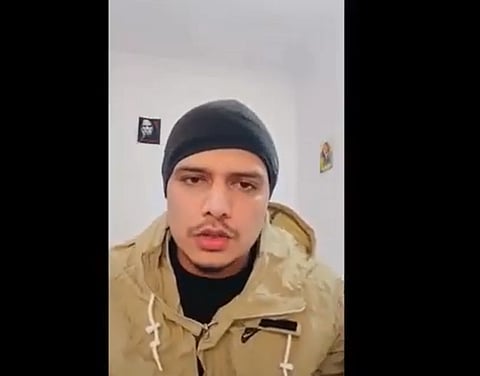
Australian-based Haryanvi rapper Praveen Dhanda, popularly known by his stage name Dhanda Nyoliwala, has decided to revise the controversial lyrics of his new album Vomit on Paper. The album was released on 7 December 2025. The step was taken after he faced massive backlash from religious groups and social media users. The rapper announced the revision on social media on 16 December 2025, during an Instagram livestream.
He stated that he would rewrite the lyrics to ease tensions, while the core message would remain the same. He further highlighted that he did not intend to target religious faith but was questioning hypocrisy and social wrongdoings. He also cited some past incidents from his village that served as inspiration behind the lyrics. He emphasised that his motive was to expose the social abuse of religious identity by individuals concealing misconduct behind spiritual authority.
The uproar stemmed from the mention of “fake babas” in the lyrics, accompanied by imagery in the video of a baba resembling Baba Bageshwar, also known as Pandit Dhirendra Krishna Shastri, a prominent religious figure. The music video did not name anyone directly. Strong reactions were triggered after a scene in the video showed a saffron-clad figure being kicked, which many perceived as an insult to religion, Hindu symbols, and individuals associated with spiritual life.
The track was criticised by religious personalities, with Sadhvi Deva Thakur, a self-proclaimed Indian god-woman and Hindu nationalist leader publicly criticising and warning the rapper against insulting saints and faith traditions. This further heightened the already existing tension on social media platforms. However, the music video gained traction quickly, crossing 2.7 million views within four days of its release.
This is not the first time Dhanda’s work has landed in controversy, as there have been similar clashes in the past. Some of his tracks were previously alleged to glorify gang culture and violence, leading to their removal amid action taken by Haryana officials against regional singers for works with controversial themes. The latest row has raised questions about the boundaries of artistic expression, cultural sensitivity, and freedom of speech. The tensions have reignited a broader debate around creative freedom in the country’s music and media space.
(Edited by Dhruv Sharma)
Suggested Reading:
Subscribe to our channels on YouTube and WhatsApp
Download our app on Play Store
