
- HOME
- OPINION
- ON GROUND
- INTERVIEW
- Neta Profile
- Editor's Pick
- INDIA
- NewsGram USA
- WORLD
- न्यूजग्राम
- POLITICS
- ENTERTAINMENT
- CULTURE
- LIFESTYLE
- ECONOMY
- SPORTS
- Jobs / Internships
- Misc.
- NewsGram Exclusive
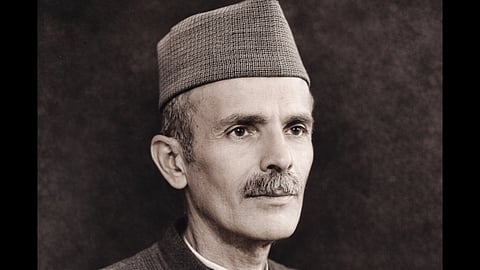
Samuel Evans Stokes Jr., an American from Philadelphia, settled in Himachal Pradesh, embraced Indian culture, and became Satyananda Stokes.
He introduced apple cultivation in the Shimla hills, transforming the region’s economy and making Himachal a major apple-producing state.
He also participated in India’s freedom movement after the Jallianwala Bagh massacre and was imprisoned by the British in 1921.
Himachal is one of the states in India where a major source of income for people is agriculture. Agriculture in Himachal includes horticulture and allied sectors, with a large working population engaged in farming. The state is widely known as the “Apple State” for being a leading producer of apples. Because of this, Himachal is often seen as an example of a state where people living in rural areas enjoy a relatively prosperous life, sometimes even outpacing urban populations.
The credit for this transformation goes largely to an American man born in Philadelphia. His name was Samuel Evans Stokes Jr., later known as Satyananda Stokes. His father, Samuel Evans Stokes Sr., was a successful and well-off businessman. Born in 1882 into a Quaker family, he came to India in 1904 as a young man. During his time in India, he became a great admirer of Indian culture and traditions.
See Also: Silence: A Brief Literary History

He came to the Shimla hills in Himachal Pradesh, initially working at a leprosy home in Subathu. He later moved to a Christian mission house and eventually married a local Christian woman, Agnes, in 1912. Leaving behind a life of luxury in America, he chose to settle in India, take up agriculture, and live among the local people. He also learned Sanskrit and the Pahari dialect during his time in the hills.
Though he came to India as a missionary, Indian culture and customs deeply influenced him. In 1932, he converted to Hinduism and adopted the name Satyananda Stokes. His wife Agnes also embraced Hinduism and became Priyadevi. The couple raised their children as Indians, surrounded by Indian culture and traditions.
He purchased farmland in Kotgarh, located in the Shimla hills near his wife’s village. There, he built a house named Harmony Hall. He began experimenting with apple cultivation and identified a variety developed by Stark Brothers in the United States. Realizing that the climate of Himachal was suitable, he imported the saplings.
He then began cultivating apples on his farmland. With his contacts, he was able to export apples to foreign markets and earned a good income. He encouraged other farmers to adopt apple cultivation, which gradually led to an “apple revolution” in the region.
His efforts in transforming the Himalayan economy through apple cultivation earned him the title “Johnny Appleseed of the Himalayas.” Today, Himachal Pradesh is one of the highest apple-producing states in India, contributing significantly to the national output. The state’s economy relies heavily on apple farming, particularly in districts like Shimla, Kullu, and Kinnaur.
Samuel was also the only American to actively participate in India’s freedom movement. What deeply affected him was the Jallianwala Bagh massacre. This incident motivated him to join the struggle for independence.
He participated in the Non-Cooperation Movement led by Mahatma Gandhi, wore khadi, and protested against British rule. He was arrested in 1921 due to his involvement in the movement and spent several months in jail in Lahore.
Sadly, he did not live to see India’s independence. Satyananda Stokes passed away in 1946 after a prolonged illness, just before India achieved freedom in 1947. His contributions to both India’s freedom struggle and Himachal’s agricultural transformation left a lasting legacy, helping shape the state into what is now known as the apple capital of India.
(Edited by Dhruv Sharma)
Suggested Reading:
Subscribe to our channels on YouTube and WhatsApp
Download our app on Play Store
