
- HOME
- OPINION
- ON GROUND
- INTERVIEW
- Neta Profile
- Editor's Pick
- INDIA
- NewsGram USA
- WORLD
- न्यूजग्राम
- POLITICS
- ENTERTAINMENT
- CULTURE
- LIFESTYLE
- ECONOMY
- SPORTS
- Jobs / Internships
- Misc.
- NewsGram Exclusive

Subramanian Swamy alleged in a podcast that some women MPs advanced politically through inappropriate relationships with PM Modi, triggering renewed political controversy.
The 2009 surveillance controversy involving a woman architect has come back into focus, with claims that Gujarat police monitored her on orders linked to senior leadership.
While Pradeep Sharma alleged illegal surveillance and victimisation, the Gujarat government and BJP dismissed the claims as politically motivated and justified the surveillance as a protective measure requested by the woman’s father.
In a recent podcast, Subramanian Swamy, economist, former Union Law Minister, and BJP politician, made serious allegations against Prime Minister Narendra Modi. Swamy claimed that several women MPs had to engage in inappropriate relationships with Modi to rise in politics and secure ministerial positions. He said, “I can name three or four women who became MPs and had to sleep with Modi; one even became a minister.”
Following these remarks, along with renewed discussions online linking Modi’s name to the Epstein files, several past controversies associated with him have resurfaced. One such episode is the controversial “snoopgate” scandal from 2009, when Modi was serving as the Chief Minister of Gujarat. The allegations suggested that a young woman architect was placed under surveillance by state police. The Gujarat government, however, maintained that the surveillance was carried out at the request of the woman’s father for her protection.
The controversy gained national attention in November 2013 when investigative news portals Cobrapost and Gulail released audio tapes. These recordings, reportedly available with the CBI, suggested that Gujarat’s then Home Minister Amit Shah had instructed senior police officials to monitor Pradeep Sharma and the woman on the orders of a person referred to as “saheb” or “boss.”
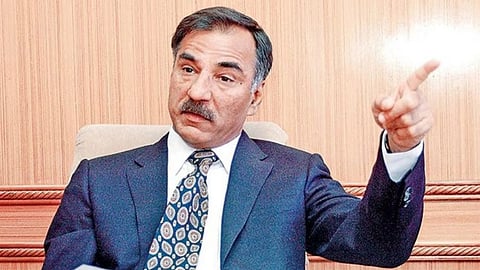
Suspended Gujarat IAS officer Pradeep Sharma later approached the Supreme Court, seeking a CBI investigation into the alleged illegal surveillance. He also made claims about Modi’s alleged closeness with the woman. Sharma alleged that the woman was subjected to extensive surveillance in 2009, including phone tapping and movement tracking. He claimed that the term “saheb” referred to Narendra Modi and argued that the surveillance violated the Indian Telegraph Act, 1885, as well as Supreme Court guidelines on phone tapping.
In his affidavit, Sharma stated that he had introduced the woman—then 27 years old—to Modi in 2004 during an official event in Bhuj, when he was serving as the Collector of Kutch. The woman had been hired as a landscape architect for a hill garden project, and Sharma claimed that she and Modi remained in contact for several years thereafter.
He further alleged that rumours about a controversial video involving the woman led Modi to suspect that he possessed sensitive information. According to Sharma, this suspicion resulted in multiple false cases being filed against him between 2010 and 2012, despite his otherwise clean service record from 1981 to 2010. He claimed that as many as six cases were registered against him during that period.
Sharma also told the court that BJP leaders had, in press conferences, acknowledged that the surveillance was carried out at Modi’s behest, and he urged the court to order a CBI probe into the matter, including the authenticity of the audio tapes.
However, the Gujarat government rejected these allegations, calling the snoopgate controversy politically motivated and based on unauthenticated material released at a strategically sensitive time. It argued that due procedures had been followed and questioned Sharma’s credibility by pointing to corruption cases against him, along with allegations of financial irregularities and personal misconduct.
The BJP defended the surveillance by citing a letter from the woman’s father, who stated that he had sought Modi’s help to ensure his daughter’s safety, though the exact reasons for such surveillance were not clearly explained.
In addition, Sharma told NDTV that the woman often acted as an intermediary between him and Modi, conveying messages that she be given government contracts in districts where he was posted. He also said that he had offered her a project to restore the historic Mani Mandir in Rajkot, which she declined, expressing interest in taking up a new project instead.
Sharma further claimed that she later visited him in Bhavnagar, where he was serving as Municipal Commissioner, after being advised by Modi to explore opportunities related to the Alang shipyard. The issue has resurfaced in the wake of recent allegations made by Subramanian Swamy, bringing renewed attention to the earlier snoopgate controversy.
[VP]
Suggested Reading:
Subscribe to our channels on YouTube and WhatsApp
Download our app on Play Store
