
- HOME
- OPINION
- ON GROUND
- INTERVIEW
- Neta Profile
- Editor's Pick
- INDIA
- NewsGram USA
- WORLD
- न्यूजग्राम
- POLITICS
- ENTERTAINMENT
- CULTURE
- LIFESTYLE
- ECONOMY
- SPORTS
- Jobs / Internships
- Misc.
- NewsGram Exclusive

By Dr. Kumar Mahabir & Shalima Mohammed, MBP
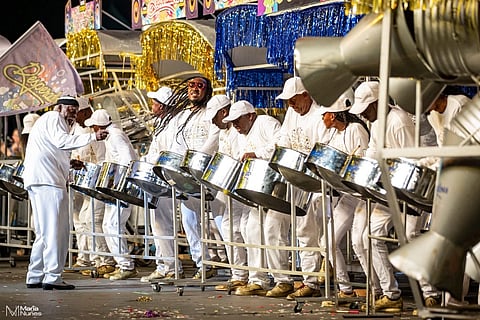
Described as the greatest show on earth, Carnival will be celebrated in Trinidad and Tobago on February 16th and 17th. Carnival culture in the Indian diaspora is a vibrant expression of identity, blending Indian traditions with the festive spirit of the Caribbean and other global celebrations. Rooted in the history of indentured labourers who migrated to countries such as Trinidad, Guyana and Mauritius, Indian communities have contributed to the evolution of Carnival through music, masquerades and elaborate costumes. Chutney and soca music, tassa drumming and Bollywood-inspired performances are integral to these celebrations, reflecting a fusion of Indian and local cultural elements. Today, Indian diaspora communities worldwide continue to resist as well as embrace Carnival as a space for creativity and cultural pride.
The following are excerpts from an Indo-Caribbean Cultural Centre (ICC) Thought Leaders’ Forum (23/02/2025). The Zoom program was chaired by Shakira Mohommed and moderated by Shalima Mohammed, both from Trinidad. There were (4) speakers in the program. Burton Sankeralli (of Trinidad) - A philosopher (specifically dhar-shanic), and theology graduate from the Catholic Seminary, he teaches philosophy, religion, and philosophy of religion at the Presbyterian St. Andrew’s Theological College in Trinidad. Dr. Sat Balkaransingh (of Trinidad) - An economist, former senior public servant, playwright, choreographer, and performing artist specialising in dance, he is also an author of several books including one titled The Shaping of a Culture. Professor Stephanie Lou George (of the USA) - Affiliated with the Graduate Center at The City University of New York, she conducts multi-sited ethnographic research on music and sound in Guyana, New York City, and online.
Professor Ryan Persadie (of Canada, originally from USA). An artist, educator and writer of Trinidadian ancestry, he is a Visiting Professor of Gender, Sexuality, and Intersectionality Studies at Connecticut College. The topic was “Carnival culture in the Indian diaspora.” See the unedited recording of the program:
Burton Sankeralli said: “On the road during Carnival, nations dance and converge, revealing the living Indian presence in Carnival. This presence is a dancing metaphysical reality, expressed through leela in Hinduism and echoed in African traditional religions as the unleashing of Shakti. We see this energy in the whip of the jab jab, the flashing whips of Kali Puja, and in chutney’s roots in Indo-spiritual practices such as matikor and sumari dances honoring the Divine Mother. The Indian presence is especially prominent in Carnivals outside Port of Spain, and has been powerful across all aspects of Carnival. This is no accident - it is leela unfolding in the metaphysical space of the road.”
Dr. Sat Balkaransingh said: “With respect to the Trinidad Carnival, there are three aspects of culture of religious persuasions: Mantras, Yantras and Tantra. Burton spoke about the Cosmology, so you are dealing with a Yantra there. There is also Tantra. On or near Carnival, you have Shivratri [Shiva’s Night]. The interesting thing about Lord Shiva and Carnival - the Greco-Roman aspect of it - is Dionysus Androgyne, male and female. Shiva is male and female. Half of Shiva is portrayed as male, and the next half as female. So you see both aspects, and Shivratri invariably falls on or near Carnival. On or near Carnival, Shiva is invoked as Mahadeo ‘Lord of all Lords’ also known as Natraj ‘The Lord of the dance,” and Peter Minshall has, in 1995, portrayed Shiva in his mas costumes on the headpiece. You have the Natraj, with Maha Shiva; he is the tantric. The energy that one gets out of Shivaratri and Hinduism is simultaneously or parallel portrayed in Carnival. I think I have given an indication that yes! there is a lot of mixing, there are lot of Indians in Carnival. Whether it is in Trinidad, Goa, Brazil or New Orleans - because it is certainly there, because I have been there, and I have seen Indian influences in Carnival.”
Professor Ryan Persadie said. “I am deeply invested in this sort of creolized encounter that brings the Indian and the African together, and for me that relationship begins in Carnival; it begins on the road; it begins in these sorts of various spaces. It helps us to think about how we - have in understanding Indo-Caribbean subjectivity - we have deeply transgressed ourselves outside of a South Asian conventional frame which is often how the Indian gets talked about.”
Professor Stephanie Lou George said. “Playing mass and other musical performances and Sonic practices produce spaces or soundscapes for musicians and revellers, as in this case of the Madrassi Day Parade in New York, USA…. Diverse Caribbean cultures of ancestral heritage are always at play in the ongoing production in the diasporas. The idea and ideal of unity and diversity runs throughout Carnival within Caribbean diasporas; for the United Madrassi Association, the notion is literally their motto: ‘unity in the community.’”
Suggested Reading:
Subscribe to our channels on YouTube and WhatsApp
Download our app on Play Store
