
- HOME
- OPINION
- ON GROUND
- INTERVIEW
- Neta Profile
- Editor's Pick
- INDIA
- NewsGram USA
- WORLD
- न्यूजग्राम
- POLITICS
- ENTERTAINMENT
- CULTURE
- LIFESTYLE
- ECONOMY
- SPORTS
- Jobs / Internships
- Misc.
- NewsGram Exclusive

The Supreme Court heard petitions challenging the voter roll revision, with Mamata Banerjee alleging large-scale unfair deletion of genuine voters.
Banerjee and her lawyers said minor spelling errors and rejected documents were being used to delete voters and accused the ECI of political bias.
The Election Commission denied the allegations, blamed staff shortages, and the court assured protection for genuine voters.
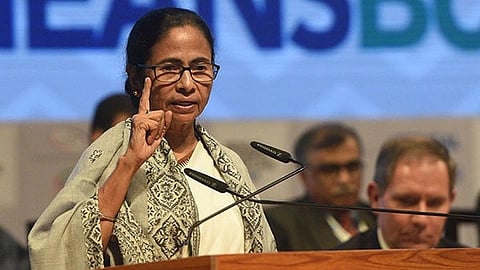
The Supreme Court on February 4, 2026, heard petitions challenging the Special Intensive Revision (SIR) of electoral rolls being carried out by the Election Commission of India (ECI) in West Bengal and other states. The case was heard by a bench headed by Chief Justice of India Surya Kant, along with Justices Joymalya Bagchi and Vipul Pancholi. West Bengal Chief Minister Mamata Banerjee appeared in person before the court after seeking permission through an interlocutory application. She argued her case on her own at the Supreme Court.
Banerjee had earlier filed a petition under Article 32 of the Constitution, seeking directions to conduct the 2026 West Bengal Assembly elections based on the existing voter lists instead of revised rolls prepared under SIR. She also requested an immediate halt to voter deletions, alleging that the process was being used mainly to remove names rather than correct records. According to official data, more than 58 lakh voters have already been deleted in the first phase of SIR released in December 2025, with over 1.36 crore names flagged in the “logical discrepancy” list.
Senior advocate Shyam Divan, appearing for Banerjee, told the court that “nearly 70 lakh cases involve minor spelling mismatches such as ‘Dutta’ and ‘Datta’ or ‘Roy’ and ‘Ray’.” He argued that many voters were being issued notices without clear reasons and were being forced to wait in long queues for verification. He added that important documents such as Aadhaar, domicile certificates, and OBC certificates were being rejected. “Some short reasons must be given. People should know why they are not in the list,” he said, demanding greater transparency.
During the hearing, the Chief Justice observed that pronunciation and spelling differences were common in local dialects across India. “Suppose one person writes ‘Dutta’ and some may spell it as ‘Datta’…” he remarked. Justice Bagchi also pointed out that the Bengali language lacks certain sounds, leading to frequent variations in names. “Mr Dwivedi, in Bengal you will be called ‘Mr Dibedi’. Bengali language does not have a ‘va’,” he said. The court noted that genuine voters should not be excluded due to technical errors.
Addressing the bench, Mamata Banerjee launched a strong attack on the Election Commission. “Justice is crying behind closed doors,” she said. “We wrote six letters to the Election Commission.” She alleged that the SIR exercise was being rushed unfairly and that Bengal was being “targeted” ahead of elections. “That is what they are doing. There are some daughters who moved to their in-laws’ house and are being unilaterally deleted,” she claimed.
Banerjee also accused the ECI of appointing “micro-observers” from BJP-ruled states to supervise deletions. Calling the poll body a “WhatsApp Commission,” she alleged political interference and said that nearly 58 lakh names were removed in the first phase alone. She further claimed that officials were not accepting Aadhaar and other valid documents, unlike in other states. “They wanted to do something in two months which takes two years. When people were out, they did it. It is because of the harassment. West Bengal is targeted. Why not Assam? Why not Assam?” she asked.
The ECI, represented by senior advocate Rakesh Dwivedi and Solicitor General Tushar Mehta, denied the allegations and said that notices were being issued properly. Dwivedi argued that the state government had failed to provide enough officers for verification, forcing the commission to appoint micro-observers. He also claimed that ECI officials were working in a hostile atmosphere in Bengal. “We wrote many times to the state to give Class II officers to be appointed as EROs. Only 80 officers were given. The fault lies with them, which is why we appointed micro-observers,” he said.
The court acknowledged the concerns raised by Banerjee and her lawyers and assured that solutions would be found. “Every problem has a solution. We must ensure that solutions come and no innocent person is left out,” CJI Kant said. He suggested that the state provide a team of Bengali-speaking officers to help resolve name mismatches and directed the ECI to be “careful and sensible” while issuing notices, especially to prominent citizens.
The bench also took note of Banerjee’s claim that SIR notices were sent to well-known personalities such as Nobel laureate Amartya Sen and poet Joy Goswami. “You cannot send notices to notable authors,” the CJI told the ECI. The court issued notices on the petitions and said that another related case involving an ECI affidavit would also be heard.
During the hearing, Banerjee also referred to the deaths and health issues of booth-level officers (BLOs) linked to the SIR exercise. She appealed emotionally before the bench, folding her hands and saying, “Please protect the people’s rights.”
The Supreme Court noted that the SIR exercise is meant to remove dead voters, disqualified persons, and illegal entries, while ensuring that genuine migrants and eligible citizens remain on the rolls. “By virtue of such mistakes, bona fide persons cannot be left out,” the CJI emphasized.
The court has scheduled the next hearing for Monday, February 8, 2026, when further submissions and related cases will be taken up.
Suggested Reading:
Subscribe to our channels on YouTube and WhatsApp
Download our app on Play Store

