
- HOME
- OPINION
- ON GROUND
- INTERVIEW
- Neta Profile
- Editor's Pick
- INDIA
- NewsGram USA
- WORLD
- न्यूजग्राम
- POLITICS
- ENTERTAINMENT
- CULTURE
- LIFESTYLE
- ECONOMY
- SPORTS
- Jobs / Internships
- Misc.
- NewsGram Exclusive

The Supreme Court ordered provisional MBBS admission for Atharva Chaturvedi under the EWS category using its special powers under Article 142.
Atharva prepared and argued his own case after being denied admission due to the lack of EWS policy in private colleges.
His journey highlights determination and exposes gaps in reservation policy implementation in private medical institutions.
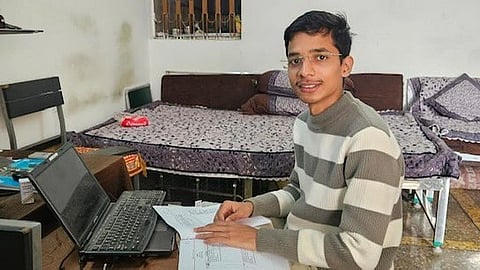
In February 2026, the Supreme Court directed the National Medical Commission and the Madhya Pradesh government to grant provisional MBBS admission to 19-year-old Atharva Chaturvedi from Jabalpur, after he personally argued his case seeking implementation of the Economically Weaker Section (EWS) quota in private medical colleges. The order was passed by a bench led by Chief Justice Surya Kant, invoking Article 142 of the Constitution to ensure complete justice.
Atharva, a Class 12 pass-out, had cleared the NEET examination twice, scoring 530 marks. He was eligible under the EWS category, which is meant to support students from financially weaker backgrounds. However, he was unable to secure admission in private medical colleges due to the absence of a clear state policy extending EWS reservations to these institutions.
After failing to get relief through regular counselling, Atharva approached the Jabalpur High Court, where he argued his case in person. Although the court did not grant him immediate relief, a judge reportedly remarked that he argued well and suggested that he could consider a legal career. Despite this, Atharva remained determined to pursue medicine.
During the Covid-19 lockdown, Atharva began closely observing court proceedings online, learning legal procedures by watching his father, a lawyer, participate in virtual hearings. He studied previous judgments, downloaded petition formats from the Supreme Court website, and prepared his own Special Leave Petition (SLP). He filed the case online on January 6, 2026, after correcting registry objections. To avoid travel expenses to Delhi, he fought his case online.
When the matter was taken up in February 2026, Atharva requested ten additional minutes to present his arguments as the court was about to rise. He explained that despite fulfilling all eligibility conditions, he was denied admission due to administrative gaps.
After hearing his submissions, the Supreme Court held that admissions cannot be denied merely because the state had not implemented EWS reservations in private colleges. The bench directed authorities to grant provisional admission for the 2025–26 academic session and ordered the state to allot him a medical college within seven days, subject to payment of fees.
The court noted that Atharva had qualified for NEET twice and belonged to an economically weaker background, making him eligible for reservation benefits. It observed that policy deficiencies should not deprive deserving students of educational opportunities.
Atharva’s family welcomed the verdict but expressed concern over the high fees charged by private medical colleges, as EWS fee structures remain unclear. His father, Manoj Chaturvedi, said the family would try its best to manage the expenses, while his mother has supported him throughout his academic journey.
His teachers also played an important role in building his confidence and communication skills. Atharva studied subjects such as Mathematics, Biology, English, and Computer Science and had also qualified for an engineering college before choosing medicine. The case has drawn attention to gaps in the implementation of reservation policies in private medical institutions.
Atharva’s journey from a small town in Jabalpur to the Supreme Court has been widely praised as an example of determination and self-belief. Despite financial and administrative hurdles, he continued to pursue his dream and successfully argued his case at the country’s highest court. Authorities have stated that further steps will be taken to ensure compliance with the court’s directions, while Atharva now prepares to begin his medical education.
Suggested Reading:
Subscribe to our channels on YouTube and WhatsApp
Download our app on Play Store
