
- HOME
- OPINION
- ON GROUND
- INTERVIEW
- Neta Profile
- Editor's Pick
- INDIA
- NewsGram USA
- WORLD
- न्यूजग्राम
- POLITICS
- ENTERTAINMENT
- CULTURE
- LIFESTYLE
- ECONOMY
- SPORTS
- Jobs / Internships
- Misc.
- NewsGram Exclusive

The Gujarat High Court ruled that a registered marriage certificate cannot validate a Hindu marriage if the essential religious ceremonies, including Saptapadi, were never performed.
The case involved a UK-based man who claimed his signatures were obtained fraudulently, while the woman herself admitted that no marriage rituals had taken place.
The Bench held that registration under the Hindu Marriage Act is only evidence of a marriage that has already been legally solemnised and cannot create the legal status of husband and wife in the absence of mandatory Hindu rites.
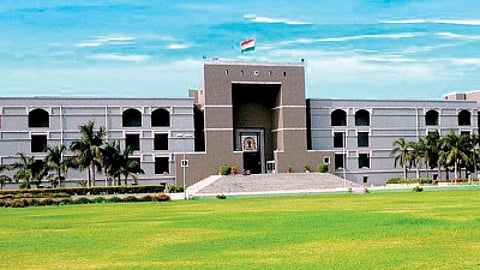
IN A GUJARAT HIGH COURT judgment dated June 23, 2026, the court said that merely the registration certificate of a marriage doesn't make a Hindu marriage legally valid. The ruling came in the case of Kaushal Pramodbhai Sonar v. Khushi Sanjay Shah. The Bench of Justices Ilesh J. Vora and R.T. Vachhani gave the ruling, declaring the marriage null and void because the mandatory Hindu marriage ceremonies had not been performed.
The Gujarat High Court ruled that religious ceremonies are essential for a marriage to be considered valid under the Hindu Marriage Act, 1955. In its ruling, the court observed that the registration of marriage is only proof of a marriage that has already been solemnised with all the required rituals and cannot create a valid marriage on its own.
The case is related to a UK-based man who alleged that he came to know about his marriage only after the woman approached his parents with a marriage certificate. The woman came to his house and claimed that she was his legally wedded wife, because of which the man approached a Family Court in Ahmedabad. However, the Family Court refused to declare the marriage null and void, forcing the man to approach the Gujarat High Court.
The man alleged that he used to work in a company owned by the woman's father and that the documents containing his signatures were obtained fraudulently. He said he was promised a promotion or threatened with termination from his job. He also told the court that he had never married the woman, no rituals had taken place, no Hindu marriage ceremonies were performed, and they had never lived together as husband and wife.
During the proceedings before the Family Court, the woman herself admitted in her written statement that no marriage rituals had taken place and no ceremonies were performed between the two. “We are of the considered opinion that, since the respondent herself has admitted that no marriage rites and ceremonies were performed, the basic and essential requirement of a Hindu marriage is absent in the present case. Therefore, the existence of a marriage certificate or its registration cannot override, contradict, or nullify the legal effect of her clear admission that no marriage was ever solemnized,” the court stated.
Despite this admission, the Family Court in Ahmedabad refused to declare the marriage void. It held that since a registered marriage certificate existed, there was a presumption that a valid marriage had taken place and, therefore, the matter required a full-fledged trial. The man then challenged this ruling before the Gujarat High Court.
The court said that the woman had admitted that no rituals had taken place. Therefore, once the woman admitted that no essential Hindu marriage ceremonies had been performed, there was no point in forcing the parties to undergo a lengthy trial.
The court said, “The word ‘solemnized’ used in Section 7 means that the marriage must be performed in the proper manner and with the required ceremonies… In the absence of such solemnization, there is no valid Hindu marriage in the eyes of law.”
For a marriage to be considered complete and legally binding, it is important to include the Saptapadi ceremony, in which the bride and groom jointly take seven steps around the sacred fire. The Bench further said that Section 8 of the Hindu Marriage Act, which deals with the registration of marriages, merely facilitates proof of a marriage that has already been validly solemnised. Registration cannot, by itself, create the legal status of husband and wife.
The Bench emphasised that under Hindu law, marriage is not merely a legal contract but a sacrament (samskara). "When the very foundation of a Hindu marriage, namely the performance of the essential ceremonies, is admittedly absent, the spiritual, social, and legal status that Hindu law grants to marriage as a sacrament and samskara never came into existence," the Court noted.
The Bench also stressed that marriage is not merely an occasion where loud music is played, people dance, and large dinners are hosted with huge gatherings, nor is it a commercial transaction. It said that marriage is a solemn institution through which a man and a woman enter into a lifelong relationship and build a family together as equals.
The court drew attention to the significance of Saptapadi, one of the most important rituals in a Hindu marriage. While explaining the importance of the ritual, the Bench referred to the Rig Veda.
"We observe that, in the context of Saptapadi in a Hindu marriage, the Rig Veda states that after the seventh step is completed, the bridegroom says to the bride: 'With seven steps we have become friends (sakha). May I attain friendship with you, and may I never be separated from that friendship.' In Hindu tradition, a wife is regarded as one-half of her husband (ardhangini), while at the same time being recognised as an individual with her own identity and as an equal partner in the marriage. Under Hindu Law, marriage is considered a sacrament or samskara. It forms the foundation of a new family."
The Court said that although marriage customs may vary across different regions and communities, the purpose of these ceremonies remains the same—to purify and transform the spiritual life of the individuals entering into marriage.
The High Court, therefore, declared the alleged marriage null and void from its very inception and permitted the man to approach the competent authority for cancellation of the marriage registration and the marriage certificate.
(Edited by Harsh Pandey)
Suggested Reading:
Subscribe to our channels on YouTube and WhatsApp
Download our app on Play Store

