
- HOME
- OPINION
- ON GROUND
- INTERVIEW
- Neta Profile
- Editor's Pick
- INDIA
- NewsGram USA
- WORLD
- न्यूजग्राम
- POLITICS
- ENTERTAINMENT
- CULTURE
- LIFESTYLE
- ECONOMY
- SPORTS
- Jobs / Internships
- Misc.
- NewsGram Exclusive
By Hannah
On the Know Thyself podcast, the author and teacher lays out the four pillars of the love he believes people are now being asked to practice, and the small, daily habits that make it possible.
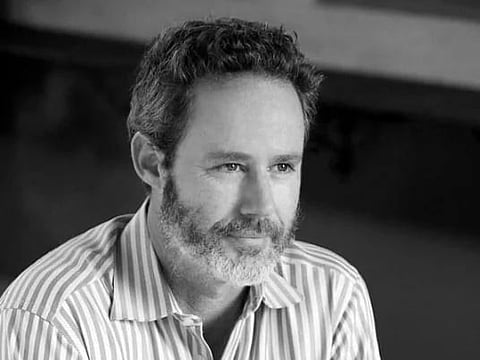
Most of us were raised on a simple story about love: find the right person and everything else will work itself out. John Wineland, the author of From the Core and host of The Embodied Relationship Experience podcast, has spent close to two decades teaching people that the story leaves out the most important part.
"How we love is evolving," he told host André Duqum in a recent two-hour conversation on the Know Thyself podcast. For most of history, he said, relationships were organized around procreation and then survival. In the last half-century they shifted toward self-expression and pleasure. Now, he argues, something new is being asked of couples: "Love now is asking us to heal. It's asking us to expand. It's asking us to create better families and children."
Why we're drawn to the people who trigger us
Wineland starts with a dynamic most people recognize from their own lives. Early experiences of neglect, control or criticism leave an imprint, and that imprint shapes who we're drawn to as adults. "Any unhealed part of you that is still transmitting is going to be a beacon for somebody with the opposite," he said, "so that you can play out the childhood dynamic that you were both raised in."
He points out that none of this is new to relationship psychology, citing researchers and therapists from Stan Tatkin to Esther Perel; it just "hasn't really filtered into the general population." What he adds is a reframe. "That's not a problem," he said. "That's actually an opportunity to heal it." That reframe also explains a pattern he sees constantly: couples who feel great for a year, move in together and suddenly start fighting. As commitment deepens, he said, the subconscious begins to treat a partner as family, and old family roles return: withdrawing, getting defensive, going quiet. The friction is real. But because a partner now occupies that place in our inner world, he said, "you also have the capacity to be a healing agent for me in the way that my parents never could." As he puts it: "We're wounded in relationship. We heal in relationship."
Duqum compared it to a dumbbell, resistance that builds strength. Wineland's own image is that a relationship is "a dojo." The payoff, as he describes it, is a nervous system that can hold more, and he says it carries over into "how I relate to my community, how I relate in business."
See Also: Choking in Delhi's toxic air? Here are 5 simple ways to protect yourself from pollution
The four pillars
Asked what turns an ordinary partnership into something deeper, Wineland outlined the four pillars at the center of his upcoming book, Evolutionary Love.
Your own deep work. Looking honestly at your wounds, patterns and stories, and taking responsibility for how they run the show. "Without that, I'm not bringing the most capable version of myself to relationship."
Devotion to love itself. This is where he says most couples get stuck. Around the two-year mark, the power struggle begins: my needs against your needs. "You have a choice. You're at a fork in the road," he said. You can fall into the power struggle, which usually ends the relationship, or "use that moment to become more devotional to love itself, the field of love itself that holds the relationship."
Intimacy. Recognizing the sameness in each other. "I am love, you are love. I have fear, you have fear," he said. "The more that two people can recognize that oneness, the more intimate they can become."
Erotic artistry. Treating intimacy as an art to be practiced and developed over a lifetime, rather than a release or an obligation.
All four, he stressed, are lifelong practices. "People invest tens of thousands of dollars into personal and business development, but don't invest the same time and money into the art of loving well," he said.
Practice before the hard moment
Insight alone doesn't help much in the middle of an argument, when old reactions take over. That's why Wineland's workshops focus on training the nervous system ahead of time. "You can't step onto Wimbledon never having picked up a racket," he said.
The simplest practice he offered is physical: noticing the urge to close up, then choosing to stay open. Relax the body, feel the heart, lift the chest, "take the pose of openness when everything in me says constrict, hide, protect."
He also described a request he makes in his own life when difficult feedback is coming: "I'll hear anything. I will hear any truth you have. In fact, I demand it, but just give me a heads up. Give me two minutes or three minutes." He uses those minutes to slow his breathing, settle himself and get ready to listen. In his view, though, feeling safe on your own is only half of the work. The other half is helping create safety for the other person, so that both people become "healing agents for each other." His summary: "I believe the world heals one relationship at a time."
What he sees in men's work
Wineland has led men's programs for more than a decade, and Duqum asked him what men struggle with most. His answer had four parts:
Numbing and distraction, mostly out of fear. Men don't know what to do with what they feel, so they numb it.
Limited nervous-system capacity. Many men struggle to stay present when a partner is upset, even if they work out or meditate. He describes nervous-system training as closer to martial arts.
"A pool of unfelt feelings." Grief and pain that have never been expressed and witnessed.
A lack of real brotherhood. Plenty of men have friends, he said, but deep work done together creates something different: "There's no substitute for that."
In his groups, men challenge each other out of love rather than competition. "That's the difference between competition, which is 'I'm better than you,'" he said, and "I see who you are... you're not going to collapse in front of me." He said he loves watching men open up in that setting: "I love my job."
Energy and consciousness, not gender
Asked whether "masculine" and "feminine" describe something real or are just useful stories, Wineland reframed the terms in a way that may surprise people who know them only from online arguments. Life itself, he said, is energy, always moving and changing. We also need awareness, or we wouldn't experience being alive at all. Energy and consciousness are two poles present in every person, and in his framework those are what the words "feminine" and "masculine" point to. "Pick other words if you don't like those words," he said.
The goal, he said, is wholeness: developing both capacities and choosing, moment to moment, what a situation calls for.
Still practicing
One of the most candid moments came when Wineland talked about his own growth. After years of building skills as a teacher, he said, he kept running into the unhealed parts of his own childhood. "I'm still dealing with this thing," he said. "And I'm supposed to be the relationship guy." His answer has been to work on two tracks: continuing his own personal work, and treating relationship itself as a place where healing happens.
His practical advice for busy couples is to make "the field of love" the guiding principle and protect it in small ways: five minutes of real connection, a few minutes of practice together in the morning, words of appreciation. "You are responsible for the field of love, 100%," he said. "You and your partner both."
Where to find John Wineland
John Wineland is the author of From the Core: A New Masculine Paradigm for Leading with Love, Living Your Truth & Healing the World (Sounds True, 2022) and host of The Embodied Relationship Experience podcast. He leads The Art of Sacred Intimacy and Fierce Love workshops, the Embodied Men's Leadership Training and a 1000-Hour Teacher Training. His next book, Evolutionary Love, builds on the four pillars described here. More at johnwineland.com.
Listen to the full conversation on the Know Thyself podcast.
[NGpg/VS]
Suggested Reading:
Subscribe to our channels on YouTube and WhatsApp
Download our app on Play Store
